Article: News
05 December 2025
On 1 December 2025, IIASA welcomed H.E. Ian Biggs, Ambassador and Permanent Representative of Australia, to the Institute for discussions on strengthening scientific cooperation between Australia and IIASA.
Article: News
05 December 2025
IIASA Energy, Climate, and Environment Program Director, Keywan Riahi, has been reappointed to the European Scientific Advisory Board on Climate Change for a second term from 2026 to 2030.
Event
Gainesville, FL, USA
The Association for Forest Spatial Analysis Technologies (ForestSAT) will host its 2026 international conference in Gainesville, Florida, bringing together experts to share the latest advances in forestry, remote sensing, artificial intelligence, and geospatial technologies. Dmitry Shchepashchenko (IIASA) plans to attend and deliver presentations at the conference. He also serves as a member of its Scientific Committee.
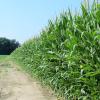
Analysis of Impacts of Renewable Fuels and Renewable Fuel Policies for the US Environmental Protection Agency Using GLOBIOM (EPA)
Article: News
04 December 2025
Two recent visits by senior representatives of Peking University (PKU) to IIASA have reaffirmed and expanded the long-standing partnership between the institutions, highlighting new opportunities for joint research, academic training, and policy-relevant collaboration in environment, population, and systems sciences.
Event
2361 Laxenburg, Martin Ebner-Gasse 10
Starting on 15 January 2026 and running for two weeks, the traveling exhibition "Climate and Me" will be on display in Laxenburg, offering the public a chance to engage with new perspectives on climate action. The opening event features a keynote by IIASA Director General Hans Joachim (John) Schellnhuber, whose insights highlight the Institute’s leadership in shaping a sustainable future.
Event
IIASA, Laxenburg
On Wednesday, 10 December, IIASA will host a class from the Vienna Sir Karl Popper school for a half-day workshop to explore systems thinking through the life cycle analysis of a chocolate bar.
Article: News
03 December 2025
In late November, IIASA Director General Hans Joachim (John) Schellnhuber visited Argentina to take part in a high-level event on urban sustainability. The visit included participation in a two-day event on climate, cities, and sustainable construction, held at the German Embassy in Buenos Aires and the University of Buenos Aires, bringing together scientific, political, and municipal actors to discuss the transformation of the construction sector and its role in climate action.
Designing a Roadmap for Effective and Sustainable Strategies for Assessing and Addressing the Challenges of EU Agriculture to Navigate within a Safe and Just Operating Space (BrightSpace)
Event
CSIR International Convention Centre, Pretoria, South Africa
IIASA will co-host a session with the National Research Foundation (NRF) of South Africa under the title, People, planet, and possibility: systems science meets journalism for wellbeing, at the 2025 World Conference of Science Journalists in Pretoria, South Africa.
Article: News
01 December 2025
In its post-COP30 analysis, Frankfurter Allgemeine Zeitung features insights from IIASA Director General Hans Joachim (John) Schellnhuber and other experts, arguing that the conference outcome shows how the world may now need to look beyond the 1.5°C limit.

Kirtika Kandel
Research Assistant (SYRR, MIG)

Constance Bwire
Research Scholar (S3)
Event
Raiffa room and Online
Artificial Intelligence (AI) and Machine Learning (ML) methods are becoming increasingly important in both science and society. In climate science - where complex biophysical and societal processes interact across diverse temporal and spatial scales, and datasets are often large, heterogenous and incomplete - AI and ML methods offer new powerful solutions.
Article: News
27 November 2025
More than you might think. A badly chosen holiday destination can leave everyone frustrated, just as poorly designed disaster plans can leave communities devastated; although the consequences are not comparable, the decision-making processes have similar characteristics. The MEDiate project is building a novel Decision Support System (DSS) – a digital toolbox which helps policy-makers test strategies before disaster strikes. IIASA is not only helping to design models and frameworks behind this system, but also ensuring that every stakeholder participates in the discussion. Even the best technical solution won’t work if there is nobody supports it.
Article: News
27 November 2025
Researchers from IIASA and partner institutions in the EU funded PARATUS project introduce a new generation of modeling tools that help not only better understand but also reduce systemic risk and vulnerability to multiple, possibly cascading, natural and man-made hazards. Instead of relying on traditional independent hazards’ analysis and static risk mapping, the IIASA PARATUS team from CAT-ASA group develops novel dynamic modeling approaches enabling to analyze and project how hazards’ patterns and vulnerability dimensions can evolve over time as functions of vulnerability drivers—and how risk-informed policy choices regarding the drivers can reduce risks and vulnerability of all kinds.
Article: News
27 November 2025
Although many policymakers might still not realize it, disasters like floods, hurricanes, or earthquakes are not isolated events. Their impacts can spread much wider, disrupting power supply, cutting off roads, or even worse – delaying logistics and your next Amazon delivery by weeks. The latest deliverable in the PARATUS Project sets out to build a clear methodology for assessing systemic risks across the case studies chosen earlier in this project.
Event
Webinar/online
As a co-host, JoAnne Linnerooth-Bayer will share the latest project insights during this webinar co-organized by Risk KAN and NATURANCE.
Article: News
27 November 2025
At the International Conference on Theory and Practice of Electronic Governance (ICEGOV 2025), IIASA researchers highlighted the critical role of cultural context in combating climate change disinformation. Presenting the Adaptation AGORA project, they showcased a suite of innovative digital tools, including a mobile app and a dedicated Disinformation Academy, designed to empower citizens and build climate resilience through inclusive, participatory governance. The project moves beyond top-down approaches to co-create adaptation strategies that are both scientifically robust and socially legitimate.
Article: News
26 November 2025
A recent Financial Times special report on climate-related research funding features IIASA Director-General Hans Joachim (John) Schellnhuber in his role as a past Blue Planet Prize laureate. The article highlights the urgent need to better connect scientific evidence, policy action, and public communication to drive meaningful climate solutions.