
IIASA Capacity Development and Academic Training Dean, Fabian Wagner, recounts a moment of convergence at the recent first author meeting of the upcoming Intergovernmental Science-Policy Platform on Biodiversity and Ecosystem Services (IPBES) Spatial Planning and Connectivity Assessment, that speaks to the enduring reach of the IIASA Young Scientists Summer Program (YSSP).
 © IPBES
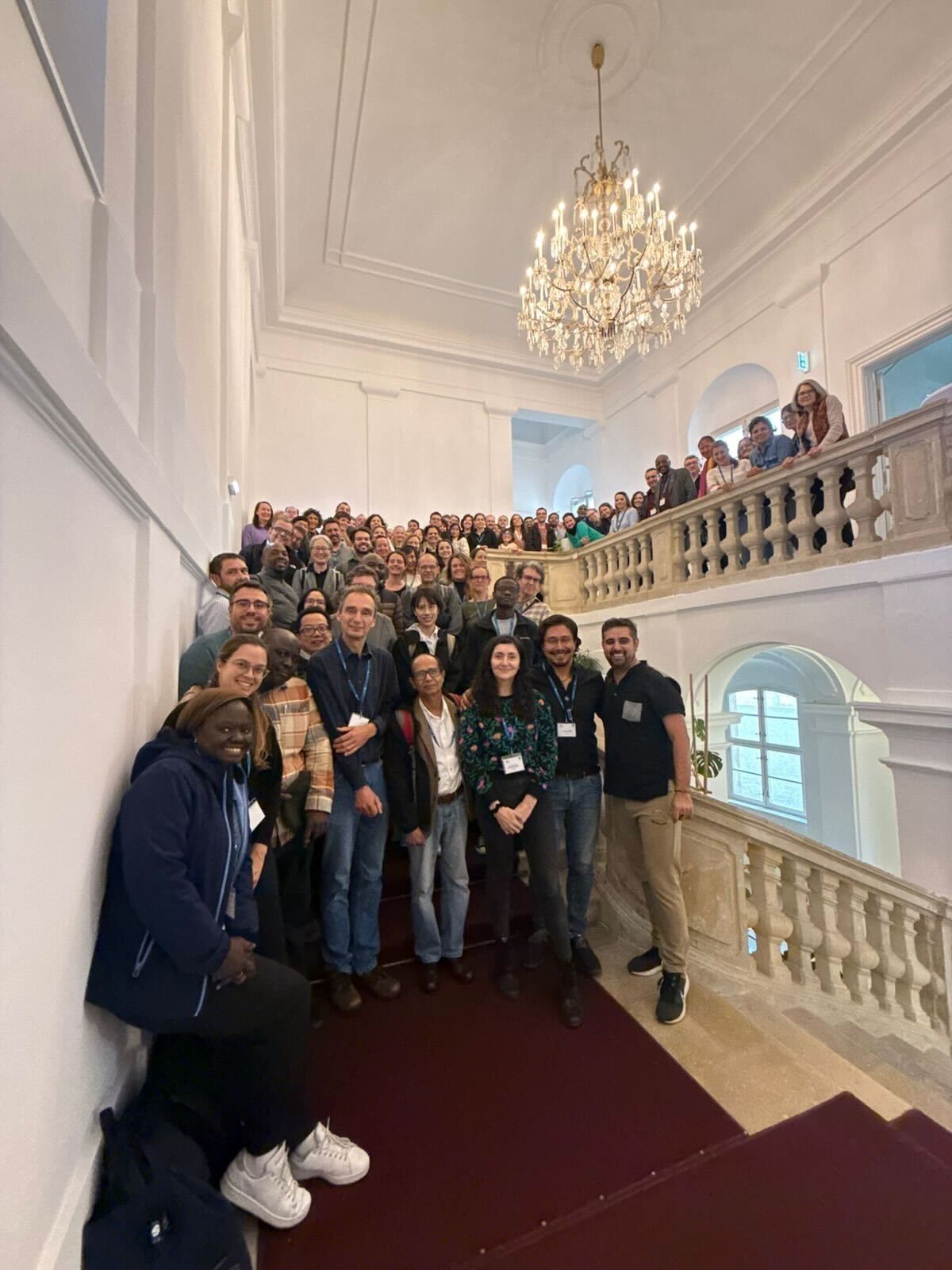
Attendees at the first author meeting of the upcoming Intergovernmental Science-Policy Platform on Biodiversity and Ecosystem Services (IPBES) Spatial Planning and Connectivity Assessment in Laxenburg.
In late September 2025, IIASA hosted the first author meeting of the IPBES Spatial Planning & Connectivity Assessment in Laxenburg. We were delighted to see three familiar faces among the attendees – Millie Chapman, Ehsan Pashanejad, and Nihar Chhatiawala. It felt like watching a part of the YSSP network reassemble in a room primed for being consequential.
Their journeys reflect the long arc of influence we cultivate at IIASA.
- Ehsan Pashanejad was part of the 2023 YSSP cohort in the Advancing Systems Analysis stream. He just defended his PhD thesis at the University of British Columbia.
- Nihar Chhatiawala also participated in the 2023 YSSP as part of the Biodiversity and Natural Resources Program. At the time, his research focused on water governance in the Ganges–Brahmaputra basin. He defended his PhD thesis at the RAND School of Public Policy three days prior to the IPBES meeting and is currently continuing his research as a postdoc at RAND.
- Millie Chapman was part of the 2022 YSSP cohort where her project on EU biodiversity targets earned her recognition as one of IIASA’s exceptional young scientists through the Peccei Award. She came to us from Berkeley and is now an assistant professor at ETH Zurich.
At the IPBES meeting, Millie contributed as an expert on Spatial Planning and Connectivity and she will be a review editor for the IPBES North America Biodiversity and Climate Change assessment. Ehsan is currently working as an IPBES Fellow, bringing his modeling and systems analysis experience into the assessment framework. Similarly, Nihar is contributing his background on climate and environmental policy and decision-making under uncertainty to the IPBES authors team and contributing to the final chapter as an IPBES Fellow.
This repeated convergence of former YSSP peers meeting again on the frontlines of a global assessment is no accident. It highlights the fact that the YSSP is not merely a summer program but the loom upon which future networks of influence are woven. The program primes its alumni to repeatedly find themselves in the rooms where science and policy intersect.
And this is just the beginning. Today, Millie, Ehsan, and Nihar are shaping assessments. Tomorrow, I expect them to evolve into trusted advisors to governments, directors of international programs, or holders of senior leadership roles in global science–policy bodies. From the halls of Laxenburg to the offices of capitals and multilateral institutions, their shared YSSP roots continue branching outward, yet again intersecting in the spaces where the future of nature is decided.
Note: This article gives the views of the author, and not the position of the Nexus blog, nor of the International Institute for Applied Systems Analysis.