
Chenchen Ding
PKU-IIASA International Postdoctoral Fellow (BEC)
Shutong Liu
Guest Researcher (ICI)
Article: News
03 November 2025
The SPARCCLE consortium convened at the CMCC Foundation in Milan on 7-8 October 2025 for its annual General Assembly, marking two years since the project’s launch. The meeting brought together partners from across Europe, along with representatives from sister projects, members of the Stakeholder Advisory Board, and colleagues from the European Commission’s Joint Research Centre (JRC).
Event
Belem, Brasil
From 10 to 21 November 2025, Brazil will have the honor of hosting the 30th Conference of the Parties (COP30) where the world's experts come together to agree on the actions to address the climate crisis, helping vulnerable communities adapt to the effects of climate change and achieving net-zero emissions by 2050.
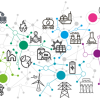
IEA Bioenergy TCP Task 44: Taskforce on System Integration and Flexibilization
Tool
Stakeholder engagement is a crucial part of informed and sustainable decision-making. The first step in stakeholder engagement is to understand their vision, their roles, and their expectations. The Stakeholders Exploratory Vision Analysis (SEVA) is a flexible exploratory tool to analyze the stakeholders’ vision. SEVA is designed to be easy to use yet provide flexibility so it can be applied in different fields for stakeholder engagement.
Article: Blog Post
31 October 2025
What begins as a summer research experience can sometimes grow into a lasting collaboration. In this blog post, Jaewon Son reflects on her path from participating in the 2024 IIASA Young Scientists Summer Program (YSSP), to returning as a Guest Research Scholar with the Equity and Justice Research Group.
Event
Theatersaal, Austrian Academy of Sciences (ÖAW), Sonnenfelsgasse 19, 1010 Vienna, Austria
Co-organized by the Austrian Academy of Sciences (OeAW), United Nations Development Programme (UNDP), and IIASA, this event marks the Austrian launch of the Human Development Report 2025 "A Matter of Choice: People and Possibilities in the Age of AI" with a keynote presentation by Yanchun Zhang, the UNDP Chief Statistician, followed by a dialogue session that will examine the transformative societal impact and implications for human agency stemming from the rapid development of artificial intelligence.
Event
Online
Boreal forests - the vast green belt encircling the northern hemisphere - are undergoing rapid transformation. This webinar will explore new research on the changing dynamics of the boreal biome, what these shifts mean for global climate feedbacks, and how remote sensing helps us understand the future of one of Earth’s most important ecosystems.
Event
Brussels, Belgium
The NaturaConnect project, co-coordinated by Piero Visconti (IIASA) and the German Centre for Integrative Biodiversity Research (iDiv), is hosting a stakeholder engagement event in Brussels to advance strategic planning for the Trans-European Nature Network (TEN-N). Organised by project partners EUROPARC Federation and WWF Central and Eastern Europe, and taking place 20 – 21 January in Brussels, the event will bring together decision-makers from across Europe to explore and contribute perspectives on the planning, governance, and financing aspects of TEN-N implementation.
Event
Leipzig, Germany
The NaturaConnect project team, co-coordinated by Piero Visconti (IIASA) and the German Centre for Integrative Biodiversity Research (iDiv), is meeting in Leipzig, Germany from 2-5 December 2025.
Andrea Vismara
Guest Researcher (MIG)
Claudia Berchtold
Guest Senior Research Scholar (EQU)
Article: News
27 October 2025
As the world marks UN World Cities Day on 31 October – a call to make cities more sustainable – a new international study warns that the global construction sector’s carbon footprint is on track to double by 2050, threatening to derail efforts to meet the Paris Agreement climate targets.
Article: News
24 October 2025
In October, IIASA welcomed a high-level delegation from the Chinese Research Academy of Environmental Sciences (CRAES) for an in-depth exchange on advancing systems analysis and environmental solutions. The visit marked an important step toward strengthening collaboration between IIASA and CRAES on global and regional sustainability challenges.
Article: News
24 October 2025
Rising seas are irreversible on human time scales and among the most severe consequences of climate change. Emissions released in the coming decades will determine how much coastlines are reshaped for centuries to come. New research shows that near-term mitigation could spare future generations around 0.6 meters of sea-level rise that would be caused by emissions between 2020 and 2090 following current policies, making today’s decisions critical not only for limiting warming but also for coastal impacts.
Article: News
24 October 2025
IIASA Deputy Director General, Karen Lips, represented the Institute at the 2025 European Regional Meeting of the Global Research Council (GRC), convened by Science Europe earlier this week. The meeting provided an important forum for engagement with global research-policy networks to advance themes of open science, artificial intelligence, fairness, and sustainable research systems.
Article: News
23 October 2025
IIASA Distinguished Emeritus Research Scholar and Sherpa for Asia, Wolfgang Lutz, has been awarded the Austrian Decoration for Science and Art (Österreichisches Ehrenzeichen für Wissenschaft und Kunst).
Event
Vienna, Austrian Academy of Sciences
As co-organizer of the symposium hosted by the Commission on the De-Fossilization and Carbon Neutrality of the European Energy Systems (DEE) at the Austrian Academy of Sciences, IIASA's Dr. Thomas Schinko will open the event by highlighting the importance of a systemic and interdisciplinary view for a successful transformation of energy systems. Moreover, he will emphasize the necessity to foster justice, equity, and collaboration in shaping Europe’s path toward a carbon-neutral future.
Article: News
22 October 2025
Martin Lees, Chair of the OECD-IIASA Strategic Partnership on Systems Approaches, returned to IIASA earlier this month to deliver a thought-provoking lecture, revisiting the origins and future of systems thinking in international policymaking and reflecting on decades of collaboration between IIASA and the Organisation for Economic Co-operation and Development (OECD).