
IIASA Deputy Director General, Karen Lips, represented the Institute at the 2025 European Regional Meeting of the Global Research Council (GRC), convened by Science Europe earlier this week. The meeting provided an important forum for engagement with global research-policy networks to advance themes of open science, artificial intelligence, fairness, and sustainable research systems.
The Global Research Council (GRC) is a virtual organization comprising the heads of science and engineering funding agencies from around the world. Its purpose is to promote the sharing of data and best practices for high-quality collaboration among research funders internationally.
The 2025 European Regional Meeting, convened by Science Europe in cooperation with the Science Fund of the Republic of Serbia and the HUN-REN Hungarian Research Network in Belgrade, Serbia, from 20-23 October, provided an important platform for participants to exchange insights and contribute to the preparation of the 2026 GRC Annual Meeting in Bangkok, Thailand. Discussions focused on two central themes:
- Open science and AI for equity, justice, and sustainability
- Sustainable research for sustainable communities
These discussions were framed by a cross-cutting exploration of how artificial intelligence can be integrated into open science practices and how research systems can better contribute to sustainable development.
Several IIASA member countries were also represented through their national research funding and performing organizations that are members of Science Europe and thus part of the GRC network, including Austria, Finland, Germany, Norway, Slovakia, Sweden, the UK, and Ukraine. Their participation emphasized the shared commitment among IIASA and its national and regional member organizations to foster open, equitable, and sustainable research environments.
“Participating in this meeting provided an excellent opportunity to connect IIASA’s global systems perspective with the priorities of our member countries’ research communities,” said Lips. “The dialogue on open science, AI, and sustainability strongly reflects IIASA’s mission to support evidence-based, multilateral cooperation on complex global challenges.”
The outcomes of the European Regional Meeting will feed into the development of a Statement of Principles to be adopted at the 2026 GRC Annual Meeting. For IIASA, this engagement reinforces the Institute’s role in linking international scientific collaboration with the strategic research frameworks of its member countries to advance shared goals for open, fair, and sustainable science worldwide.
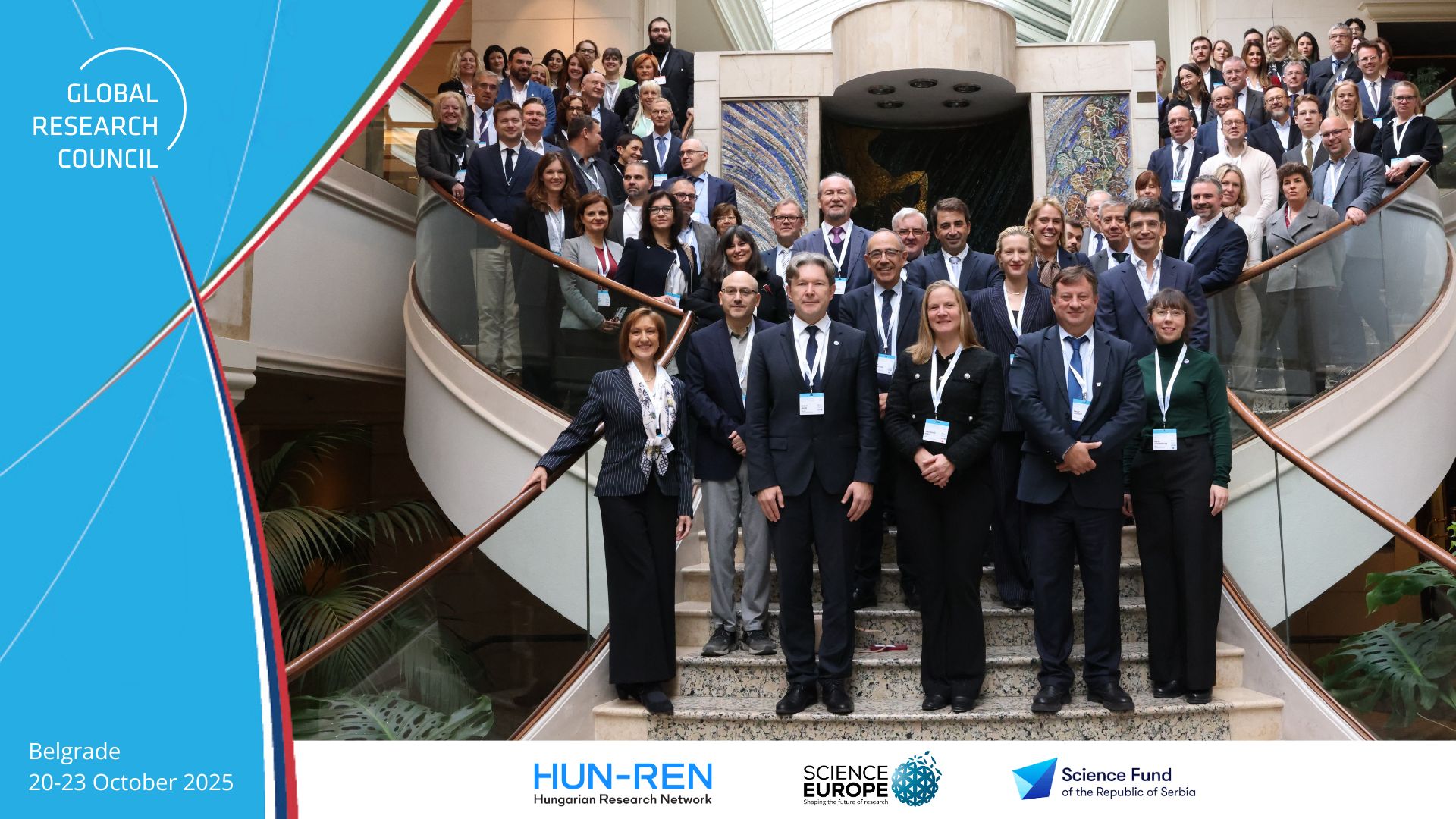 © Science Europe
Group photo of attendees at the 2025 European Regional Meeting of the Global Research Council (GRC).
News

18 November 2026
New report: Climate overshoot could cause lasting, irreversible harm to northern forests
Wildland fires in the circumboreal forest are becoming more frequent and severe, and in many areas may soon exceed what these ecosystems can recover from. A new report launched at COP this week warns that some of the resulting damage could persist for decades or centuries, even if global temperatures later decline. As global warming is set to exceed 1.5°C global warming, the report calls for urgent action to strengthen the resilience of this vast ecosystem.
16 November 2026
Exploring Real Zero: Flagship climate science research initiative to be established at IIASA
The Minderoo Foundation has committed A$9 million in seed funding to establish the Real Zero Hub and support Exploring Real Zero, a flagship climate science research initiative based at IIASA. The initiative will bring together world-leading researchers, policymakers, and institutions to develop practical, science-based pathways to eliminate fossil fuel emissions, better understand the impacts of climate change, and support governments to transition away from fossil fuels.

04 November 2026
European Commission's CORDIS platform highlights NATURANCE project
Research results from the Horizon Europe project “NATURANCE – Nature for insurance, and insurance for nature” have been highlighted by the European Commission’s Community Research and Development Information Service (CORDIS), the primary platform for sharing the results of EU-funded research and innovation projects.