


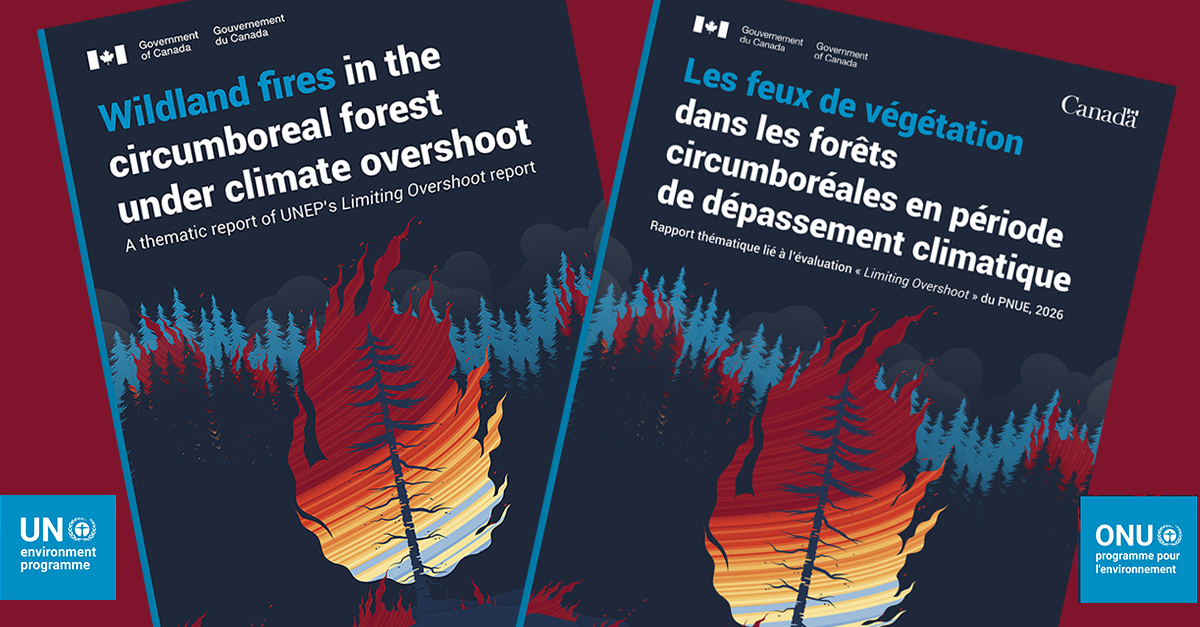
Wildland fires in the circumboreal forest are becoming more frequent and severe, and in many areas may soon exceed what these ecosystems can recover from. A new report launched at COP this week warns that some of the resulting damage could persist for decades or centuries, even if global temperatures later decline. As global warming is set to exceed 1.5°C global warming, the report calls for urgent action to strengthen the resilience of this vast ecosystem.
The report, Wildland fires in the circumboreal forest under climate overshoot, finds that recent wildland fire seasons in northern regions could become more common as temperatures rise. Increasingly severe and repeated fires threaten forest regeneration, biodiversity and vast carbon reservoirs, with consequences for the global climate, human health and economies.
Published during the UN Climate Change Conference in Antalya (COP31), the report calls for urgent reductions in greenhouse gas emissions, alongside adaptation measures such as prevention, preparedness early warning, ecosystem restoration, and Indigenous and local fire stewardship. The United Nations Environment Programme (UNEP) contributed to the initial conceptualization and framing of the assessment and supported collaboration among participating institutions and experts. The scientific analysis was undertaken by the contributing authors, led by experts from Natural Resources Canada (NRCan) and IIASA.
“Certain ecosystems simply cannot adapt to a world of climate overshoot and broken targets – this is especially true for northern regions that are warming faster than the global average,” said Mirey Atallah, Chief, Adaptation Branch, Climate Change Division, UNEP. “We must not let the world’s vast carbon reserves and biodiversity go up in flames. COP31 is an opportunity to sharply slash global emissions and adopt more robust plans for protecting forests and the communities that depend on them.”
The circumboreal forest forms a nearly continuous belt across the high northern latitudes of North America and Eurasia. It stores roughly one-third of global terrestrial forest carbon, mostly in soils, peatlands, and permafrost. It is also home to Indigenous peoples and other northern communities with cultures and livelihoods closely connected to these ecosystems, as well as unique biodiversity.
Wildland fires are a natural part of boreal ecosystems, but climate change is increasing the frequency of extreme fire weather, driven by rising temperatures, prolonged droughts, and drier conditions. Lightning activity is also increasing in Arctic regions.
“Latest results from IIASA’s forest fire model, FLAM, produced for this report indicate the potential for a doubling of the burned area in the boreal forest biome by the end of the century, with further increases possible under climate overshoot scenarios,” said Andrey Krasovskiy, FLAM modeling team leader at IIASA.
In Canada's extreme 2023 wildland fire season, an estimated 554 million tonnes of carbon were released, 76% of it from burning soils and peat. Repeated fires can also prevent forests from regenerating, potentially transforming landscapes for decades or longer.
The impacts extend far beyond the areas burned. Wildland fires threaten infrastructure, livelihoods and cultural heritage, particularly in Indigenous and northern communities. Smoke can travel vast distances, affecting air quality and human health far from the fires themselves, while economic losses can be high: the 2023 Canadian wildland fire season caused nearly CAN$1 billion in insured property losses alone.
“Improved and intensified sustainable forest management represents one important nature-based solution to help mitigate these developments. However, particularly in the context of climate overshoot, enhancing the resilience of ecosystems must go hand in hand with rapid and full decarbonization across all sectors, alongside the responsible and fast upscaling of carbon dioxide removal and long-term carbon storage storage, particularly in harvested woody products such as construction timber,” notes Florian Kraxner who leads the Agriculture, Forestry, and Ecosystem Services Research Group at IIASA.
The report emphasizes that early action is more effective and less costly than delayed responses. Integrated fire management, adapted to regional conditions and combining scientific expertise with Indigenous and local knowledge, can help protect biodiversity, preserve carbon stores and strengthen the safety and resilience of communities.
Further information:
Read the full report
Watch the COP31 press conference
 © UNEP | ONU
News
01 October 2026
Fire&Ice brings the boreal fire community together at IBFRA 2026 Conference in Canada
Where, under future climate, will fire put people's health at risk? And what can we do?
These are the questions we asked in the Fire&Ice workshop that we held on 24 August 2026, at the International Boreal Forest Research Association (IBFRA) Conference in Québec City with around 28 participating boreal specialists, from students and researchers to practitioners and decisionmakers from leading institutions and organizations.
13 September 2023
FLAM Sparks Interest and Conversation at the 2023 IBFRA Conference in Helsinki
Boreal forests often bring to mind a winter wonderland: spruce and pine forests as far as the eye can see, fluffy snow dotted with reindeer beneath a nighttime sky brightened by the aurora borealis. Climate change threatens this fragile, pristine habitat that spans 8 countries in the far north. Now boreal forests are associated not just with snowy landscapes, they are becoming synonymous with raging wildfires and massive plumes of smoke, such as those found currently in Canada.
Mitigating the threats posed by climate change in this unique ecosystem and discussing the most recent boreal-related research is the focus of the International Boreal Forest Association conference. Organized in large part by IIASA’s own Florian Kraxner, IBFRA 2023 was held in Helsinki, Finland, where researchers from around the globe gathered to discuss recent findings, foster new connections, and contribute to a plan of attack to save boreal forests as we know them.

30 August 2023
The IIASA Summer Experience: A Blend of Learning and Experience in a nurturing atmosphere
Every summer, IIASA turns into a buzzing hub of knowledge seekers, and this year is no different! The AFE FLAM team welcomed three interns and three YSSP fellows this summer and we took a moment to chat with Rasheed, Adrian, Laura, and Lawrence about their experiences and goals.