

Where, under future climate, will fire put people's health at risk? And what can we do? These are the questions we asked in the Fire&Ice workshop that we held on 24 August 2026, at the International Boreal Forest Research Association (IBFRA) Conference in Québec City with around 28 participating boreal specialists, from students and researchers to practitioners and decisionmakers from leading institutions and organizations.
 © Johanna San Pedro | IIASA
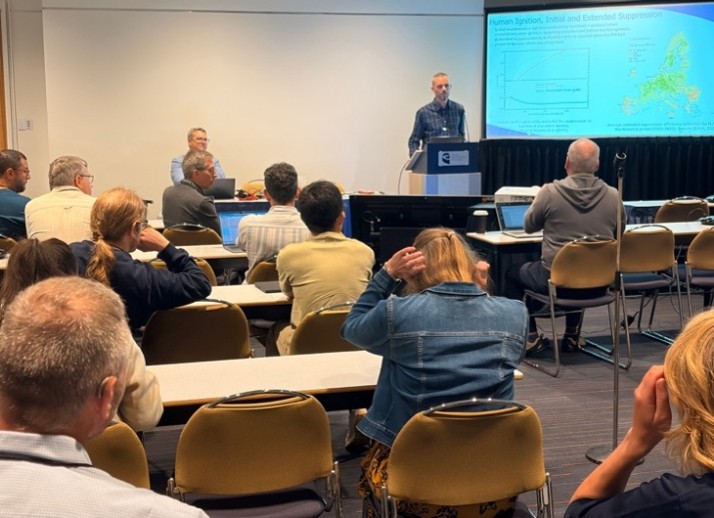
Figure 1. Andrey Krasovskiy presenting the FLAM Model and its application to the Workshop participants.
Boreal forests are facing unprecedented levels of disturbance from wildfire. From the large fires in Sweden in 2018, to the record seasons in Siberia in 2021 and across North America and Asia in 2023–2026, these events are an indication of what is to come, not only for the boreal, but for forests around the globe under changing climate. Understanding this risk means looking beyond burned area alone and investigating the full chain that connects fire to emissions (pollutants), population exposure, and health - their impacts on people, forests, and health require bringing together expertise from across the fire-science community.
 © Florian Kraxner | IIASA
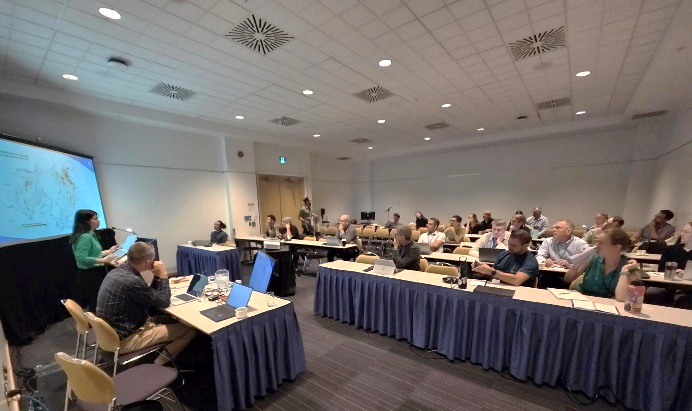
Johanna San Pedro introducing the Fire&Ice project and Breakout Session Instructions.
After an introduction to the project with a focus on the novel Fire&Ice methodology combining three IIASA models, including wildfire climate impacts and adaptation model (FLAM), demographic model, and GAINS, participants worked through three themes in breakout groups: the modelling of fire and emissions, population and health, and policy and action. Rather than simply presenting results, the team invited the community to identify the research gaps and uncertainties, and to consider who is most affected by fire and what to do in terms of policy actions.
 © Johanna San Pedro | IIASA
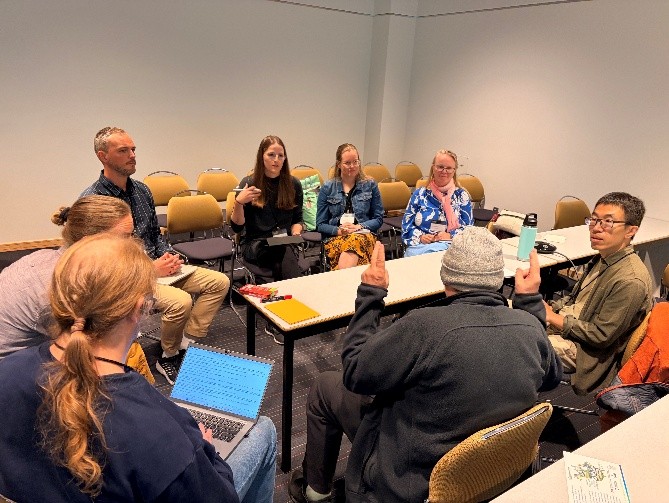
Modelling group working on the breakout session task.
The discussions were rich. On the modelling side, participants emphasized that managed and unmanaged forests must be treated as distinct challenges and understanding where forests are managed, where fires are suppressed, and how landscapes recover and change due to changing climate are all important factors in modelling.
 © Johanna San Pedro | IIASA
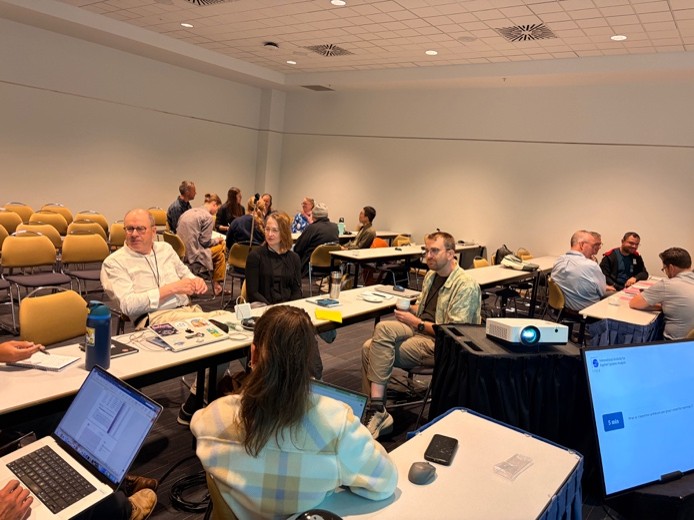
Population and Health group during the breakout session.
On population and health, the group highlighted that isolated, under-resourced communities are most exposed to both direct impacts, like evacuation and loss of homes, and indirect ones like smoke and poor air quality – though wealthy communities in fire-prone landscapes are not immune. And because smoke travels long distances, distant fires can matter as much as local ones.
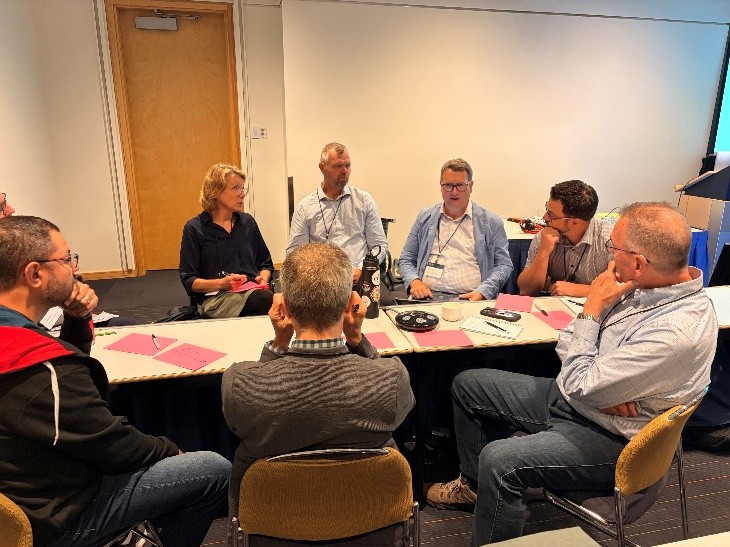 © Johanna San Pedro | IIASA
Policy group discussing during the breakout session
On policy, participants pointed to the costs that usually go uncounted, like cultural loss, long-term mental health, and cascading effects such as polluted drinking water, lost wages, and grounded flights. They highlighted the value of cultural and First Nation fire knowledge and prescribed burning and called for greater coordination across borders when fighting fire. As to which stakeholders we should involve in decision making relevant to this, they identified insurers to firefighters to communities who need a greater voice in decisions.

We are here, for the first time, trying to bring these silos together. That's why a workshop like this matters.
The workshop brought together wide expertise that will directly inform the next phase of the Fire&Ice Project, from the modelling of fire and emissions to the way we account for population, health, and policy. We are grateful to everyone who contributed their insights, and we look forward to continuing the conversation and the collaborations that began in beautiful Québec City.
News
13 September 2023
FLAM Sparks Interest and Conversation at the 2023 IBFRA Conference in Helsinki
Boreal forests often bring to mind a winter wonderland: spruce and pine forests as far as the eye can see, fluffy snow dotted with reindeer beneath a nighttime sky brightened by the aurora borealis. Climate change threatens this fragile, pristine habitat that spans 8 countries in the far north. Now boreal forests are associated not just with snowy landscapes, they are becoming synonymous with raging wildfires and massive plumes of smoke, such as those found currently in Canada.
Mitigating the threats posed by climate change in this unique ecosystem and discussing the most recent boreal-related research is the focus of the International Boreal Forest Association conference. Organized in large part by IIASA’s own Florian Kraxner, IBFRA 2023 was held in Helsinki, Finland, where researchers from around the globe gathered to discuss recent findings, foster new connections, and contribute to a plan of attack to save boreal forests as we know them.
30 August 2023
The IIASA Summer Experience: A Blend of Learning and Experience in a nurturing atmosphere
Every summer, IIASA turns into a buzzing hub of knowledge seekers, and this year is no different! The AFE FLAM team welcomed three interns and three YSSP fellows this summer and we took a moment to chat with Rasheed, Adrian, Laura, and Lawrence about their experiences and goals.

20 April 2023
IIASA Director General visits Canada
IIASA Director General Albert van Jaarsveld attended the Canadian Institute for Advanced Research (CIFAR) joint Council and Program Directors' meeting on 17 April and a symposium on misinformation from 18-19 April as part of the CIFAR Research Council.