News
23 October 2026
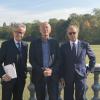
IIASA and Italy deepen dialogue during visit by CNR President
On 19 October, Professor Andrea Lenzi President of the National Research Council of Italy (CNR), visited IIASA for discussions on strengthening scientific cooperation and exploring future opportunities for strategic collaboration between Italy and IIASA.
15 October 2026
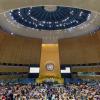
IIASA strengthens science diplomacy ties at UNGA in New York
IIASA Science Diplomacy Director and Head of Communications and External Relations Susie Kitchens represented the Institute at the United Nations General Assembly (UNGA) High-level Week and Science Summit in New York in September, contributing to discussions on how science and international cooperation can help address shared global challenges.
14 October 2026
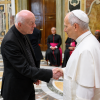
IIASA Director General joins leading scientists at Vatican to discuss the future of science
IIASA Director General, Hans Joachim (John) Schellnhuber joined leading scientists, Nobel laureates, and international science leaders at the Pontifical Academy of Sciences in Vatican City towards the end of September to explore how science can help address humanity's most pressing challenges.
Focus
02 October 2026
From Cold War bridge to global mediator: Science diplomacy for a fractured world
On 4 October the International Institute for Applied Systems Analysis (IIASA) in Laxenburg quietly turns 54. The date matters less as an anniversary than as a reminder of an experiment begun in the Cold War: whether science can preserve dialogue when politics fails to. More than half a century later, that experiment has new urgency.

15 September 2026
50, 50, 30: Why Nordic countries work with IIASA
Finland and Sweden celebrate 50 years of IIASA membership in 2026, while Norway marks 30. What has sustained these Nordic partnerships for so long, and what makes them valuable today?