Nature Sustainability Chief Editor Monica Contestabile will present a seminar at IIASA on the sustainability research landscape and the challenges of publishing interdisciplinary work. The session includes an overview of the editorial and peer-review processes at Nature Sustainability, offering insights into how research is prepared for publication.
During a recent visit to Brazil, IIASA Director General, Hans Joachim (John) Schellnhuber, and Deputy Director General, Karen Lips, met with representatives from government agencies, research institutes, universities, and NGOs to explore opportunities for collaboration on some of the world’s most pressing sustainability challenges.
Population and Just Societies Program scientists will present and discuss latest IIASA research at the European Population Conference-EPC 2026 organized by European Association for Population Studies (EAPS) in collaboration with the University of Bologna in Italy.
The Rapid Impact Model Emulator (RIME) and its probabilistic extension, RIME-X (Rapid Impact Model Emulator Extended), are lightweight, open-source software tools developed at IIASA to bridge the gap between global emissions pathways and climate impacts and risk assessment. These emulators enable researchers to explore thousands of potential futures in seconds, facilitating a deeper integration between the climate impact (IPCC WGII) and mitigation (IPCC WGIII) communities.
On Thursday, 26 March, IIASA hosts a group of young minds from the Keimgasse High School in Mödling to connect "systems thinking" with an all time favourite, chocolate.
IIASA, together with the College of Population Studies, Chulalongkorn University, will host an intensive and internationally recognized training in advanced demographic analysis with applications to aging, health, and education, taking place in Thailand from 2–25 November 2026.
IIASA Gender Equality and Diversity, Equity, and Inclusion Officer, Anastasia Aldelina Lijadi, will represent the Institute at the EARMA Annual Conference 2026 to discuss strategies to address workplace microaggressions. Her contribution underscores IIASA’s commitment to advancing diversity, equity, and inclusion within the global research management community.
Join the online webinar to explore two new interactive simulation tools developed by the CHOICE project. Discover how these tools make Integrated Assessment Model scenarios for the food sector more accessible and help users understand how policies, behaviours, and food system choices can influence climate outcomes. See the tools in action and learn how they can support research and evidence-based decision-making
The IIASA Urban Futures Hub is a cutting-edge research initiative dedicated to studying and assessing how cities and urban systems can lead climate change mitigation and adaptation efforts from local to global scales. The Hub regularly brings together experts from various disciplines within and beyond the Institute to collaborate on assessing cities and climate change across diverse domains and scales. IIASA researchers Leila Niamir and Merle Quade share insights from the initiative's latest expert workshop.
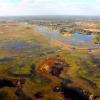
Development of a Climate Resilient Livelihoods Enhancement Programme for the Cubango-Okavango Basin (WBCLIMACORB)
Two new studies published in leading scientific journals conclude that stabilizing long-term climate risks will require sustained net-negative carbon dioxide (CO₂) emissions for centuries. Approaching the problem from distinct perspectives – legal and technological feasibility on the one hand, and economic optimization under uncertainty on the other – the research converges on a consistent message: reaching net zero is not enough.
The EU agri-food system is increasingly threatened by climate change while accounting for roughly one-third of the EU’s greenhouse gas emissions. A new report by the European Scientific Advisory Board on Climate Change, with contributions from IIASA researchers, warns that current policies are insufficient to address rising climate risks and meet EU climate targets.
Elisa Calliari, a Senior Research Scholar in the Systemic Risk and Resilience Research Group of the IIASA Advancing Systems Analysis Program, has been awarded a prestigious European Research Council (ERC) Starting Grant for a new project investigating how climate change reshapes the habitability of places and how societies respond.
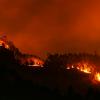
Development of a Wildfire Spread (Spotting and Re-ignition) Prediction Algorithm Incorporating IIASA’s FLAM Model (KFA)
Wolfgang Lutz will be a keynote speaker at the 8th World Congress of Education, taking place in Helsinki, Finland, from July 22 to 24, 2026.
IIASA recently welcomed Distinguished Visiting Fellow Éliane Ubalijoro, CEO of the Center for International Forestry Research and World Agroforestry (CIFOR-ICRAF), for a lecture on the importance of gender and social inclusion in forest and landscape governance and an interdisciplinary discussion on equity and sustainability.
Hands-on mini project- ‘My Future City’ for brainstorming a safer school street for children
Climate change reshapes lives, but not always the way headlines suggest. In this podcast, Roman Hoffmann joined Judith Kohlenberger to explore why most climate‑affected people stay close to home, and what that means for policy and preparedness.
This spring, leading experts will gather in Italy to mark the 250th anniversary of methane’s discovery and shape the next phase of methane action. Join this preview webinar to explore what’s coming and why it matters. You will hear expert perspectives, including from IIASA Senior Research Scholar Lena Höglund Isaksson, on methane science and policy.

Kyuil Kwak
Korea Research Foundation Postdoctoral Fellow (IACC, CDAT)