
What begins as a summer research experience can sometimes grow into a lasting collaboration. In this blog post, Jaewon Son reflects on her path from participating in the 2024 IIASA Young Scientists Summer Program (YSSP), to returning as a Guest Research Scholar with the Equity and Justice Research Group.
From June to August 2024, I participated in the Young Scientists Summer Program (YSSP) at IIASA. I was hosted by the Equity and Justice (EQU) Research Group in the Population and Just Societies (POPJUS) Program, as well as the Biodiversity, Ecology, and Conservation (BEC) Research Group in the Biodiversity and Natural Resources (BNR) Program. My research focused on the role of urban green spaces as nature-based solutions in Korea and Germany. Together with my mentors Juliette Martin and JoAnne Linnerooth-Bayer, we explored the institutional enablers and barriers that shape how these spaces are governed. You can read more about that work in an earlier IIASA blog post.
What made the YSSP experience so meaningful was how collaborative it was from the very beginning. Even before arriving at IIASA, we had already developed the research concept, interview protocols, and data collection plans. I especially appreciated the dedicated guidance I received from Juliette Martin, a researcher associated with both the EQU and BEC research groups, throughout the process. Her mentorship was instrumental in shaping the project and making the summer incredibly productive. I was particularly inspired by the institutional enablers and barriers framework developed as part of the PHUSICOS project, coauthored by Juliette, JoAnne Linnerooth-Bayer, and others. Juliette’s contributions to that work especially influenced the analytical approach I applied in my YSSP paper.
After the program ended, our collaboration continued. We recently submitted a manuscript based on my YSSP research. I am especially happy that we incorporated EQU’s Applied Justice Taxonomy and Assessment Framework (AJUST), which helped us highlight the multiple dimensions of justice that are often overlooked in urban green space governance. The manuscript is currently under editorial review and will become the second paper in my cumulative doctoral thesis.
During the YSSP, a new idea emerged. We began to explore how different values of nature influence urban green space governance. This idea led to a new project applying the Intergovernmental Science-Policy Platform on Biodiversity and Ecosystem Services (IPBES) Nature Futures Framework (NFF). To pursue this, I returned to IIASA from September to October 2025 as a Guest Research Scholar in EQU group. This time, I worked with my YSSP mentors and Elliott Woodhouse to analyze how plural values of nature are reflected in governance practices in Korea and Germany.
It was a fortunate coincidence that my visit overlapped with the first author meeting of the IPBES Spatial Planning and Connectivity Assessment, held at IIASA in late September. Interacting with the authors was incredibly inspiring and reinforced the relevance of our work. We are now finalizing the manuscript and aim to submit it by the end of the year. This will be the third and final paper in my doctoral thesis.
Although my research stay is ending, I will return to IIASA soon to present a poster at the INQUIMUS conference, organized by EQU in early December. The theme, Centering Justice in Climate Risk Management for Transformative Change, aligns perfectly with my research interests.
Reflecting on my journey, I cannot recommend the YSSP program enough. If you are in your second or third year of a PhD, I especially encourage you to apply. While the program is open to candidates at different stages, those in the middle of their PhD often find it particularly rewarding and are more likely to be prioritized. I joined YSSP during the middle stage of my own PhD and found it to be a turning point in my academic path, opening doors to new ideas, collaborations, and friendships. I am grateful for the support I received from the Institute for Technology Assessment and Systems Analysis (ITAS), Karlsruhe Institute of Technology (KIT) during YSSP, and from the Graduate School for Climate and Environment (GRACE) for my current research stay. I am excited about the possibilities ahead, including expanding our work with the AJUST framework, and I look forward to continuing this journey with the IIASA community.
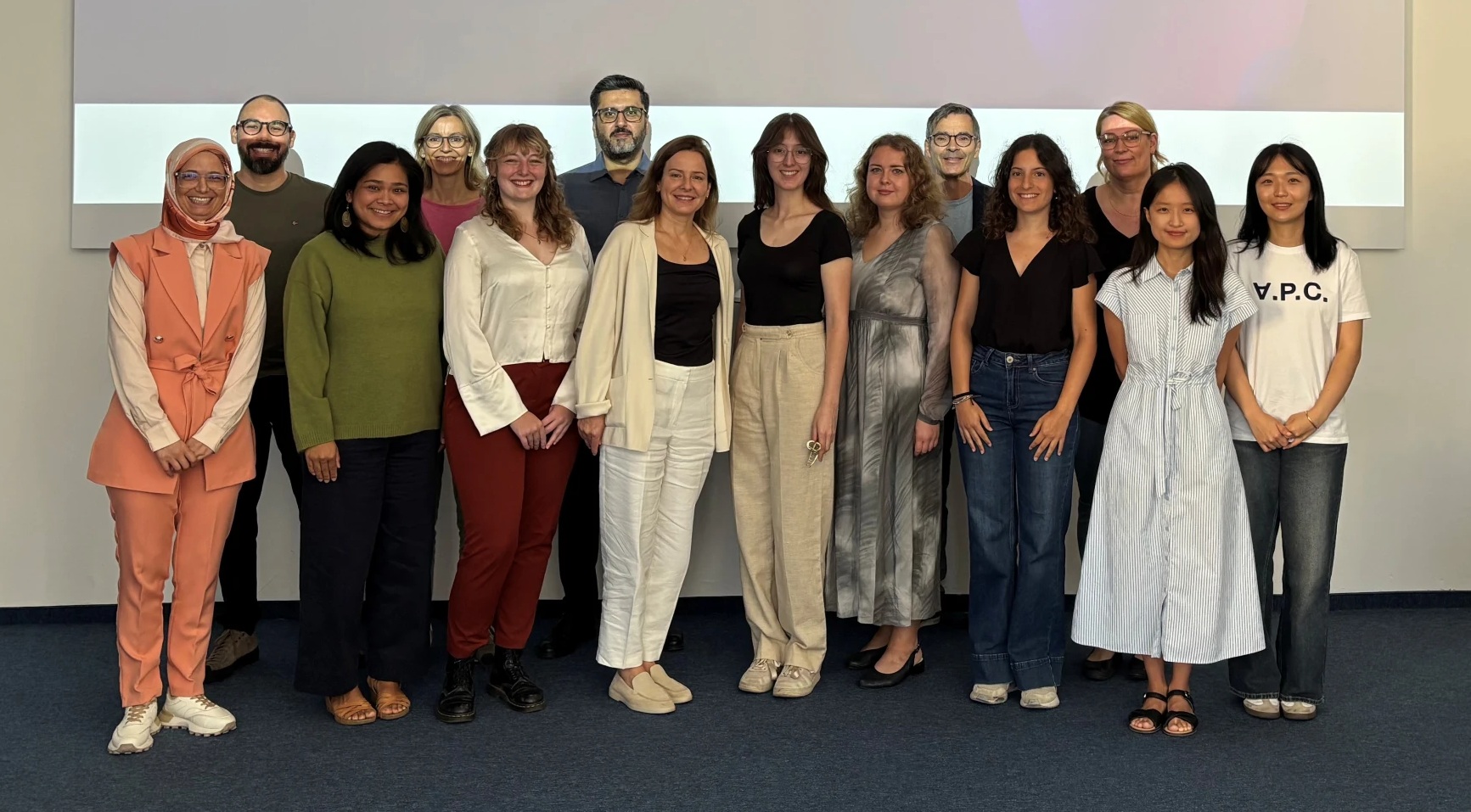 © IIASA
Jaewon Son with a group of new IIASA staff at their first day orientation session.
Note: This article gives the views of the author, and not the position of the Nexus blog, nor of the International Institute for Applied Systems Analysis.