

IIASA Distinguished Emeritus Research Scholar and Sherpa for Asia, Wolfgang Lutz, has been awarded the Austrian Decoration for Science and Art (Österreichisches Ehrenzeichen für Wissenschaft und Kunst).
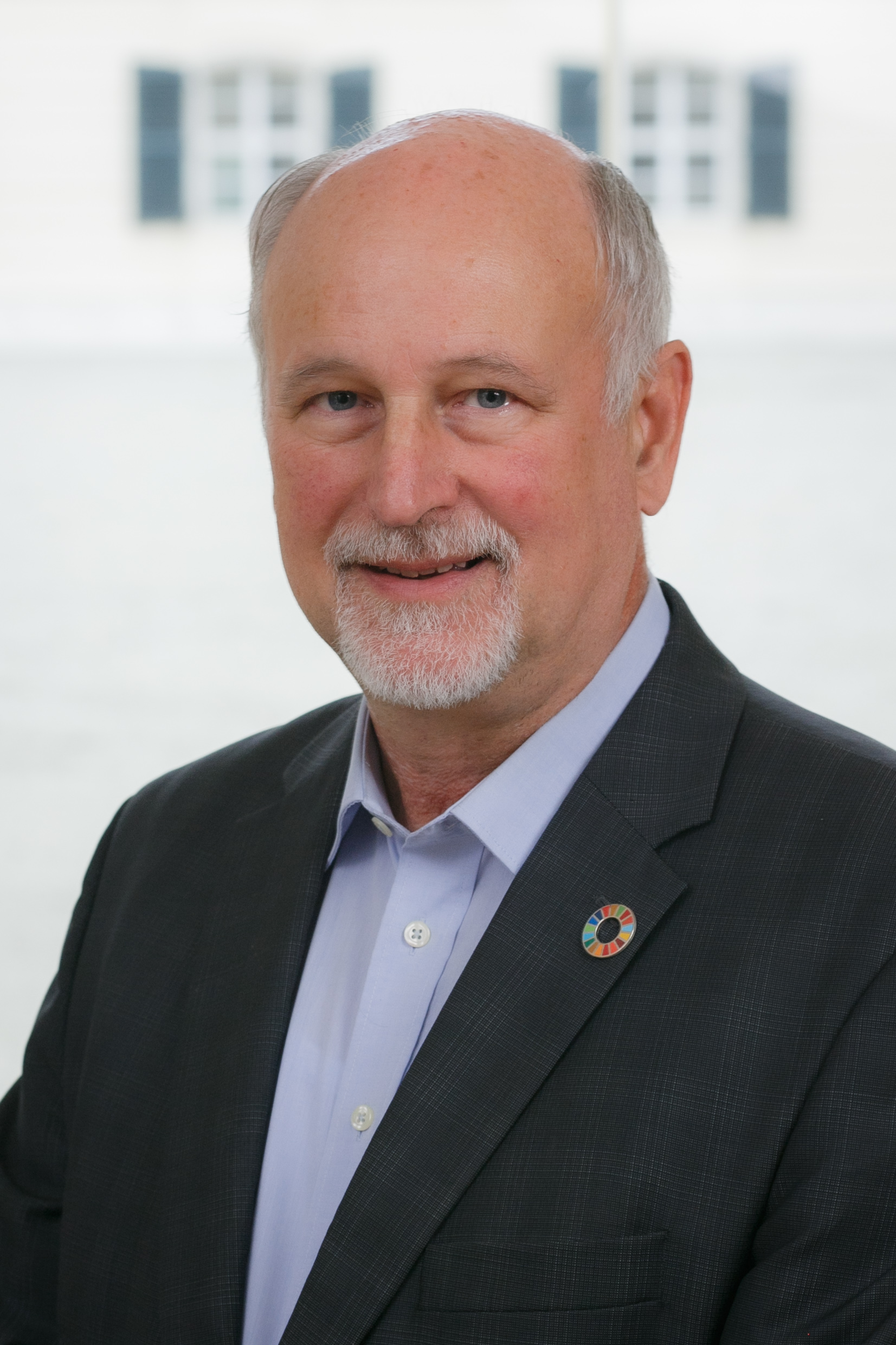 © Silveri | IIASA
The distinction was conferred in person by Austrian Federal President Alexander Van der Bellen on 14 October 2025 at the Presidency in Vienna. The award recognizes Lutz’s outstanding scientific contributions and long-standing impact on the national and international research landscape.
The honor was announced earlier this year by Professor Anton Zeilinger, Nobel laureate and Chair of the Curia for Science of the Decoration for Science and Art, who informed Lutz of his election by the Curia’s members. The Austrian Decoration for Science and Art is the highest recognition granted by the Republic of Austria for exceptional achievements in these fields.
Membership in the Decoration is limited to 36 Austrian and 36 foreign citizens in each of its two sections – Science and Art – making it one of the country’s most prestigious distinctions.
Lutz, who has been affiliated with IIASA for several decades and is founding director of the Wittgenstein Centre for Demography and Global Human Capital (a collaboration between IIASA, the Austrian Academy of Sciences, and the University of Vienna), is renowned for his pioneering work in making education, especially female education, a central dimension of demographic modeling, as well as his ability to translate rigorous scientific research into public discourse on critical global challenges such as population-change, human capital, and climate adaptation. Among many milestones, Lutz has published hundreds of peer-reviewed articles, been appointed to United Nations expert groups, and developed novel forecasting methods that incorporate educational attainment alongside age and sex. In 2024, he was also awarded the Yidan Prize, the world’s most highly esteemed education accolade for his research on the role of education as a driver of sustainable development.
At IIASA, he has played key roles including Acting Director General and Interim Deputy Director General for Science, and as Program Director of the Population and Just Societies Program. His leadership in building international research infrastructure, such as the Wittgenstein Center, has cemented Austria and IIASA’s reputation as a hub for cutting-edge demographic research.
IIASA congratulates Wolfgang Lutz on this achievement and celebrates the vital role of demography and human capital research in shaping sustainable futures.
News

24 September 2026
IIASA researcher joins Austrian Academy of Sciences working group on integrated carbon neutrality
On 15 September, Principal Research Scholar Thomas Schinko represented IIASA at a high-level event of the Commission on the De-Fossilization and Carbon Neutrality of the European Energy Systems (DEE) of the Austrian Academy of Sciences (OEAW). The meeting denoted the kick-off workshop of the newly established DEE Working Group "Transsectoral and Transcontinental Integration”.
10 September 2026
Hop & Mop project’s Co-creation of mini-blocks: schoolchildren’s teamwork as the center of developing ideas
Schoolchildren are the stakeholders that will be benefit from the city not only for today, but also for a long time in the future. As such it is crucial to include them in designing their environment. They have a fresh eye on spotting the issues and can think creatively and at the same time critically to come up with ideas to develop their environment. Hop & Mop project is aimed to work with the schoolchildren to design mini-block prototype in the streets near their schools.
24 August 2026
Project "G/ArtenLeben": Turning gardens into biodiversity hotspots together
How can private gardens help support biodiversity in Austria? The new IIASA citizen science project G/ArtenLeben brings science and gardening practice together. At three G/ArtenCafés in Lower Austria, hobby gardeners are invited to contribute their knowledge and experience to research and work alongside scientists to explore how gardening can help biodiversity thrive.