


Under the leadership of IIASA Director General Hans Joachim (John) Schellnhuber, the Science and Timber Construction Alliance (SITCA) was officially launched today. The initiative aims to transform the construction sector into a driver of climate protection through sustainable forest management and modern timber construction.
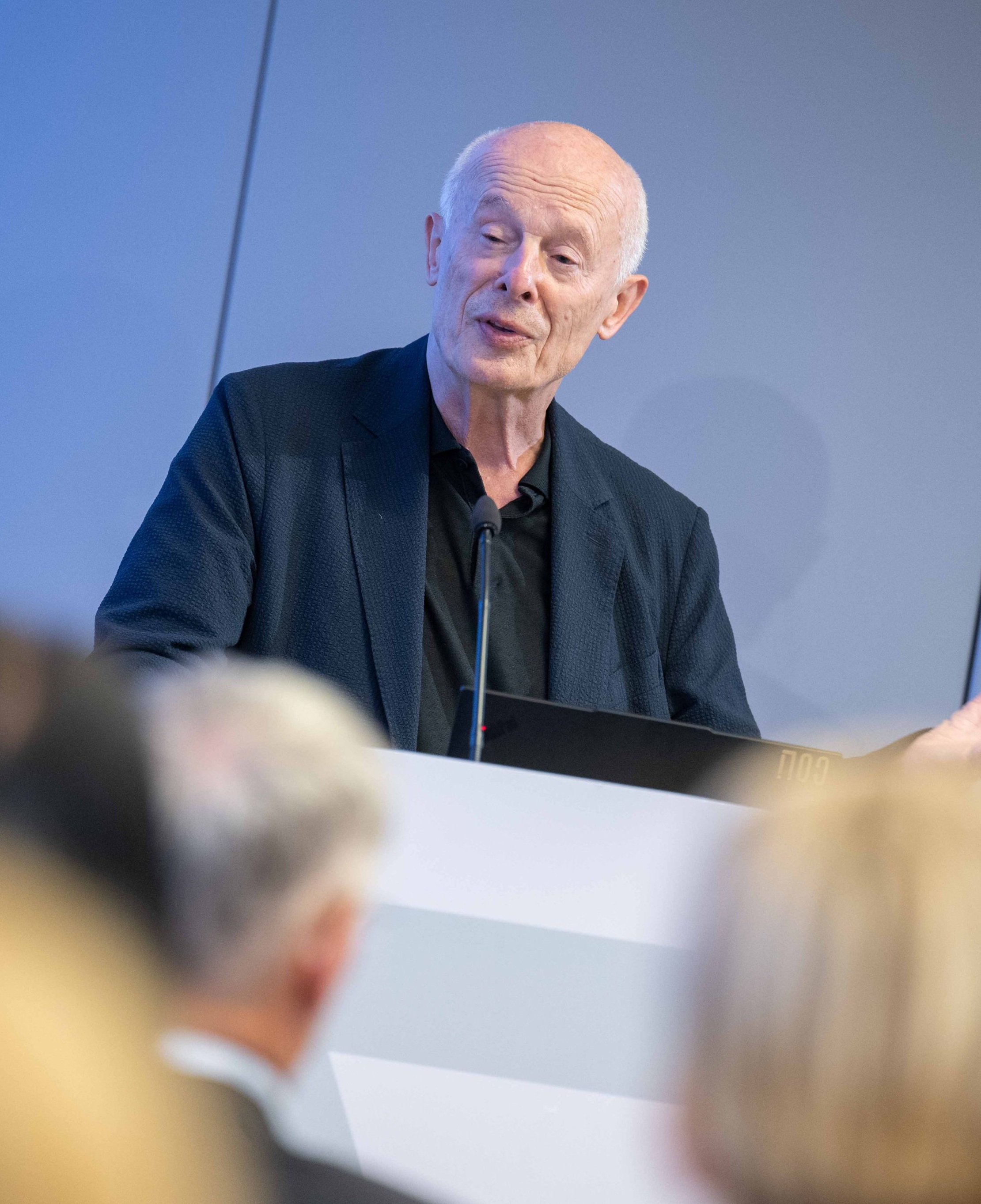 © BMLUK-Hemerka
IIASA Director General Hans Joachim (John) Schellnhuber
Together with its founding partners IIASA, Hilti, WIEHAG, binderholz, EGGER, Stora Enso, and the Austrian Federal Forests, SITCA combines scientific expertise with the innovative strength of leading companies from the construction and forestry sectors.
“We are approaching dangerous tipping points in the climate system. At the same time, the global built environment is responsible for more than one-third of CO₂ emissions, making it the single greatest leverage point for preventing a looming ‘Hothouse Earth’ scenario,” emphasized Schellnhuber at the launch event in Vienna. “Cities must be transformed from sources of CO₂ into carbon sinks. Timber construction is the most important tool to achieve this.”
Science explains the concept of the “Forestry-Construction Pump”
“The combustion of fossil fuels and the destruction of natural ecosystems have significantly increased the concentration of CO₂ in the atmosphere. Trees absorb CO₂ through photosynthesis and store the carbon in their wood. When this wood is used in long-lasting buildings, the carbon remains locked away for decades or even centuries, while new trees grow in the forest and absorb additional CO₂. In this way, CO₂ is continuously removed from the atmosphere and, metaphorically speaking, ‘pumped’ via the forest into the built environment. Sustainable forest management and timber construction, combined with reuse and modern recycling technologies, can therefore create a long-term carbon sink,” explains Schellnhuber, outlining the fundamental concept underpinning SITCA.
Robust facts for business and industry
The alliance’s primary objective is to provide scientific evidence and raise awareness among decision-makers.
“With SITCA, we are creating the scientific foundation needed to convince decision-makers in politics, public administration, real estate, and the construction industry around the world of the need for a paradigm shift from CO₂-intensive materials to regenerative building materials,” stresses Dr. Erich Wiesner, CEO of WIEHAG, highlighting the alliance’s central mission.
Strong political support
Federal Minister Norbert Totschnig stated: “Building with wood saves CO₂ twice over. On the one hand, carbon is stored in wood over the long term; on the other hand, the use of emission-intensive construction materials is reduced. This is why Austria has consistently promoted timber construction for many years, for example through endowed professorships in timber engineering and the Austrian State Prize for Timber Construction. Particularly in multi-storey residential construction, however, there remains enormous untapped potential. Through initiatives such as SITCA, we bring together science, industry, and policymakers, strengthen innovation, and create the knowledge needed for a climate-friendly and sustainable future.”
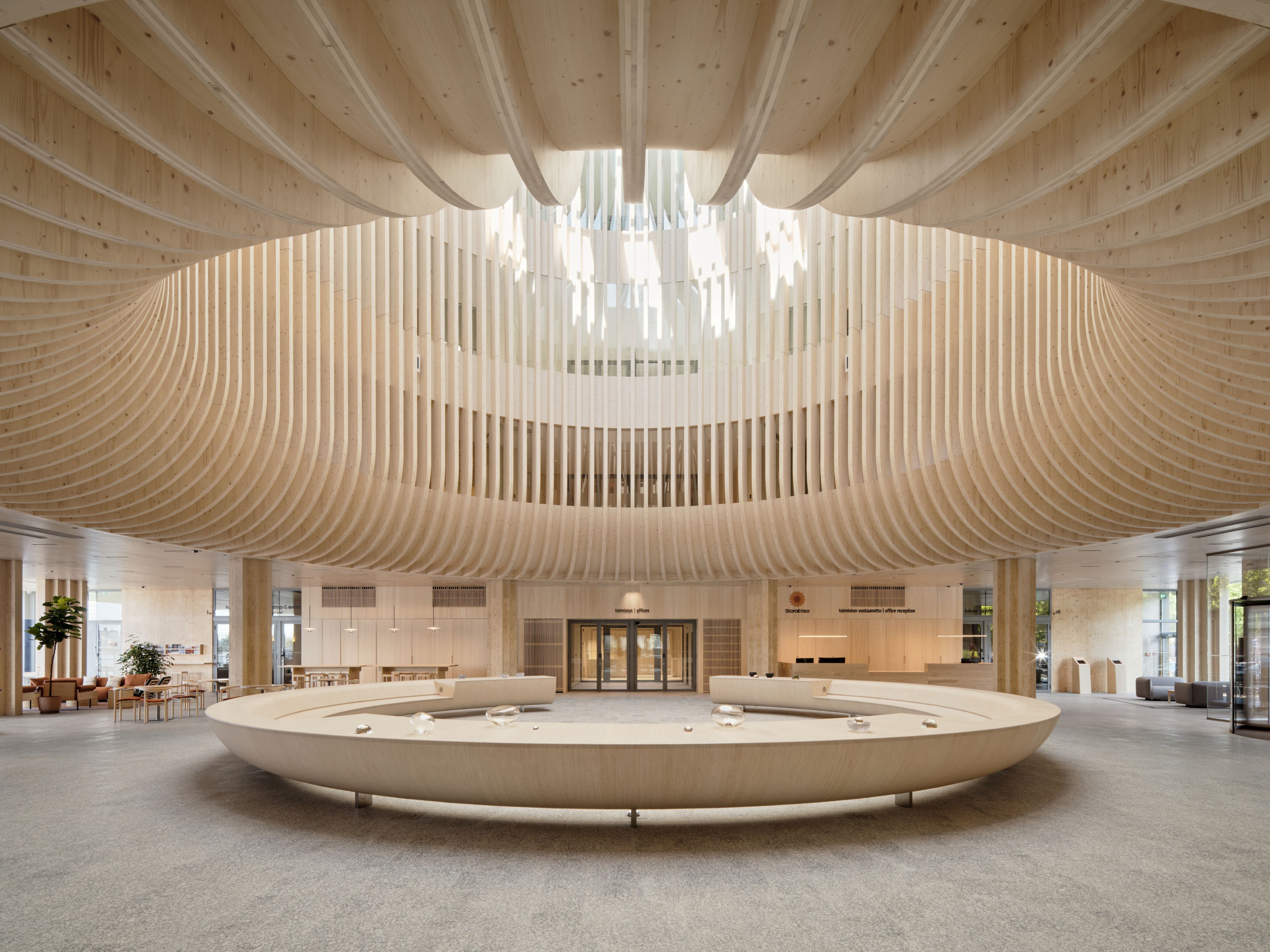 © Tuomas Uusheimo
Stora Enso Head Office - Katajanokan Laituri bench
A holistic approach: Biodiversity and public acceptance
For Prof. Dr. Daniela Kleinschmit, President of the International Union of Forest Research Organizations (IUFRO), the societal dimension is crucial: “Timber construction can only succeed with healthy forests. We integrate biodiversity and social considerations from the very beginning to ensure the public acceptance required for this transformation.”
IUFRO will be represented on the alliance’s advisory board as a scientific partner and will contribute expertise from its global network of researchers.
International cooperation
SITCA works in close coordination with the communication initiative “Grow the Solution,” developed by the Food and Agriculture Organization of the United Nations (FAO).
“Globally, we are faced with a discrepancy between the urgent need for climate-friendly building materials and the still limited public awareness of sustainably produced wood in construction. We welcome the SITCA initiative, as it helps provide fact-based information on sustainable, forest-based solutions,” said Dr. Ewald Rametsteiner, Deputy Director of the FAO Forestry Division, underscoring the initiative’s international significance.
A strong foundation from industry and policymakers
In addition to the scientific community, SITCA is supported by major players across the sector. The founding partners, together with HASSLACHER Group, which joined last week as the first new industry partner, represent the entire forest-based value chain.
About SITCA
The Science and Timber Construction Alliance (SITCA) is a global platform dedicated to advancing timber-based construction through scientific evidence.
SITCA’s objectives:
- Strengthen the scientific foundation: Generate robust knowledge on sustainable timber availability, carbon sequestration, and future-proof timber construction systems.
- Connect stakeholders and foster dialogue: Bring together relevant stakeholders and strengthen the exchange of scientific findings and shared messages.
- Raise awareness and support decision-making: Communicate the benefits of sustainable forest management and timber construction on the basis of scientific evidence and embed them in policymaking, business, and society.
For more information: www.sitca.earth
News
15 October 2026
IIASA strengthens science diplomacy ties at UNGA in New York
IIASA Science Diplomacy Director and Head of Communications and External Relations Susie Kitchens represented the Institute at the United Nations General Assembly (UNGA) High-level Week and Science Summit in New York in September, contributing to discussions on how science and international cooperation can help address shared global challenges.

13 October 2026
Connecting disciplines and inspiring new ideas with the Environment and Climate Research Hub
IIASA Deputy Director General Karen Lips delivered a keynote at the University of Vienna's recent Environment and Climate Research Hub (ECH) Research Frontiers Workshop in Bad Vöslau, Austria, emphasizing the importance of interdisciplinary collaboration in addressing complex environmental and climate challenges.
12 October 2026
Connecting science across borders: IIASA Committee meets University of Salzburg
How can universities and international research organisations work together to address the complex challenges of a changing world? This question shaped a full day of scientific exchange at the University of Salzburg on 6 October, when the Austrian IIASA Committee met with members of the University community to discuss research, collaboration and opportunities for researchers and students.