


This project highlights the transformative role of education in sustainable development, with a regional focus on Africa and Southeast Asia. By applying advanced demographic modeling methods, it aims to provide policymakers with data-driven insights into how education can shape long-term outcomes related to health, economic growth, poverty reduction, and climate resilience.
 © IIASA
Led by Wolfgang Lutz, 2024 Yidan Prize for Education Research Laureate, the initiative builds on decades of scientific work that has positioned education as a key variable in development and climate analysis.
The project is structured around three interconnected components. Together, they aim to strengthen research capacity, inform policy, and enhance education data systems. While each component produces distinct outputs, their combined impact is designed to be mutually reinforcing.
The first component will produce a comprehensive report on the demographic and statistical methods used in education and human capital modeling. Developed in collaboration with UNESCO’s Institute for Statistics and the Global Education Monitoring Report in the framework of the Demographically Coherent Education and Literacy Statistics (EduCohorts) project, this work aims to become an authoritative reference. It will also apply these methods to improve education statistics across African countries, contributing to international development indicators.
The second component focuses on training in demographic modeling, generating country-specific policy scenarios, and organizing policy workshops. A major output will be a publication on Africa’s future human capital, outlining alternative education trajectories for nearly all sub-Saharan African countries. The project also aims to build a sustainable foundation for ongoing research through partnerships, particularly with the University of Cape Town (UCT). Six promising young scientists from different African countries will be employed by the Southern Africa Labour and Development Research Unit (SALDRU) at UCT to work on this initiative in close collaboration with IIASA.
 © IIASA
African Human Capital Data Sheet 2026
A first major output of the project is the African Human Capital Data Sheet 2026, developed by IIASA together with partners at SALDRU. It combines demographic projections with innovative indicators of education quality and human capital, including the Skills-in-Literacy Adjusted Mean Years of Schooling (SLAMYS) indicator developed through earlier IIASA research.
The data sheet provides policymakers with evidence on how investments in education, particularly girls’ education and learning quality, influence fertility decline, workforce productivity, and Africa’s future demographic dividend. It includes continental, regional, and country-level indicators and is available in English and French, together with dedicated Senegal Country Profiles in both languages.
More information and downloads are available at www.africanhumancapital.org.
The third component aims to raise awareness of education’s role in reducing vulnerability to climate change. While education is now integrated into global climate modeling through initiatives like the Shared Socioeconomic Pathways, it remains underrepresented in the risk and adaptation policy communities. This component will work to bridge that gap.
Together, these efforts aim to position education at the heart of development planning, particularly in regions facing both demographic shifts and environmental challenges.
This initiative builds on IIASA’s long-standing leadership in population science through its Population and Just Societies Program, which has pioneered multidimensional demographic modelling and integrated education, health, age, and labour dimensions into sustainable development analysis. The current project, supported by the Yidan Prize Foundation, connects directly to this legacy by applying these advanced methods to human-capital dynamics in Africa and Southeast Asia, linking education data with demographic trends, climate vulnerability, and policy-relevant forecasting to generate actionable insights for development planning.
 © Yidan Prize Foundation
About the Yidan Prize Foundation
The Yidan Prize Foundation is a global philanthropic foundation, with a mission of creating a better world through education. Through its prize and network of innovators, the Yidan Prize Foundation supports ideas and practices in education, specifically, ones with the power to positively change lives and society. The Yidan Prize is the world’s highest education accolade that recognizes individuals or teams who have contributed significantly to the theory and practice of education. yidanprize.org
News
18 May 2026
African Human Capital Data Sheet 2026
The African Human Capital Data Sheet 2026: Past Trends, Skills, and Future Pathways presents new evidence on population trends by level of education, skills, and demographic transitions across the African continent.
02 February 2026
Education matters more than income to reduce premature adult mortality in India
IIASA researchers explored why mortality among adults of working age remains high in India alongside rapid economic growth, finding that education – at both individual and community levels – is more strongly associated with lower premature mortality than income or household wealth.
21 October 2025
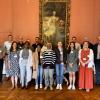
Education and human capital in focus
From 15 to 19 September 2025, IIASA hosted a Symposium on Human Capital for Sustainable Development – A Focus on Africa. Supported by the Yidan Prize project funds, the event brought together researchers, postdoctoral fellows, and PhD students from Africa and Europe to advance collaboration on education, demography, and sustainable development.
Events
Chulalongkorn University, Thailand
Training workshop: Demographic analysis with applications to aging, health, and education
Hangzhou, China
A shared agenda for population ageing
Helsinki, Finland