Article: Blog Post
21 August 2024
To maximize the benefits of having experienced researchers from US institutions visiting IIASA as part of the Peter de Jánosi Fellowship, the current fellow was selected to train the next generation of young scientists as part of the first IIASA Summer School for Systems Modeling. IIASA Science writer, Vladimir Tarakanov, sat down with Nina Fefferman to get her first impressions of the Institute.
Event
Brussels, Belgium
The Mid-term Events of CIRCOMOD and CircEUlar projects, along with the European Environment Agency (EEA) Workshop, will take place on the 27th of September in Brussels.
Event
Cartagena, Colombia
The 14th International Conference of the IDRiM Society entitled "Disaster Resilient Communities for Life" will be held on 28 - 30 August 2024 in Cartagena, Colombia. It is organized by Colombia's National Unit for Disaster Risk Management (UNGRD) in collaboration with IDRiM and in partnership with various national and international organizations.
Event
Laxenburg, Austria
IIASA, in collaboration with its US partner "Friends of IIASA", is organizing the inaugural workshop for the proposed Raiffa Center for Science Diplomacy. This event will gather international experts to shape the Center's framework and identify key areas where it can make a lasting impact.
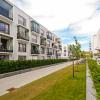
Analysis of Life-Cycle Greenhouse Gas Emissions and Removals of EU Buildings and Construction
Article: News
16 August 2024
Food and energy production have caused substantial nitrogen pollution, harming air and water quality and posing risks to the climate and ecosystems. A new study shows how nitrogen interventions can reduce pollution, improving health, and supporting the Sustainable Development Goals (SDGs).
Event
Frascati, Italy
The URBIS24 Workshop will gather a diverse community of urban policymakers, Earth Observation researchers, service providers and various end-users. Taking place at ESA/ESRIN in Frascati, Italy, during September 16–18, 2024, this event will offer an insightful exploration of urban challenges and innovative EO-integrated solutions.
Article: News
14 August 2024
Focusing on Sweden, a new IIASA study assessed the feasibility of recovering phosphorus from municipal wastewater as an alternative sustainable source of this non-renewable mineral.
Article: News
13 August 2024
IIASA Director General Hans Joachim (John) Schellnhuber spoke to Falter's Katharina Kropshofer about why tipping elements in the Earth system are so difficult to predict.
Event
Groningen, The Netherlands
On Tuesday, the 17th of September 2024, CircEUlar will organize a stakeholder workshop at the House of Connections in Groningen (The Netherlands).
Event
Vienna, Austria
The ESA Living Planet Symposium 2025 on Earth observation will be held in Vienna, where numerous colleagues from the NODES research group will be actively participating.
Event
Krakow, Poland
Research Scholar Steffen Fritz at the EuroGEO conference.
Event
IIASA Gvishiani room and Zoom
We are pleased to cordially invite you to the upcoming IIASA Young Scientists Summer Program 2024 – Final Colloquium.
Article: News
12 August 2024
Despite advancements in clean energy, global CO2 emissions continue to rise. IIASA researchers contributed to a new international study that underscores the importance of integrating technological advancements with robust institutional capacities to formulate effective climate policies.
Article: News
12 August 2024
The RESIST project has made significant progress through active collaboration with IIASA's National Member Organizations (NMO). Key recent achievements include setting up collaborations with national researcher partners and consulting with local experts and stakeholders in respective case study regions (listed below).
Event
Online
Join us for this insightful webinar titled, Exploring research that tackles the UN Sustainable Development Goals and evidencing, featuring IIASA Deputy Director General Karen Lips.
This page is for participants of the Urban ReLeaf General Assembly 2025.
Elisa Nobile
Guest Researcher (EM)
Resilience and Malleability of Social Metabolism (REMASS)
Event
Vienna and Laxenburg, Austria
Forty global experts from the China Council for International Cooperation on Environment and Development (CCICED) are gathering in Vienna to explore the city’s innovative urban climate initiatives. This pivotal event brings together stakeholders focused on the intersection of digitalization and green technology for sustainable urban development. Collaborating with prestigious institutions from Germany, China, the UK, and Austria, the event aims to develop strategies that leverage digitalization and green technology, emphasizing the crucial role of international cooperation in tackling global climate challenges.