



A new IIASA study explores waste management systems and reveals that achieving zero waste leakage by 2030 is unlikely, potentially jeopardizing related Sustainable Development Goals. The authors emphasize the need for global cooperation, particularly across four regions, to responsibly manage waste disposal.
Waste leakage to aquatic ecosystems is a major concern threatening biodiversity as well as human health. Inadequate disposal of waste, particularly plastic waste, has been documented in all the major ocean basins, beaches, rivers, lakes, and even in remote environments such as the Arctic and Antarctic. Previous studies have focused on estimating specifically plastic emissions into the oceans. However, no study has comprehensively assessed waste leakage into aquatic environments from a waste management perspective.
IIASA researchers adopted a waste systems perspective to identify hotspots of land-waste leakage, and determined which rivers, lakes, and coastal areas are particularly at risk. The results indicate a need for urgent action.
“Our study shows that the majority of leakage of municipal solid waste – everyday items that are discarded by people – into aquatic environments occur in Africa, China, India, and South Asia. It’s necessary to start focusing on improving waste management systems in these affected areas,” explains study lead author Adriana Gomez Sanabria, a researcher in the Pollution Management Research Group of the IIASA Energy, Climate, and Environment Program.
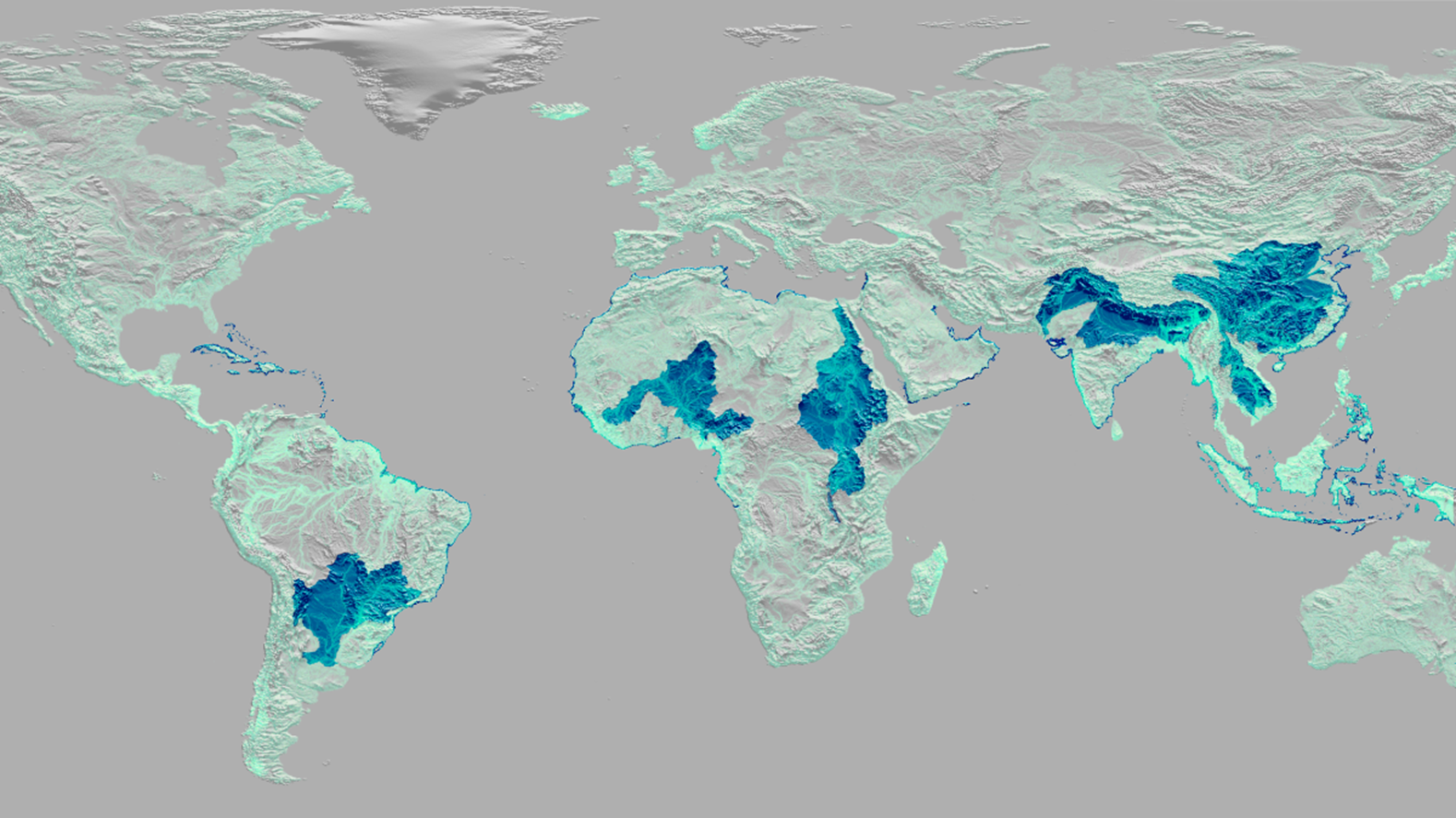 © Source: Adriana Gomez Sanabria
Fig.1. Aquatic ecosystems at higher risk of receiving land-based waste. Dark blue highlights key areas (including rivers and their basins, and coastal zones) with the highest risk of receiving land-based waste. Neon represents all the other rivers and coastal areas.
The study highlights that focusing on single waste streams can lead to unintended consequences. For example, as single-use plastic cups are replaced with paper cups, the amount of paper waste has increased. Therefore, it is crucial to set targets that address multiple waste streams simultaneously. Additionally, the study emphasizes the importance of universal waste collection as the primary strategy to prevent waste leakage into terrestrial and aquatic environments, even in a scenario where overall waste generation is reduced.
“Our analysis shows that there is a pressing need to establish a standardized framework to monitor waste generation, composition, and flows. This framework should help us track the effectiveness of actions, including political, economic, and technological measures aimed at reducing waste and improving waste management systems,” notes Florian Lindl, a study coauthor and researcher in the IIASA Pollution Management Research Group.
The research team notes that their study addresses a crucial gap in our understanding of how waste management systems play an important role in addressing various environmental impacts. By examining the interaction between waste management and waste leakage, effective strategies can be identified to reduce pollution in aquatic environments and preserve ecosystems. This knowledge is vital for shaping policies and promoting sustainable development practices that minimize the environmental footprint of our consumption habits.
“We need to understand that the primary function of waste management systems is to protect human health and the environment. As creators of the waste crisis, we must take responsibility by changing our behavior to reduce consumption through refuse, rethink, and reuse practices,” concludes Gomez Sanabria.
Reference:
Gomez-Sanabria, A., Lindl, F. (2024) The crucial role of circular waste management systems in cutting waste leakage into aquatic environments. Nature Communications DOI: 10.1038/s41467-024-49555-9
News
01 October 2026
Where the waters meet: Connecting global limits and local water management
Human activity and climate change are putting growing pressure on water resources, disrupting the predictability of the water cycle, and changing the availability and quality of freshwater. IIASA researchers and partners have developed a new framework for guiding water management and planning at the river-basin level, derived from the existing Global Water Planetary Boundary.

21 September 2026
Fairness informs how the world cuts emissions
Who cuts emissions fastest, and who supports others do so, are central questions in global climate action. New IIASA-led research shows that building fairness into climate models from the start can inform deliberations without changing the overall climate goal.

07 September 2026
Investing in climate and clean air action can deliver 15-fold returns
Every US$1 invested in tackling climate change and air pollution together can generate around US$15 in economic benefits, according to a report published today by the UN Environment Programme (UNEP) and the Climate and Clean Air Coalition (CCAC). This is higher than tackling climate and clean air separately and includes both market and non-market economic gains.