1
News
11 June 2025
Supporting the development of greenhouse gas emissions and removals projections in Latin America and beyond
IIASA researchers collaborated with the United Nations Environment Programme (UNEP) to develop a new practical guide focused on enhancing the technical robustness and transparency of climate reporting through the development of greenhouse gas (GHG) emissions and removals projections. The guide will strengthen national capacities for estimating projections necessary to achieve the goals of the Paris Agreement in Latin America and other regions of the world.
02 October 2024
IIASA and Latin American Ambassadors explore new collaborative opportunities
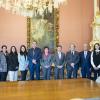
On 23 September 2024, a distinguished delegation of Heads of Missions from the Latin American region, led by its Dean, Ambassador Juan Francisco Facetti Fernandez, Permanent Representative of Paraguay to the International Organizations in Vienna, visited IIASA to explore avenues for meaningful research collaborations.
Focus

Annual Report 2023
Exploring plant-based food alternatives to advance global sustainability
Shifting diets could yield major improvements for climate and biodiversity. IIASA researchers found that replacing half of all main meat and milk products with plant-based alternatives by 2050 can reduce agriculture and land userelated greenhouse gas (GHG) emissions by 31% and halt the degradation of forests and natural land.

14 July 2023
Ambitious ecological restoration and deforestation control strategies could support Colombia’s climate and biodiversity targets
IIASA researchers Juliana Arbelaez-Gaviria and Eleanor Warren-Thomas have coauthored a new policy brief published with the Colombia team of the Food, Agriculture, Biodiversity, Land, and Energy (FABLE) Consortium, an initiative under the Food and Land Use Coalition (FOLU) and part of the UN Sustainable Development and Solutions Network (UNSDSN). The brief outlines how deforestation and ecological restoration in Colombia may impact carbon, biodiversity, and agricultural production by 2030.
Projects