
The PM Group focusses on solving immediate and near-term environmental (health and ecosystems impacts from pollution), climate (non-CO2 greenhouse gases), and social (widening inequality gaps) problems in a cost-effective way, providing support to policymaking at local and regional scales.
The PM Group addresses sustainability challenges in the near and long term through an improved understanding of the multiple benefits of policies and their distribution across society. The group has a strong focus on the development of new approaches for multi-sectoral policy interventions to manage pollution across different media (air, water, and soil) at various scales to address near-term concerns and enable long-term transformations and their public support towards a sustainable future. In particular, the group endeavors to enhance the systems perspective approach to address and explore issues such as the interactions and environmental impacts of pollution; assessment of sources of non-CO2 greenhouse gases; mitigation opportunities; approaches to address nutrient and material cycling; options for more equitable solutions; and improved methods for estimating the health and economic benefits of policy interventions.
Themes
Nutrient cycling
Non-CO2 greenhouse gas sources
Scenario Services and Scientific Software
Models, tools, datasets
Greenhouse Gas and Air Pollution Interactions and Synergies (GAINS)
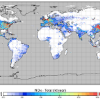
Global emission fields of air pollutants and GHGs
Policy applications
Centre for Integrated Assessment Modelling (CIAM)
Since 1999 IIASA has been hosting the Centre for Integrated Assessment Modelling (CIAM), one of the four centres assigned for the European Monitoring and Evaluation Programme (EMEP) of the Convention on Long-range Transboundary Air Pollution.
GAINS analyses for the 2009 United Nations Climate Change Conference - COP15 in Copenhagen
As input to the climate negotiations at COP15 in Copenhagen 2009, IIASA has developed a coherent international comparison of greenhouse gas mitigation efforts among Annex I Parties in 2020. This web site provides interactive access to an on-line calculator, underlying input data, and documentation of the methodology.
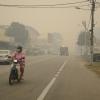
Pollution Management in Developing Countries
There is an urgent need in the developing world for increased support on pollution management in order to respond to the magnitude of the threat to human health and economies. Responding to pollution is a challenge that is solvable in the near term to save lives and unlock economic opportunity through action at the local, national, regional and global levels.
The methods developed by the PM Group offer an integrated perspective on cost-effective policy interventions that improve air quality, reduce negative health impacts, and deliver benefits for a wide range of development goals.
Projects
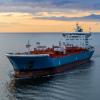
Finding solutions to pollution caused by shipping in Europe (EMERGE)
Development of a global integrated assessment modeling system for climate-air pollutants management focused on Northeast Asia (GUIDE)
Development of a collaborative, integrated management framework to improve future air quality in Northeast Asia (AQNEA)

Exploring National and Global Actions to reduce Greenhouse gas Emissions (ENGAGE)
Staff

Pengnan Jiang
Guest Postdoctoral Research Scholar (PM)

Florian Lindl
Research Scholar (PM)

Pallav Purohit
Senior Research Scholar (PM)

Wolfgang Schöpp
Guest Senior Research Scholar (PM)
News
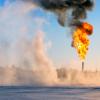
16 October 2026
Getting back on track to reduce methane emissions
A new study, led by IIASA researchers and coauthored by UNEP colleagues, finds that if governments fully implement their methane reduction plans, they could reduce global emissions by 11% between 2020 and 2030. This would reverse the current trend of increasing methane emissions, but would not be sufficient to achieve the goal of the Global Methane Pledge.

07 September 2026
Investing in climate and clean air action can deliver 15-fold returns
Every US$1 invested in tackling climate change and air pollution together can generate around US$15 in economic benefits, according to a report published today by the UN Environment Programme (UNEP) and the Climate and Clean Air Coalition (CCAC). This is higher than tackling climate and clean air separately and includes both market and non-market economic gains.

03 July 2026
Building bridges: Indian Ambassador visits IIASA
H.E. Ambassador Shambhu S. Kumaran, India's Permanent Representative to the International Organizations in Vienna, recently visited IIASA to explore deeper research cooperation and meet the Institute's Indian Young Scientists Summer Program (YSSP) cohort.
Events
Auditorium of the Institute of Atmospheric Sciences and Climate Change, UNAM
IIASA and partners launch collaboration for cleaner air in Mexico City
Focus

Annual Report 2025
Annual Report 2025: Energy, Climate, and Environment Program Highlights
The transition to a low-carbon future requires both ambitious action and a clear understanding of what works. In 2025, the Energy, Climate, and Environment Program produced research that helped clarify the opportunities, trade-offs, and practical pathways for accelerating climate mitigation and strengthening environmental sustainability.

27 April 2026
Cleaning the air in South Asia: Why science and cooperation matter
IIASA researchers Pallav Purohit and Zbigniew Klimont examined the urgent challenge of air pollution in South Asia and the opportunities to address it through science-based policy and regional cooperation. In the run-up to the recent International Vienna Energy and Climate Forum, they drew on recent research and real-world examples to highlight how integrated approaches to energy, climate, and air quality can deliver cleaner air, improved health, and more resilient economies for nearly one billion people.