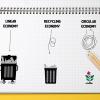
Join us for this highly topical lecture by IIASA Distinguished Visiting Fellow, Dirk Messner, moderated by IIASA Interim Deputy Director General for Science, Wolfgang Lutz.
The A1 Digital Life Summit 2022 will convene people to discuss about digital solutions for climate change. Charlie Wilson, Professor of Energy & Climate Change of the Oxford University and Visiting Research Scholar at IIASA (ECE), will participate as a panelist in the Panel Discussion.
Nebojša Nakićenović, Deputy Chair of the Group of Chief Scientific Advisors to the European Commission and Emeritus Research Scholar of IIASA, presents at the World Conference on Basic Sciences and Sustainable Development in Belgrade, Serbia.
Austrian Academy of Science - JUFA Hotel Wien Simmering
IIASA Energy, Climate, and Environment Program Director Keywan Riahi will talk about historical energy transformations and various energy and emission scenarios for the students of the Austrian Academy of Science (ÖAW).
Roman Hoffmann is invited to present his research on "Climate Change, Aridity and Internal Migration: Evidence from Census Microdata for 72 Countries" at the Seminar Series FALL 2022 of DONDENA Centre for Research on Social Dynamics and Public Policy in Università Bocconi.
IIASA Research Group Leader Shonali Pachauri will participate as a member of the Scientific Advisory Panel (SAP) at the CCAC to the Global Methane, Climate and Clean Air 2022 Forum.
IIASA Research Group Leader Shonali Pachauri will present at the Energy Analysis and Policy (EAP) 2022 Conference, to strengthen the IIASA/UW-Madison Partnership.
OSCAR is a model of reduced-complexity that describes the interactions between large-scale components of the Earth system that relate to anthropogenic climate change. Its modules are calibrated to emulate the behavior of complex process-based models.
Florian Hofhansl writes about an upcoming IIASA research initiative and its successful inauguration at a recent conference of the Association for Tropical Biology and Conservation.
Population and Just Societies Program scientists will present and discuss latest IIASA research at the hybrid conference "Fire Ecology Across Boundaries conference: Connecting Science and Management" organized by The Association for Fire Ecology (AFE) and Pau Costa Foundation (PCF), partnering with Regione Toscana and University of Florence.
IIASA offers a range of postdoctoral opportunities for early career researchers. The institute is currently accepting applications for two of its postdoctoral offerings: the IIASA Postdoctoral Fellowship and the Peking University (PKU)–IIASA Postdoctoral Program.
IIASA has increased its membership footprint through its newest member, the Sub-Saharan Africa Regional Member Organization, as part of a regional approach to participation in IIASA research and capacity building activities.
IIASA staff, alumni, and friends are invited to join us for combined lectures by IIASA Distinguished Visiting Fellows and a Distinguished Guest from the National Academy of Sciences of Ukraine ahead of the IIASA birthday celebration event on Tuesday, 4 October 2022.
Each year, select Young Scientists Summer Program (YSSP) participants win a scholarship to support their travel and research. In 2022, IIASA welcomed Swaptik Chowdhury, the recipient of the Roger Levien Fellowship, and Chayasmita Deka, who received the Professor Jyoti and Professor Kirit Parikh Fellowship.
Thomas Schinko, the Equity and Justice (EQU) Research Group leader at IIASA, will participate at the event "Days of Transformation" as co-host and scientific advisor of the Globart 2022 fellowship programme.