Article: Blog Post
06 October 2022
Maddalena Muttoni is a 2022 Young Scientists Summer Program participant in the IIASA Economic Frontiers Program. This summer, she modeled the relationship between the Earth’s carbon stock and industrial production, paying special attention to what happens at a climate change tipping point.
Article: News
05 October 2022
On 3 October 2022, citizen science networks and practitioners from around the world welcomed the formation of the Citizen Science Global Partnership (CSGP), a newly established association which seeks to promote and advance citizen science for a sustainable world.
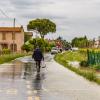
planned relocatIon as adapTation in a cHAnging ClimAte (ITHACA)
Julia Beier
Researcher (EQU)
Thomas Thaler
Guest Senior Research Scholar (EQU)
Article: News
03 October 2022
The ForestNavigator (Navigating European forests and forest bioeconomy sustainably to EU climate neutrality) Project is a new ambitious pan-European research project coordinated by IIASA and funded under the Horizon Europe Program. It brings together 24 research institutions from 13 EU countries and China to support the European Commission and national authorities in designing robust sectoral policies addressing forests and the forest sector for achieving climate neutrality in the EU.
Article: News
03 October 2022
The SOS-Water Project, funded under the Horizon Europe scheme and coordinated by IIASA, will create a holistic and participatory assessment framework of a Safe Operating Space (SOS) for the entire water resources system to inform global and regional water management policies and pathways.
Article: News
30 September 2022
H.E. Dato' Sri Dr. Adham bin Baba, Minister of Science, Technology, and Innovation of Malaysia, a former IIASA member country, visited the IIASA premises in Laxenburg to meet with IIASA Director General Albert van Jaarsveld on 25 September 2022 to discuss the IIASA research agenda and ways to strengthen scientific cooperation between IIASA and Malaysia.
Event
Geneva, Switzerland
IIASA Interim Deputy Director General for Science, Wolfgang Lutz, has been invited to speak at the Foreign Ministries Science and Technology Advice Network (FMSTAN), as part of the Annual Summit of the Geneva Science and Diplomacy Anticipator.
Event
Vienna-Palais Niederösterreich
IIASA researchers will present their work to the curious audience attending “The Lower Austria Research Festival 2022 - Forschungsfest Niederösterreich”, organized by the Section of Science and Research of the Province of Lower Austria.
Advancing Systems Analysis (ASA)
Systemic Risk and Resilience (SYRR)
Population and Just Societies (POPJUS)
Equity and Justice (EQU)
Agent-based models to inform economic policies on migration (ABM2Policy)
Resource nexus for transformation to circular, resilient, and liveable cities in the context of climate change (RECREATE)
Article: News
29 September 2022
IIASA is coordinating CircEUlar, a new four-year project funded by Horizon Europe aiming to develop circular pathways for a low-carbon transition in the European Union.
Article: News
28 September 2022
IIASA researchers participate in a seminar titled "Demography matters: the human life from birth to death", organized by Vienna Institute of Demography and Wittgenstein Centre.
Article: News
28 September 2022
Alberto Fresolone winner of IDRiM 2022 Young Scientist Session Award.
Model
The "IIASA Logistic Substitution Model II" (LSM2) is a software tool to estimate the parameters of technological growth and substitution processes. Applications include marketing research, scenario development, historical transition analyses, as well as meta-analysis across many individual technologies.
Event
Vienna School of International Studies
IIASA Interim Deputy General for Science, Wolfgang Lutz is invited to be the keynote speaker at the upcoming event co-hosted by Austrian Institute for European and Security Policy and Vienna School of Internal Studies to speak about the geopolitical consequences on global demographic development.
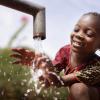
Establishing a Safe Operating Space for the global water resources system (SOS Water)
Event
Hotel Garni Seggauberg - Graz
The interdisciplinary Doctoral Programme Climate Change (DK) at the University of Graz will host the DK Fall School 2022 "Transformation to Climate Neutrality".
Article: News
26 September 2022
In a new study published in Global Environmental Change, an international team of researchers from seven institutions, including IIASA, developed a first of its kind forest model intercomparison project (ForMIP) to estimate long-term futures for the world’s forests under different socioeconomic and climate mitigation pathways.
Article: News
22 September 2022
Against the backdrop of climate change and rising water demand, tools for adequately modeling water availability are much needed. In a new study, researchers applied a large-scale model linking surface water to groundwater, which can be used for estimating water resources at a high spatial resolution.