
IIASA has increased its membership footprint through its newest member, the Sub-Saharan Africa Regional Member Organization, as part of a regional approach to participation in IIASA research and capacity building activities.
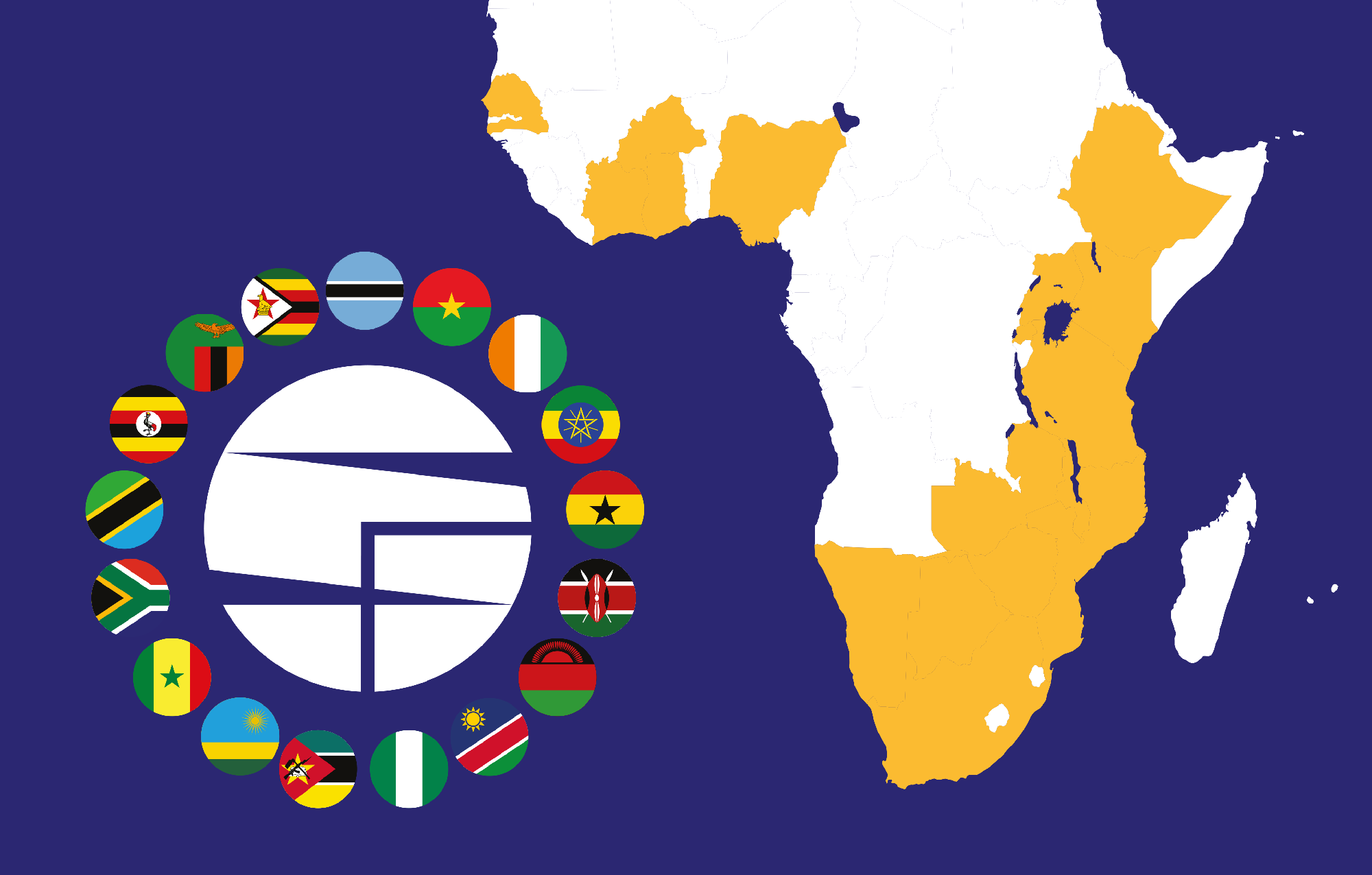
IIASA recently welcomed its first regional member. The new Sub-Saharan African Regional Member Organization (SSARMO) includes 17 African countries* who are participating in the Science Granting Councils Initiative (SGCI) in Sub-Saharan Africa – a multi-partner, multi-institutional initiative established in 2015 aimed at strengthening institutional capacities of Science Granting Councils in Sub-Saharan Africa. Through the establishment of the Sub-Saharan African Systems Analysis Centre (SASAC), SSARMO will develop integrated systems solutions and policy insights to current, emerging, and novel regional sustainability challenges and opportunities. The National Research Foundation (NRF) of South Africa, who was previously a national IIASA member since 2007, will act as the secretariat hub for SSARMO and carry the regional vote on the IIASA Council through its Council Member, Aldo Stroebel, Executive Director at the NRF. Sepo Hachigonta, Director of Strategic Partnerships at the NRF, will serve as the SSARMO Secretary to IIASA.
The regional membership application was made in response to a statement of the 98th IIASA Council meeting in June 2021, which conceptualized a regional membership model aimed at bringing together multiple countries within a region, who are facing similar challenges, but may not have the means or capacity as individual countries to join IIASA as national members. The model allows the opportunity to meet the IIASA charter obligations, build capacity, and develop and engage with global and regional applied systems analysis issues.
 © Adam Islaam | IIASA
Working closely with SASAC and the SGCI participants, IIASA will provide a bridge for building innovative scientific partnerships between stakeholders in the region and systems analysis research communities across the globe and support the development of local expertise in systems analysis, including the transfer of any associated new methodologies, tools, and data. It is foreseen that increased opportunities for collaboration between researchers in the countries represented through the regional membership will also lead to an increased impact of IIASA research in regional policy uptake, while simultaneously strengthening Sub-Saharan Africa’s capacity to identify and sustain partnerships that enhance collaboration and networking.
In addition to the above, SSARMO’s IIASA membership will contribute to accelerating the career pathways of emerging researchers to become internationally recognized and develop leading researchers with strengthened academic rigor and competitiveness through increased international exposure, collaboration, and student mentorship opportunities. This program will build on IIASA and the SGCI’s extensive collaborative network of partners in Africa and beyond, providing an organizing framework that will increase the momentum of addressing sustainability challenges.
“This membership will be instrumental in ensuring that the Sub-Saharan Region becomes globally competitive on research issues relating to systems analysis, thereby promoting innovation and a transformed research system,” notes NRF CEO, Fulufhelo Nelwamondo.
“This partnership will have a positive impact on building regional capacity of systems analysts for the greater benefit of society,” concludes IIASA Director-General, Albert van Jaarsveld.
Wide-ranging support from the CEOs of the SSA Science Granting Councils confirmed the strategic direction and impact of this initiative.
* Botswana, Burkina Faso, Côte d’Ivoire, Ethiopia, Ghana, Kenya, Malawi, Mozambique, Namibia, Nigeria, Rwanda, Senegal, South Africa, Tanzania, Uganda, Zambia, Zimbabwe
News
15 October 2026
IIASA strengthens science diplomacy ties at UNGA in New York
IIASA Science Diplomacy Director and Head of Communications and External Relations Susie Kitchens represented the Institute at the United Nations General Assembly (UNGA) High-level Week and Science Summit in New York in September, contributing to discussions on how science and international cooperation can help address shared global challenges.
16 September 2026
Exploring new opportunities for regional collaboration across sub-Saharan Africa
IIASA recently welcomed a high-level delegation from its Sub-Saharan Africa Regional Member Organization (SSARMO), its first Regional Member Organization, to explore and shape the next phase of collaboration across Sub-Saharan Africa.
14 September 2026
Can a warming climate put women at greater risk?
Unusually warm periods could have a link to an increased risk of intimate partner violence against women, according to a new IIASA-led study covering 31 countries in sub-Saharan Africa. The findings highlight how rising temperatures may compound existing risks of violence, with effects varying between demographic groups.