© ID 175979303 © Melitas | Dreamstime.com

Anne Goujon
Program Director and Principal Research Scholar (POPJUS); Acting Research Group Leader and Principal Research Scholar (MDM)
Katja Scherbov
Program and Project Officer (POPJUS, MDM, H2A, MIG)

Denise Watzenig
Program and Project Officer (POPJUS, EQU)
Gladys Shamirian
Administrative Assistant for Research Program (POPJUS, MDM, H2A, MIG, EQU)
The POPJUS Program continues and builds upon research activities previously undertaken in the IIASA World Population and Risk and Resilience programs. Insights into current and future population sizes, structures, and distributions are fundamental to understanding human impacts on ecosystems and simultaneously, the impact of environmental changes on human wellbeing differentiated by sub-populations.
The program’s research agenda embraces the key priority in the IIASA strategic plan by identifying sustainable development challenges and exploring people-centric systems solutions for sustainable, resilient, just and equitable societies. The program focuses on strengthening the human-centered and population-based approach, taking into consideration equity and the just distribution of opportunities, outcomes, and processes. In doing so, the program builds on existing strengths and expertise in population and human capital modeling as well as expertise in understanding, managing, and equitably governing systemic and existential risks associated with global change. The program will continue to invest in advancing its methods, approaches, and data to deliver results that can be incorporated into system analytical models, inclusive policy processes, and ultimately into equitable and effective policy pathways and transformations.

The EQU Group focuses on the human dimension of selected globally relevant policy challenges, with the aim of delineating and advancing their analysis, management, and governance with special attention paid to the design and application of equity and justice frameworks, both within the group and across IIASA.

MIG focuses on applying advanced data collection and estimation methods to quantify and better understand the trends, patterns, drivers, and consequences of different types of migration considering its interactions with the social, economic, and environmental dimensions of sustainable development.

Through its research, the MDM Group aims to advance demographic modeling methods to assess and forecast population dynamics with a focus on demographic and spatial heterogeneity under different socioeconomic scenarios at the global, national, and sub-national level.
The Young Scientists Summer Program (YSSP) at IIASA offers an exceptional opportunity for PhD students to engage in collaborative research with IIASA's interdisciplinary teams.
YSSP opportunities in POPJUS More information on applying to the YSSP
POPJUS is one of the three pillars of The Wittgenstein Centre for Demography and Global Human Capital, a collaboration among the Austrian Academy of Sciences (ÖAW), the International Institute for Applied Systems Analysis (IIASA) and the University of Vienna.









Josephine Borghi
Research Group Leader and Principal Research Scholar (H2A)

Mikhail Maksimenko
Guest Researcher (MIG)
Katja Scherbov
Program and Project Officer (POPJUS, MDM, H2A, MIG)

Sofia Badini
Research Scholar (MIG)

24 September 2026

23 September 2026
14 September 2026

05 August 2026
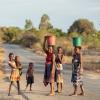
What does integration mean for a refugee child? Manya Oriel Kagan reflects on the research behind her new book, Schooling Experiences of Refugee Children in Uganda: Rethinking Integration Policies. Drawing on months of research in schools and communities in Kampala, Uganda, she explores how children's everyday experiences reveal both the possibilities and the limits of one of the world's most progressive refugee policies.

31 July 2026
In a new Expert Voices article published in Science, IIASA Population and Just Societies Program Director, Anne Goujon examines the concept of “dejuvenation” – the declining demographic, economic, cultural, and political weight of younger generations – and asks how aging societies can ensure that young people and future generations have a meaningful voice in shaping the decisions that will affect them most.