


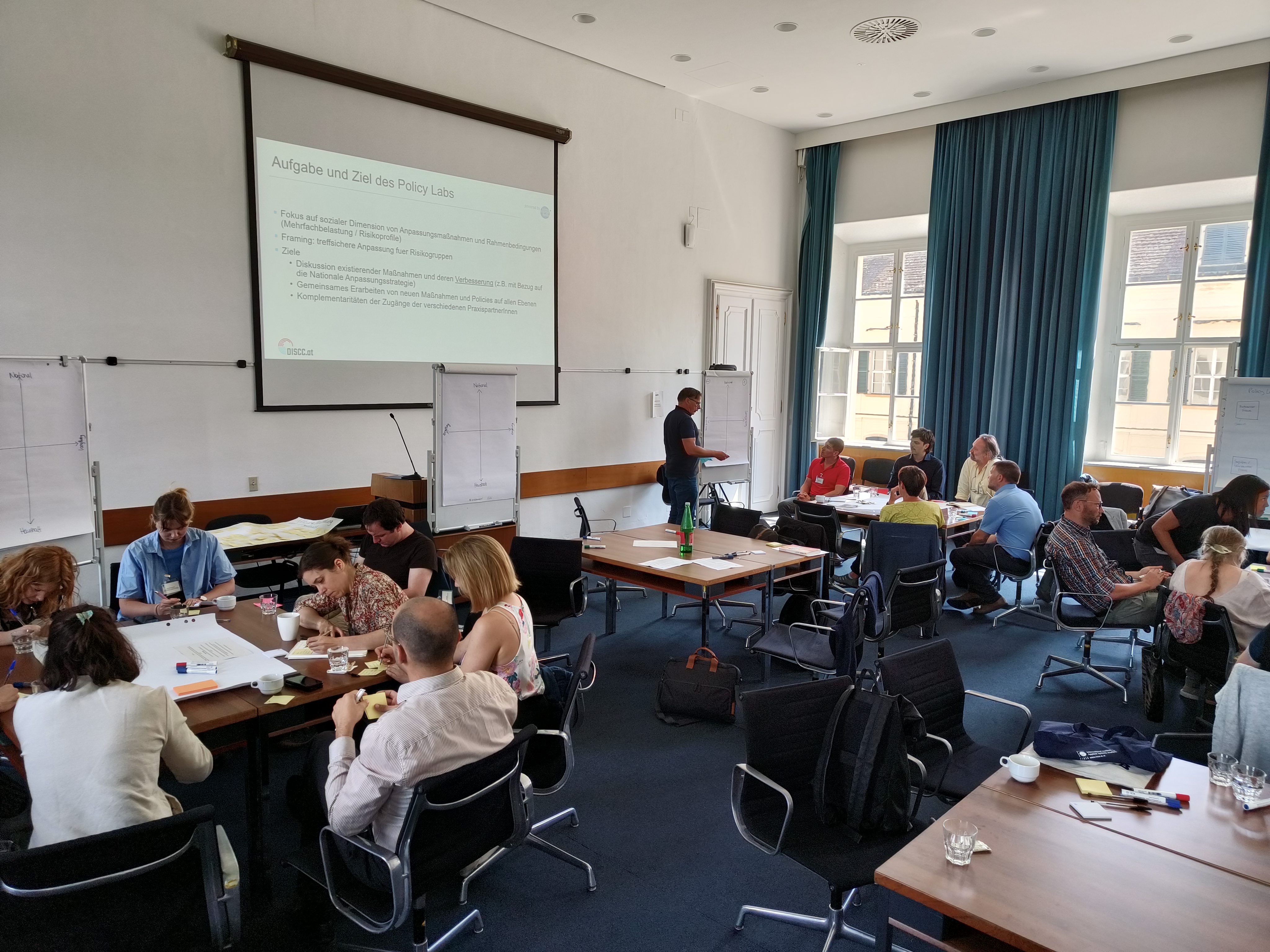
Researchers from the Equity and Justice Research Group, in collaboration with Uni Graz, Umweltbundesamt, MedUni Wien, and Vrije Universiteit Amsterdam hosted the second stakeholder workshop of the DISCC-AT project on 28 May at IIASA.
Around 30 NGO representatives, experts, practitioners, and researchers met at IIASA to discuss the issue of social vulnerability to climate risks in Austria and policies to alleviate vulnerability and strengthen adaptive capacities individually and collectively.
 © IIASA
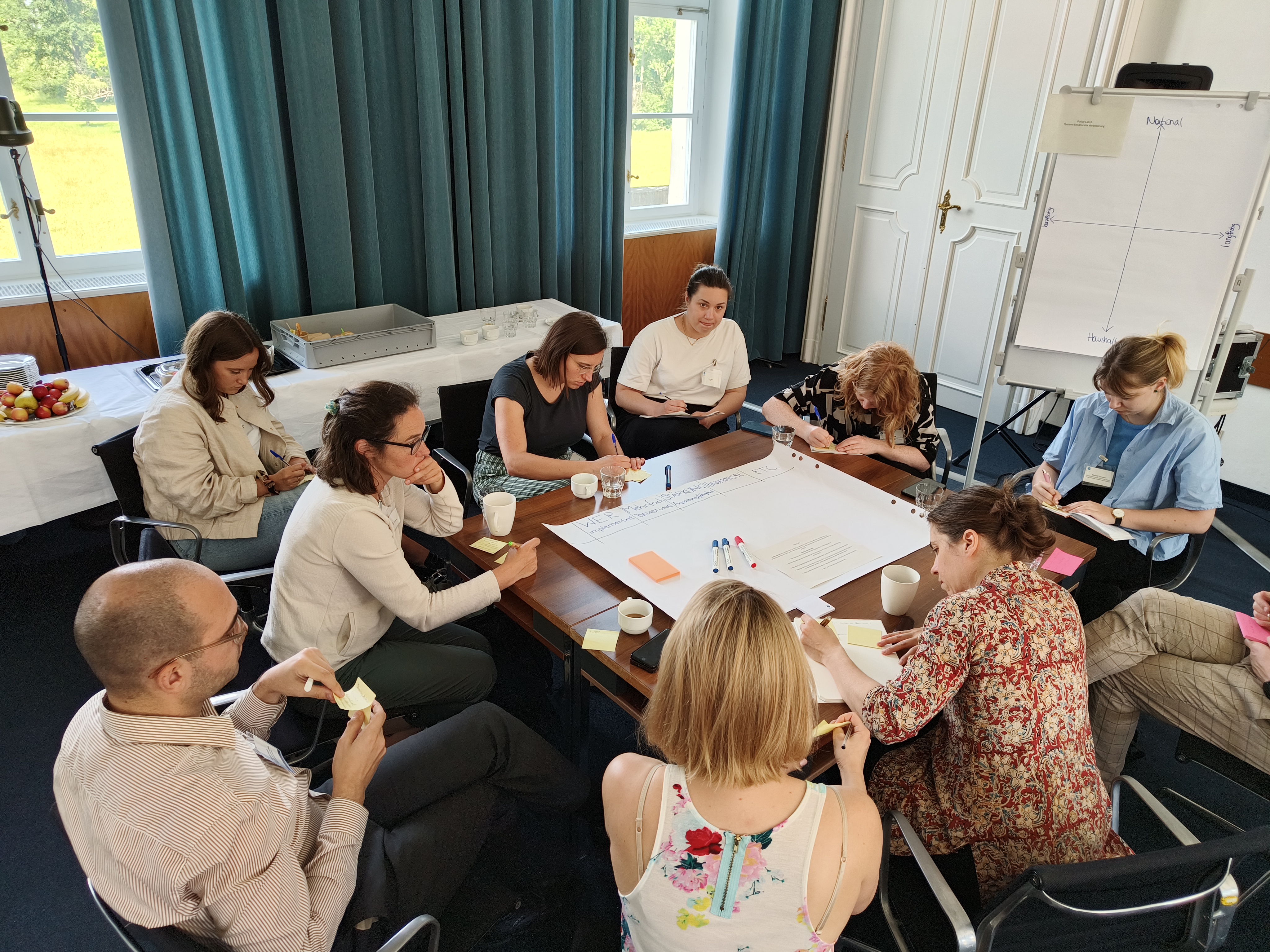
Researchers at EQU hosted a workshop on “Recognizing Social Vulnerability and Promoting Adaptive Capacity”, inviting representatives from organizations in the climate, disaster risk, and social policy field in Austria.
The DISCC-AT team presented the results of their research on
a) heat mortality in Austria (health effects)
b) social flood risk modelling in Austria, and
c) archetypes of intersectional social vulnerability.
Later, their application was discussed with the stakeholders in a world café format, developing steps for the integration of the results in existing and upcoming initiatives. Moreover, a policy lab was organized to co-develop policies and measures, from incremental to transformative, and across governance levels, for social climate adaptation that is just and targeted.
 © IIASA
The social dimensions of climate risks have become a concern of study worldwide. Climate risks vary between and within regions and vulnerable groups. Understanding differential social vulnerability within a country, i.e. Austria, has received attention in the research community, however, exploring the drivers of vulnerability on the household level from an intersectional lens remains understudied in Austria. Therefore, the DISCC-AT project explores, among other research questions, heterogenous vulnerability to key climate risks, heat, and flooding, in Austria through qualitative methods and quantitative modelling. A thorough stakeholder engagement process has been an integral part of the research endeavor from the start to the end of the project.
 © IIASA
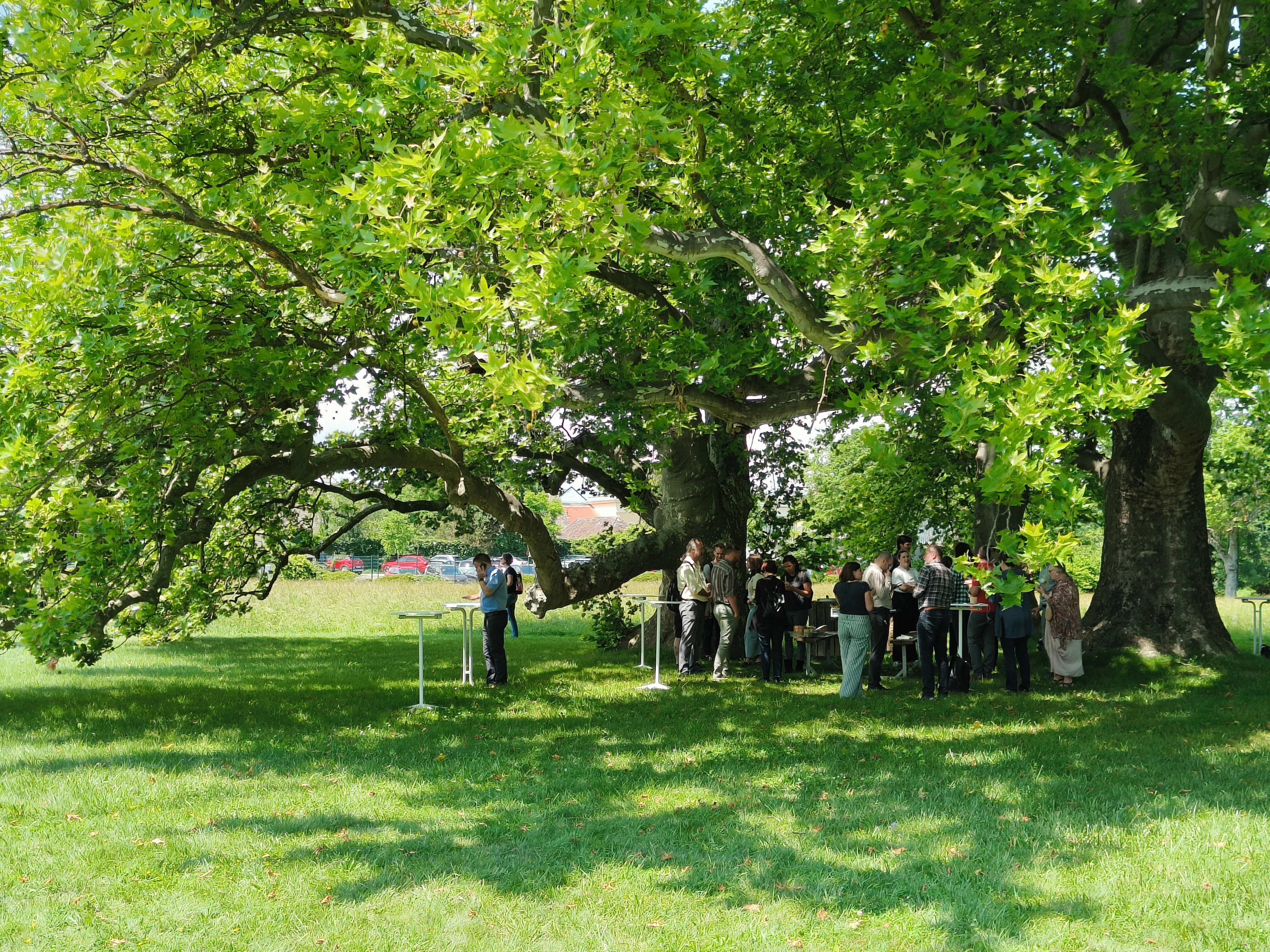
Based on this workshop, the DISCC-AT project team will finalize their research and identify opportunities for co-development of outputs until January 2025.
Project details
Name: Assessing the distributional effects of climate change impacts and adaptation in Austria, for just, targeted and efficient adaptation (DISCC-AT)
Project duration: 1 October 2022 – 30 September 2024
Funding Agency: Österreichischer Klima- und Energiefonds (Austrian Climate and Energy Fund)
Funding Program: Austrian Climate Research Program (ACRP), ACRP – 13th Call, KR21KB0K00001
Thematic Area: Understanding the climate system and consequences of climate change; Specific support for Austria’s policymakers
Partners:
- International Institute for Applied Systems Analysis (IIASA), Population and Just Societies (POPJUS) Programm, Equity & Justice (EQU) Research Group
- University of Graz, Wegener Center for Climate and Global Change, Economics of Climate and Environmental Change Research Group (lead)
- Medical University of Vienna, Department of Environmental Health
- Umweltbundesamt GmbH (subcontract)
- Vrije Universiteit Amsterdam, Department of Environmental Economics, Institute for Environmental Studies
News

24 September 2026
IIASA researcher joins Austrian Academy of Sciences working group on integrated carbon neutrality
On 15 September, Principal Research Scholar Thomas Schinko represented IIASA at a high-level event of the Commission on the De-Fossilization and Carbon Neutrality of the European Energy Systems (DEE) of the Austrian Academy of Sciences (OEAW). The meeting denoted the kick-off workshop of the newly established DEE Working Group "Transsectoral and Transcontinental Integration”.
23 September 2026
Eco-Welfare Network Conference
Julia Beier participated in the first in-person Eco-Welfare Network Conference, held in Brussels from 9-11 September at the Université Libre de Bruxelles as part of the Transform-Labor project.
14 September 2026
Can a warming climate put women at greater risk?
Unusually warm periods could have a link to an increased risk of intimate partner violence against women, according to a new IIASA-led study covering 31 countries in sub-Saharan Africa. The findings highlight how rising temperatures may compound existing risks of violence, with effects varying between demographic groups.