

IIASA EQU researchers participated in Austria's Long Night of Research, sharing their insights on the latest result of their projects at the Austrian Academy of Sciences in Vienna.
On May 24, IIASA researchers participated in Austria's Long Night of Research which takes place every two years to bring their work closer to the public. Two projects from Equity and Justice Research Group (EQU) were showcased at the Austrian Academy of Sciences in the fields of climate risk service and management.
 © IIASA
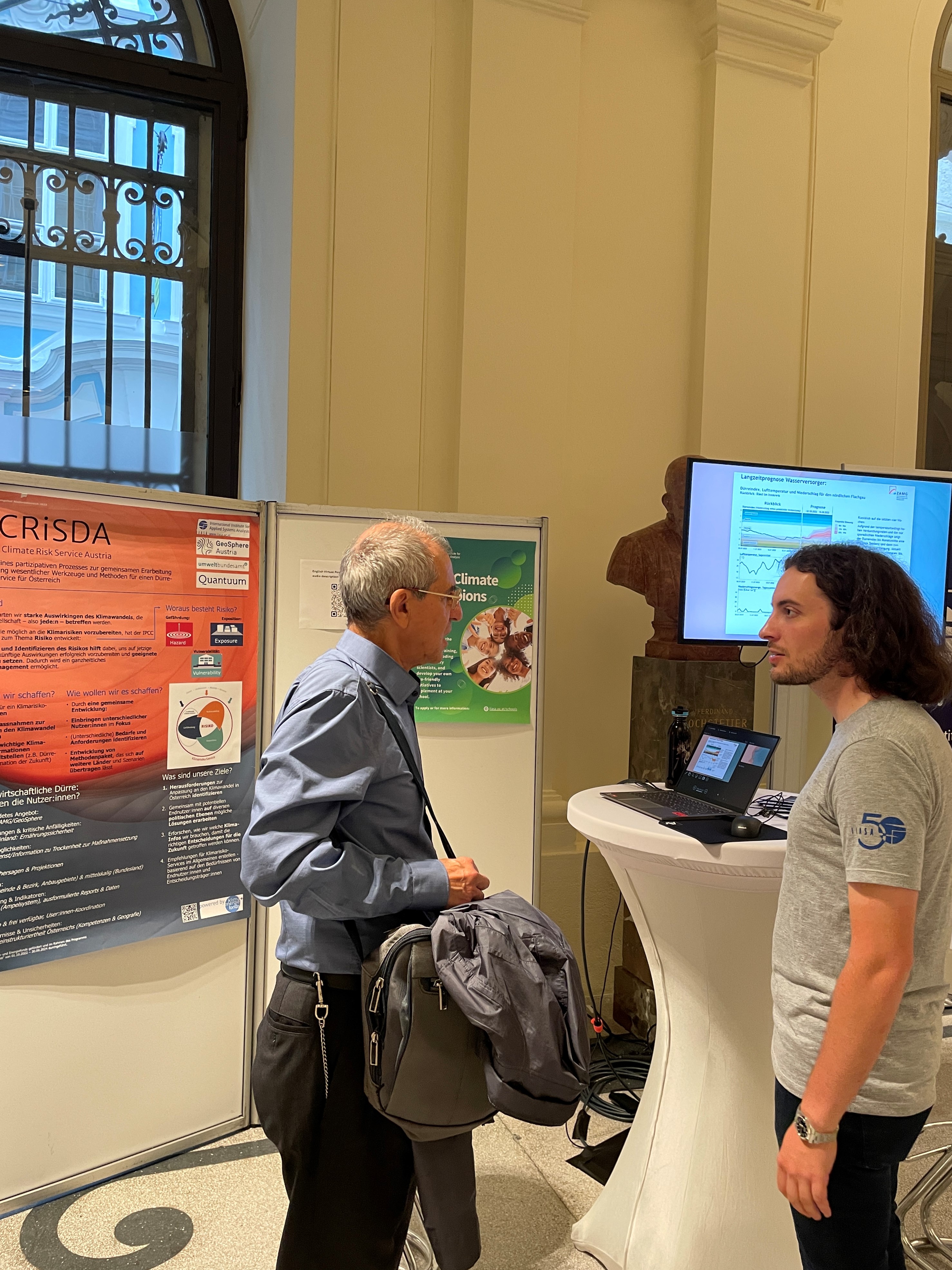
One of the projects, CRiSDA - Climate Risk Service for managing drought risk, is funded by the Austrian Climate Research Program (ACRP). Alberto Fresolone presented findings about how we could adapt to climate change, especially drought in agriculture, to interested participants. A map reflecting how different regions in Austria will be affected and in what way agriculture could be protected from damage was displayed.
 © IIASA
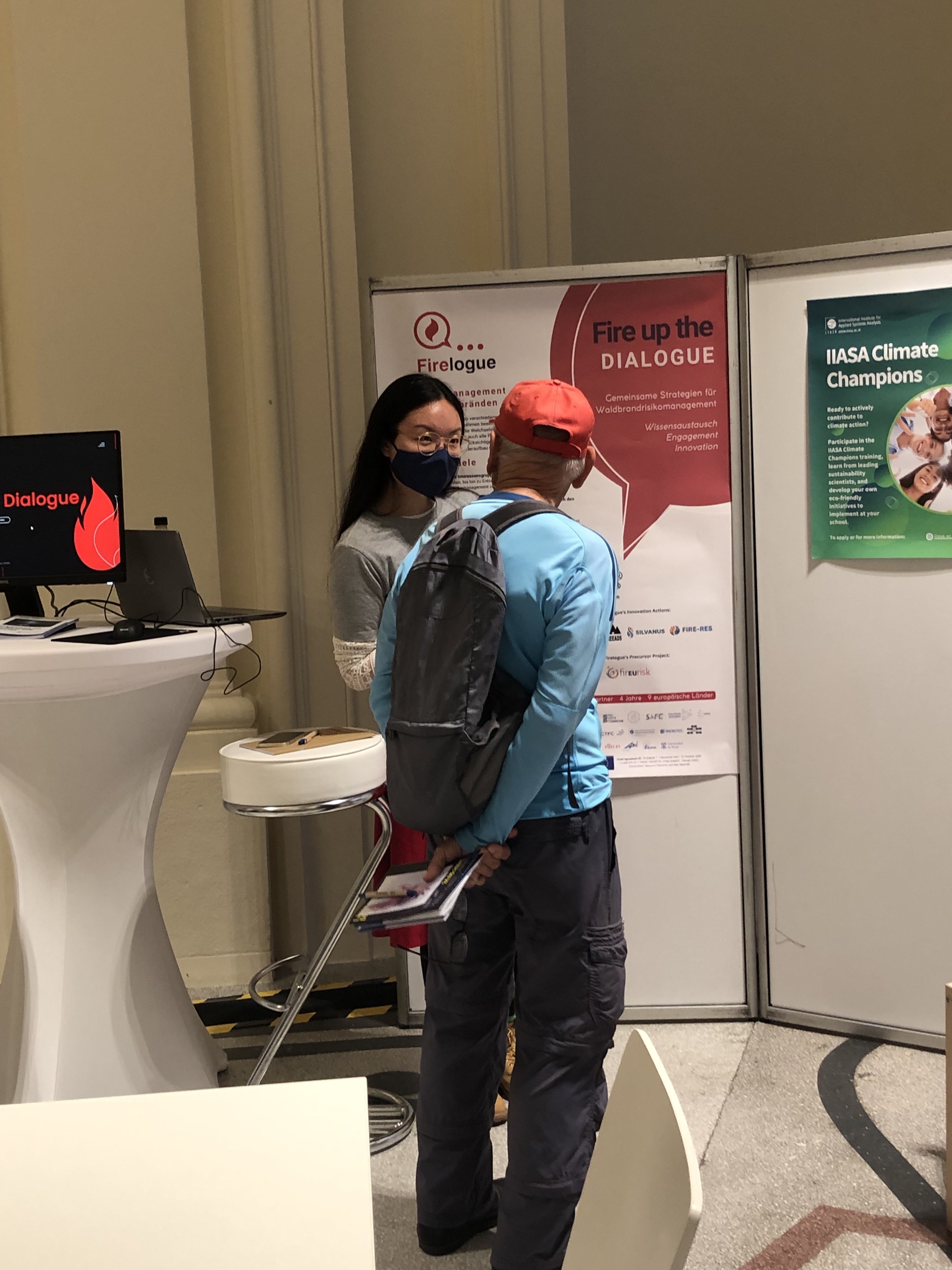
At the FIRELOGUE stand, Xiran Dong shared insights on the complexity of wildfire risk management and the importance of promoting communication, collaboration and cooperation among different stakeholders. The EU-funded Horizon 2020 project provides the wider wildfire community with forums to address the growing challenges of wildfires. Visitors were also able to explore the 'Lessons on Fire' platform designed to connect stakeholders and provide information, innovative solutions, and services.
 © IIASA
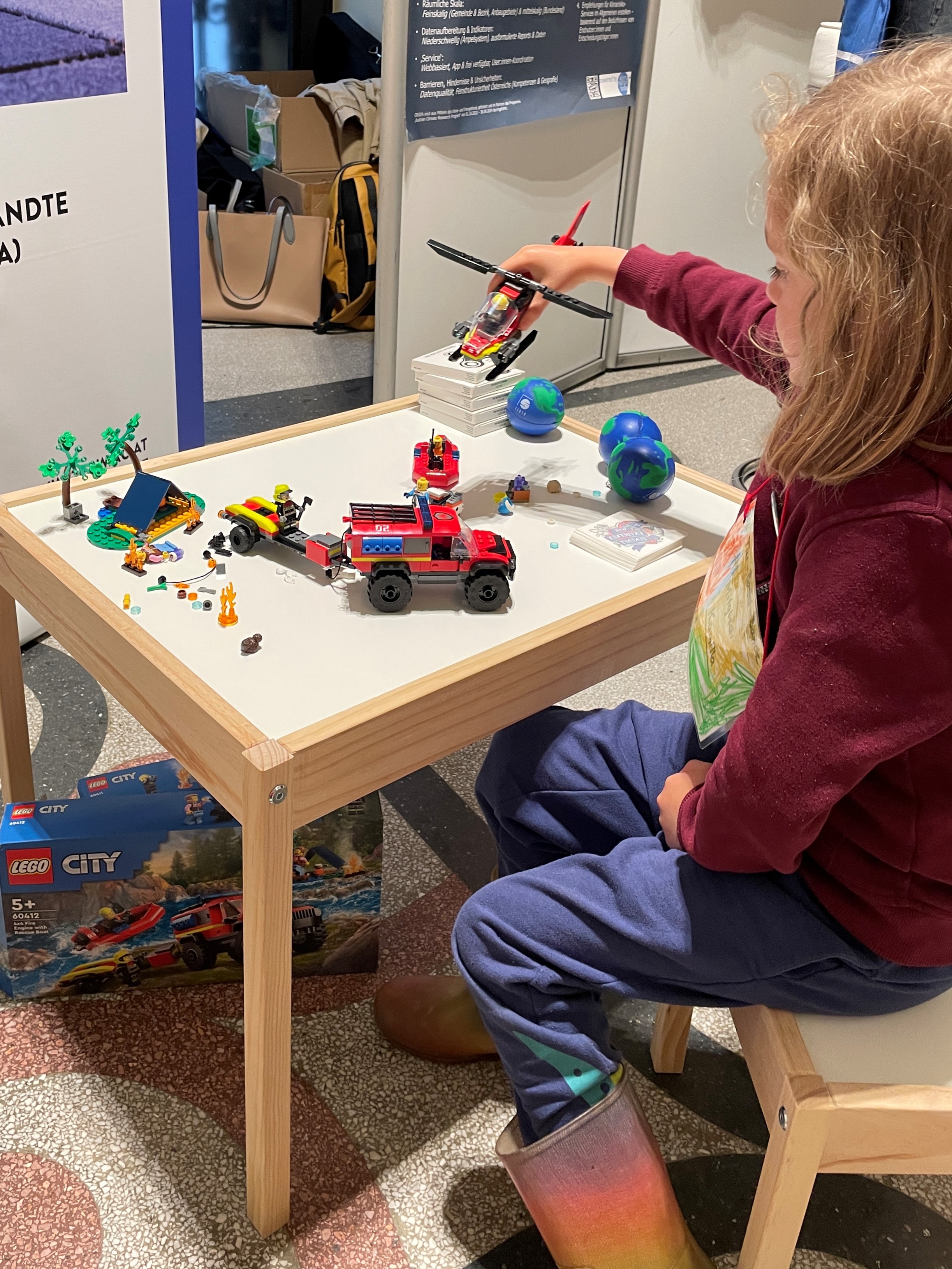
A special highlight for the young visitors was a fire-themed Lego station organized by the Communications and External Relations Department at IIASA. A forest camper frying a sunny-side-up egg (and possibly igniting a fire), firefighters, fire rescue vehicles and more were set up to communicate the topic of fire risk and response to children while having fun. Parents expressed their appreciation for the opportunity to let the kids sit and play.
News

24 September 2026
IIASA researcher joins Austrian Academy of Sciences working group on integrated carbon neutrality
On 15 September, Principal Research Scholar Thomas Schinko represented IIASA at a high-level event of the Commission on the De-Fossilization and Carbon Neutrality of the European Energy Systems (DEE) of the Austrian Academy of Sciences (OEAW). The meeting denoted the kick-off workshop of the newly established DEE Working Group "Transsectoral and Transcontinental Integration”.
23 September 2026
Eco-Welfare Network Conference
Julia Beier participated in the first in-person Eco-Welfare Network Conference, held in Brussels from 9-11 September at the Université Libre de Bruxelles as part of the Transform-Labor project.
14 September 2026
Can a warming climate put women at greater risk?
Unusually warm periods could have a link to an increased risk of intimate partner violence against women, according to a new IIASA-led study covering 31 countries in sub-Saharan Africa. The findings highlight how rising temperatures may compound existing risks of violence, with effects varying between demographic groups.