Article: News
25 March 2026
On Tuesday, 17 March 2026, IIASA had the privilege of hosting Austrian Federal President Alexander Van der Bellen at Schloss Laxenburg for a program focused on exchange, conversation, and engagement with the Institute’s research community. Austria is IIASA’s host country and one of its founding members, with its membership dating back to 1973.
Article: News
23 March 2026
The Horizon Europe project CHOICE hosted an online webinar presenting two interactive simulation environments designed to make food-system and climate modelling more accessible to stakeholders, policymakers, and non-expert users. The session featured live demonstrations and hands-on exercises exploring how behavioral change, dietary shifts, food waste reduction, and land-use decisions can shape sustainability outcomes.
Article: Blog Post
23 March 2026
Cyberattacks, blackouts, natural disasters: in a world where physical and digital systems are becoming ever more tightly intertwined, disruptions can quickly paralyze entire infrastructures. At a recent public lecture co-hosted by IIASA and the Austrian Academy of Sciences (OeAW), renowned computer scientist and mathematician Dimitris E. Simos spoke about these vulnerabilities. In this interview, he explains why our systems are particularly susceptible to attacks, how chain reactions occur, and what each of us can do to improve security.

Roxanne Kovacs
Guest Researcher (H2A)

Zhanao Zhao
Guest Researcher (EM)
Masoud Fattahzadeh
Guest Researcher (ASA)
Article: News
20 March 2026
On 12 March, a group of interns from the German Agency for International Cooperation (GIZ) visited IIASA to learn about its research activities and interact with its scientists.
Event
Raiffa Room, IIASA
Nature Sustainability Chief Editor Monica Contestabile will present a seminar at IIASA on the sustainability research landscape and the challenges of publishing interdisciplinary work. The session includes an overview of the editorial and peer-review processes at Nature Sustainability, offering insights into how research is prepared for publication.
Article: News
18 March 2026
During a recent visit to Brazil, IIASA Director General, Hans Joachim (John) Schellnhuber, and Deputy Director General, Karen Lips, met with representatives from government agencies, research institutes, universities, and NGOs to explore opportunities for collaboration on some of the world’s most pressing sustainability challenges.
Event
Bologna, Italy
Population and Just Societies Program scientists will present and discuss latest IIASA research at the European Population Conference-EPC 2026 organized by European Association for Population Studies (EAPS) in collaboration with the University of Bologna in Italy.
The Rapid Impact Model Emulator (RIME) and its probabilistic extension, RIME-X (Rapid Impact Model Emulator Extended), are lightweight, open-source software tools developed at IIASA to bridge the gap between global emissions pathways and climate impacts and risk assessment. These emulators enable researchers to explore thousands of potential futures in seconds, facilitating a deeper integration between the climate impact (IPCC WGII) and mitigation (IPCC WGIII) communities.
Event
IIASA
On Thursday, 26 March, IIASA hosts a group of young minds from the Keimgasse High School in Mödling to connect "systems thinking" with an all time favourite, chocolate.
Event
Chulalongkorn University, Thailand
IIASA, together with the College of Population Studies, Chulalongkorn University, will host an intensive and internationally recognized training in advanced demographic analysis with applications to aging, health, and education, taking place in Thailand from 2–25 November 2026.
Event
Utrecht, Netherlands
IIASA Gender Equality and Diversity, Equity, and Inclusion Officer, Anastasia Aldelina Lijadi, will represent the Institute at the EARMA Annual Conference 2026 to discuss strategies to address workplace microaggressions. Her contribution underscores IIASA’s commitment to advancing diversity, equity, and inclusion within the global research management community.
Event
Online
Join the online webinar to explore two new interactive simulation tools developed by the CHOICE project. Discover how these tools make Integrated Assessment Model scenarios for the food sector more accessible and help users understand how policies, behaviours, and food system choices can influence climate outcomes. See the tools in action and learn how they can support research and evidence-based decision-making
Article: Blog Post
12 March 2026
The IIASA Urban Futures Hub is a cutting-edge research initiative dedicated to studying and assessing how cities and urban systems can lead climate change mitigation and adaptation efforts from local to global scales. The Hub regularly brings together experts from various disciplines within and beyond the Institute to collaborate on assessing cities and climate change across diverse domains and scales. IIASA researchers Leila Niamir and Merle Quade share insights from the initiative's latest expert workshop.
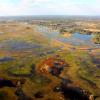
Development of a Climate Resilient Livelihoods Enhancement Programme for the Cubango-Okavango Basin (WBCLIMACORB)
Article: News
11 March 2026
Two new studies published in leading scientific journals conclude that stabilizing long-term climate risks will require sustained net-negative carbon dioxide (CO₂) emissions for centuries. Approaching the problem from distinct perspectives – legal and technological feasibility on the one hand, and economic optimization under uncertainty on the other – the research converges on a consistent message: reaching net zero is not enough.
Article: News
11 March 2026
The EU agri-food system is increasingly threatened by climate change while accounting for roughly one-third of the EU’s greenhouse gas emissions. A new report by the European Scientific Advisory Board on Climate Change, with contributions from IIASA researchers, warns that current policies are insufficient to address rising climate risks and meet EU climate targets.
Article: News
10 March 2026
Elisa Calliari, a Senior Research Scholar in the Systemic Risk and Resilience Research Group of the IIASA Advancing Systems Analysis Program, has been awarded a prestigious European Research Council (ERC) Starting Grant for a new project investigating how climate change reshapes the habitability of places and how societies respond.