
On Tuesday, 17 March 2026, IIASA had the privilege of hosting Austrian Federal President Alexander Van der Bellen at Schloss Laxenburg for a program focused on exchange, conversation, and engagement with the Institute’s research community. Austria is IIASA’s host country and one of its founding members, with its membership dating back to 1973.
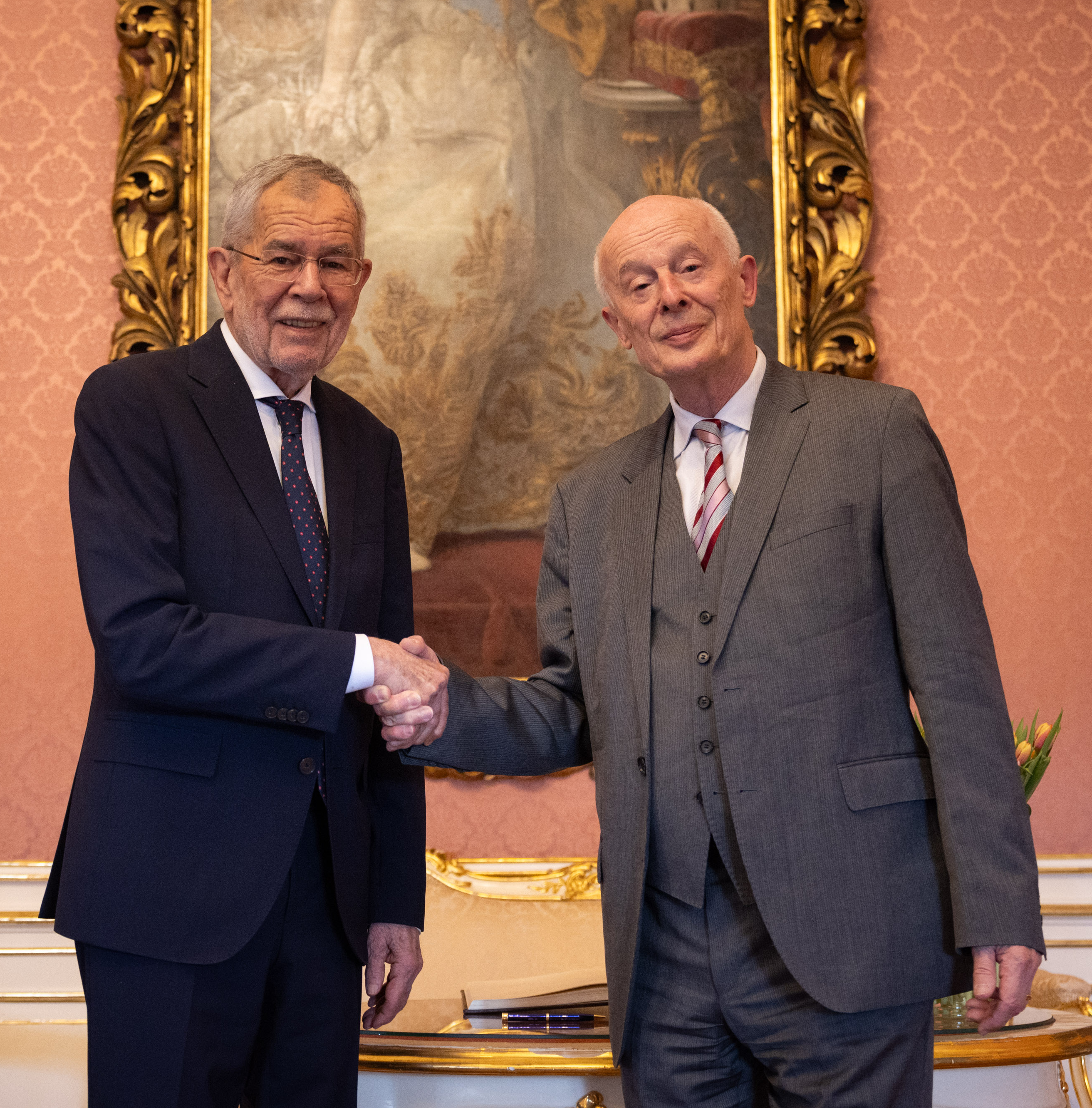 © Peter Lechner HBF
Austrian Federal President Alexander Van der Bellen and IIASA Director General Hans Joachim (John) Schellnhuber
The visit opened with a welcome and institutional introduction by IIASA Director General Hans Joachim (John) Schellnhuber, who framed the Institute’s evolving role in advancing science diplomacy and fostering international collaboration in a complex global landscape.
A central part of the program was dedicated to direct engagement with IIASA’s research. During a series of short “scientific elevator pitches,” program representatives presented selected highlights of their work, each focusing on a flagship contribution with clear policy relevance. The concise and accessible format enabled a focused exchange, offering the President insights into how IIASA research connects to current societal challenges and decision-making processes.
A highlight of the visit was the informal Meet & Greet with IIASA staff. At the President’s own request, this session replaced a formal address, creating space for open and direct conversations. Designed as a relaxed standing reception with coffee and refreshments, the gathering encouraged spontaneous dialogue between the President and researchers, analysts, and professional staff from across the Institute.
Staff members were warmly invited to join the exchange, and many took the opportunity to share their backgrounds, research interests, and personal experiences at IIASA. The informal format allowed for a genuine exchange of views, with discussions ranging from scientific work and interdisciplinary collaboration to broader reflections on the role of research in addressing global challenges.
President Van der Bellen expressed particular interest in hearing directly from IIASA colleagues, engaging in conversations that highlighted the diversity of perspectives and expertise present at the institute. The atmosphere was open and approachable, enabling meaningful interactions and personal connections across all levels of the organization.
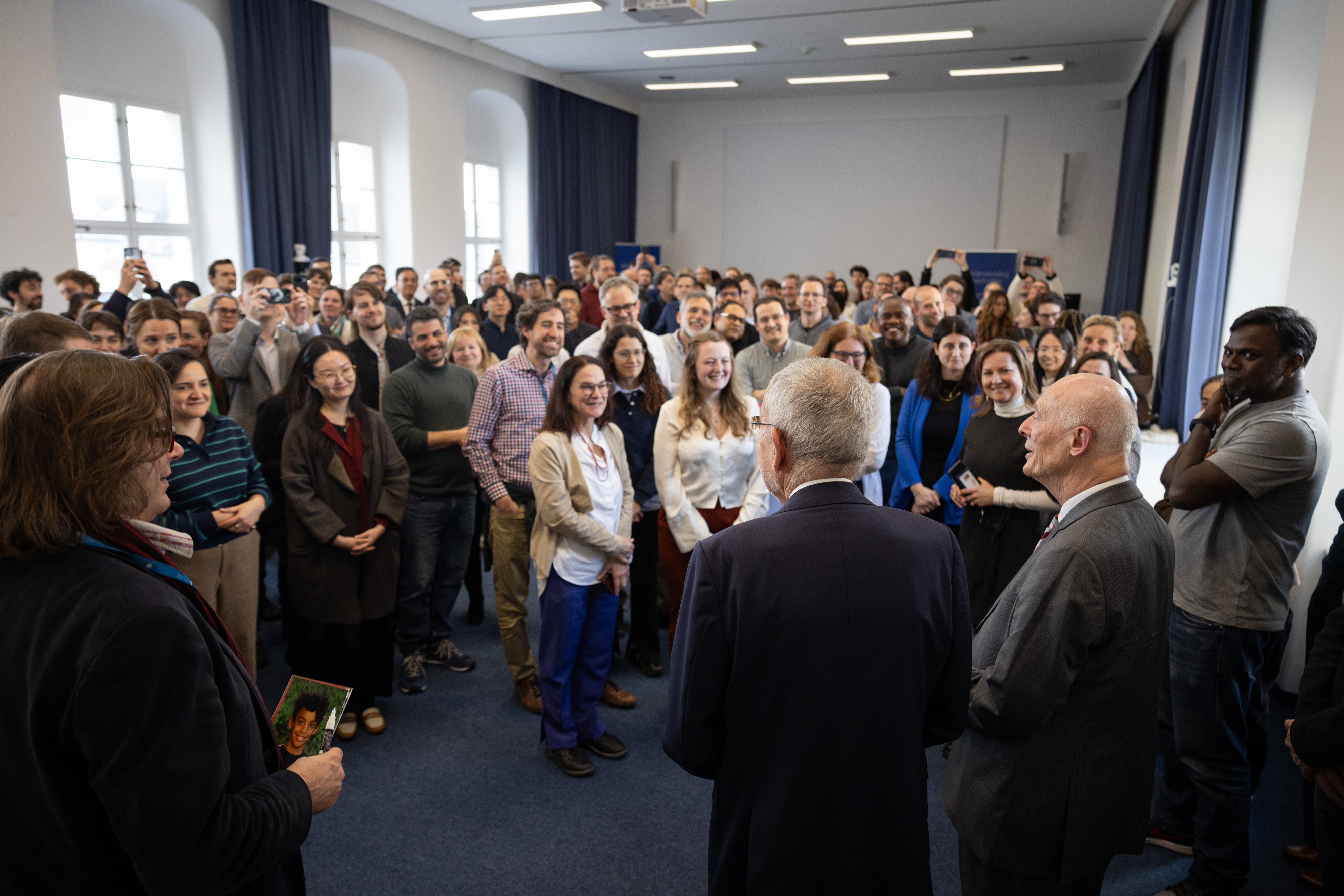 © Peter Lechner HBF
President Van der Bellen meets with IIASA staff
Reflecting on the visit, Schellnhuber emphasized the importance of such exchanges: “Encounters like this recall IIASA’s founding mission: uniting global science and policy in evidence‑based dialogue. It is through such curiosity‑driven and respectful exchanges that we can navigate the profound transformation challenges of this century.”
The visit concluded with continued informal conversations before the President’s departure, leaving a strong impression of IIASA as a place not only of scientific excellence, but also of open exchange and international collaboration.
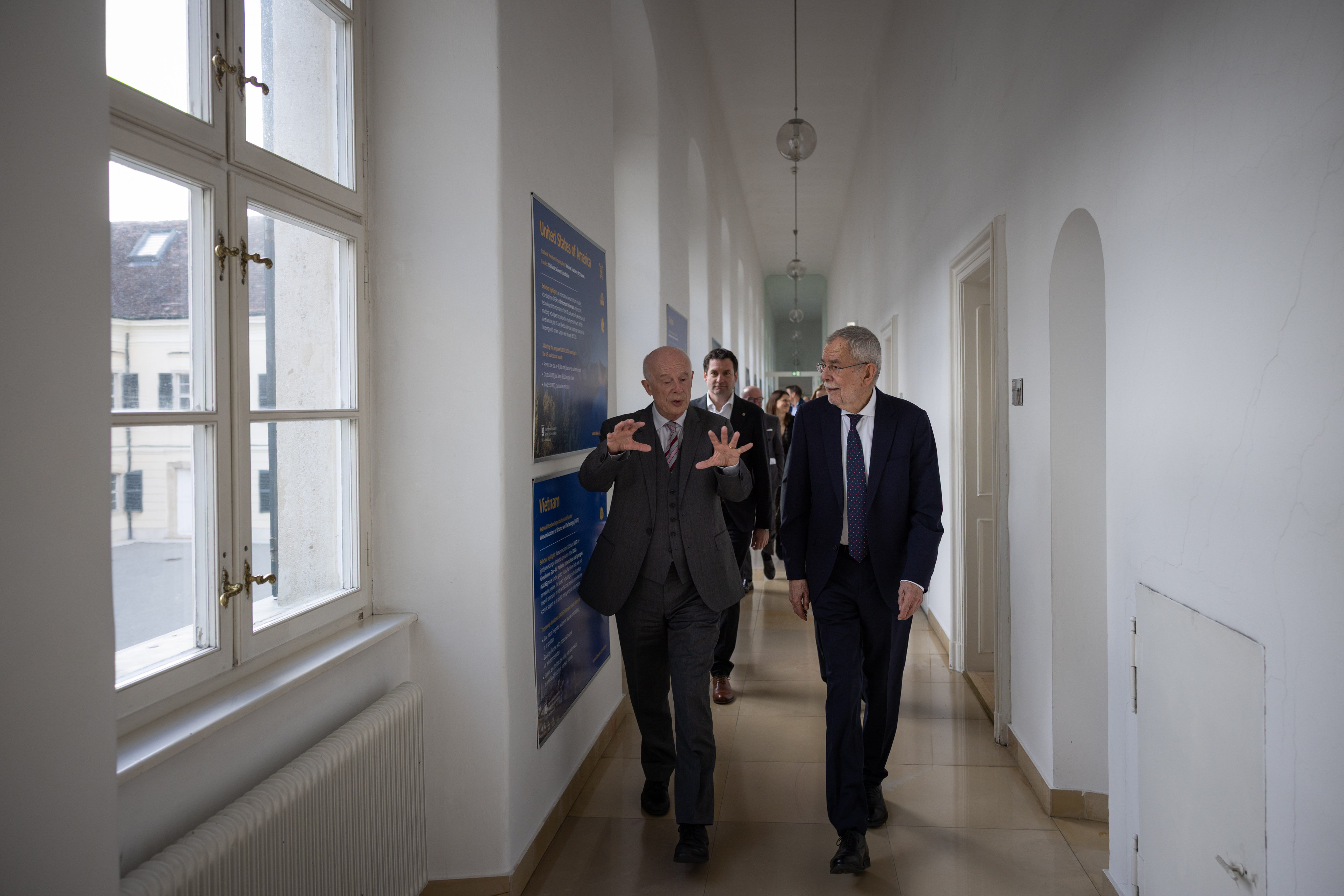 © Peter Lechner HBF
News
15 October 2026
IIASA strengthens science diplomacy ties at UNGA in New York
IIASA Science Diplomacy Director and Head of Communications and External Relations Susie Kitchens represented the Institute at the United Nations General Assembly (UNGA) High-level Week and Science Summit in New York in September, contributing to discussions on how science and international cooperation can help address shared global challenges.

13 October 2026
Connecting disciplines and inspiring new ideas with the Environment and Climate Research Hub
IIASA Deputy Director General Karen Lips delivered a keynote at the University of Vienna's recent Environment and Climate Research Hub (ECH) Research Frontiers Workshop in Bad Vöslau, Austria, emphasizing the importance of interdisciplinary collaboration in addressing complex environmental and climate challenges.
12 October 2026
Connecting science across borders: IIASA Committee meets University of Salzburg
How can universities and international research organisations work together to address the complex challenges of a changing world? This question shaped a full day of scientific exchange at the University of Salzburg on 6 October, when the Austrian IIASA Committee met with members of the University community to discuss research, collaboration and opportunities for researchers and students.