
The IIASA Urban Futures Hub is a cutting-edge research initiative dedicated to studying and assessing how cities and urban systems can lead climate change mitigation and adaptation efforts from local to global scales. The Hub regularly brings together experts from various disciplines within and beyond the Institute to collaborate on assessing cities and climate change across diverse domains and scales. IIASA researchers Leila Niamir and Merle Quade share insights from the initiative's latest expert workshop.
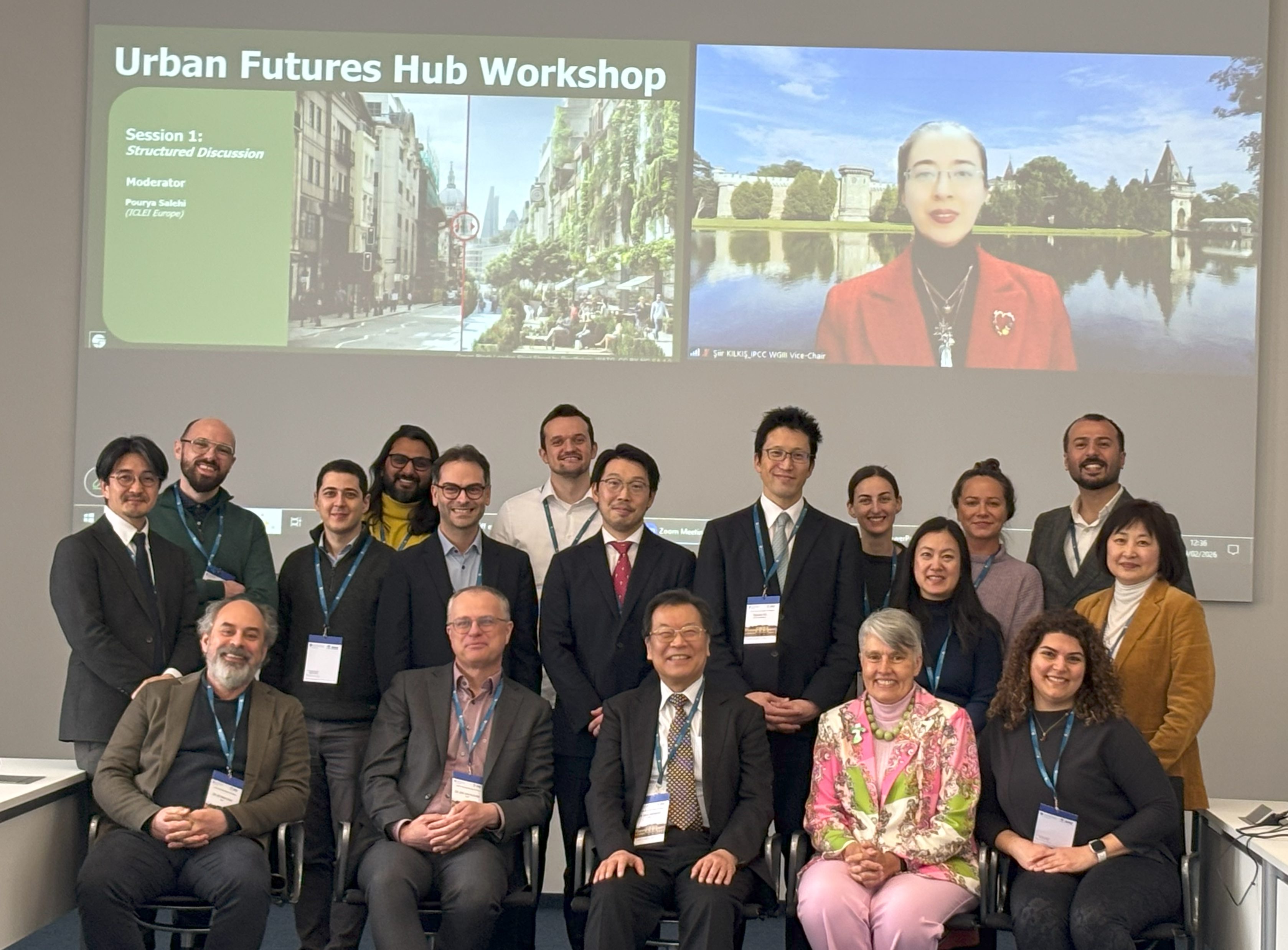
The most recent Urban Futures Hub expert workshop brought together international researchers, city practitioners, and Intergovernmental Panel on Climate Change (IPCC) authors for the third convening of the IIASA-Japan joint research initiative on “Climate Change and Cities.” Over two days, the workshop served as a dynamic space for dialogue, collaboration, and the exchange of ideas across disciplines and expertise. The event emphasized the energy and creativity that emerge when diverse perspectives converge and highlighted how science, policy, and practice can intersect to generate tangible, real-world impact.
Since its launch in September 2023, the IIASA-Japan joint research initiative has aimed to contribute insights from both research and practice to the IPCC Special Report on Climate Change and Cities. This convening focused on two key thematic areas: city governance and city-scale models and scenarios. Both topics present complex challenges, and the workshop provided a platform to present the latest studies, exchange experiences, engage in discussion, and identify potential pathways forward.
Participants engaged in an open and insightful dialogue across the science-practice interface, resulting in steep learning curves and a deeper understanding of how scientific outputs can be made relevant and actionable for city practitioners and policymakers. The discussions emphasized the importance of multi-level governance in city transformation, engaging citizens, experts, scientists, and businesses throughout the process, from decision-making to the implementation of city climate actions.
Equally important was the role of city-to-city collaboration as a powerful agent of change, enabling the exchange of knowledge and experience and accelerating collective learning and impact. Effective city climate action relies on strong coordination and collaboration among these actors, ensuring that research remains closely aligned with real-world needs.
A key takeaway from the discussions was the importance of reality checks: methods and results must be calibrated and validated in practice to ensure their effectiveness on the ground. Bridging the gap between science and practice therefore requires approaches that are inclusive, adaptable across governance levels, and responsive to local contexts.
The exchange of ideas and experiences also clarified critical intersections between governance and city-scale modeling. By the end of the workshop, an ambitious work program was agreed upon, outlining next steps for advancing research and supporting evidence-based city climate action. In particular, the workshop identified an exciting fast-track paper that brings together both thematic areas. With a target submission ahead of the IPCC Cities cut-off date (1 April 2026), this paper is ambitious but provides a highly motivating focus for the team moving forward.
These two days reinforced a fundamental insight: addressing climate change in cities is a collective endeavor that thrives on diverse expertise, open dialogue, and shared commitment.
 © IIASA
Participants of the most recent Urban Futures Hub expert workshop
Note: This article gives the views of the authors, and not the position of IIASA Insights, nor of the International Institute for Applied Systems Analysis.