

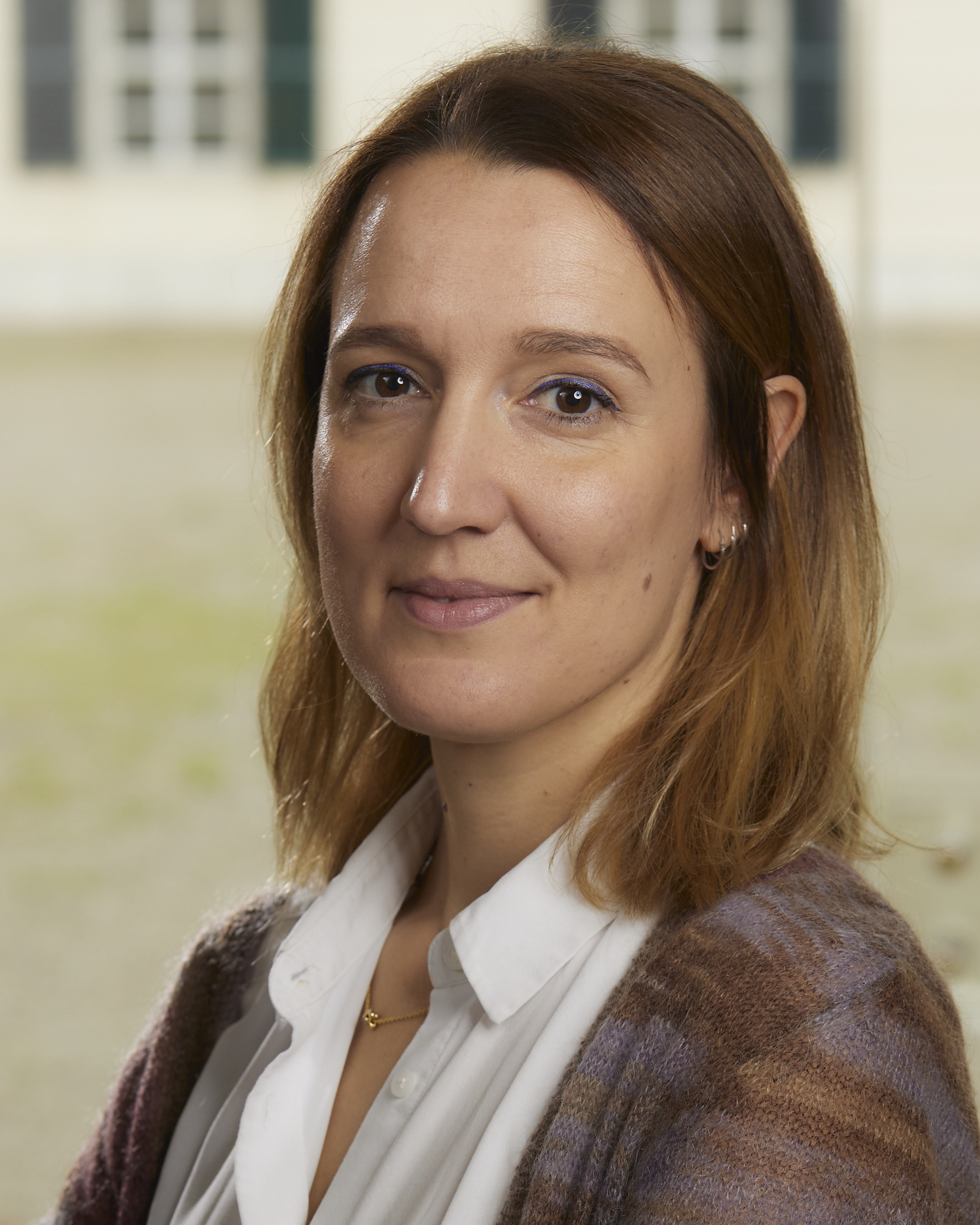
Elisa Calliari, a Senior Research Scholar in the Systemic Risk and Resilience Research Group of the IIASA Advancing Systems Analysis Program, has been awarded a prestigious European Research Council (ERC) Starting Grant for a new project investigating how climate change reshapes the habitability of places and how societies respond.
 © Silveri | IIASA
Elisa Calliari
Understanding and governing habitability in the context of climate change, or the ALTHAEA project for short, will run for five years from 1 April 2026 to 31 March 2031 and is funded by the ERC.
Climate change is increasingly transforming where and how people can live. Some projections suggest that by 2070 up to 3 billion people could live in areas considered uninhabitable due to extreme temperatures. In this context, habitability refers to the conditions that allow people to live safely and with dignity in a place, including not only environmental factors such as temperature regimes or flood patterns, but also the social, cultural, and political conditions that enable communities to sustain their lives and livelihoods.
As climate risks intensify, societies respond to changing habitability in different ways, ranging from remaining in place – by choice or constraint – to moving away. These responses raise complex questions about when a place is considered no longer viable for living and who has the authority to make such decisions.
The ALTHAEA project aims to broaden this understanding by asking three critical questions: What makes a place habitable and for whom? Who decides when a place becomes uninhabitable? How is habitability loss governed?
To address these questions, Calliari and her colleagues will develop the concept of “lived habitability,” integrating the physical conditions of a place with the social practices, meaning-making processes, and political decisions that shape what is considered habitable.
“Habitability is often treated as related to purely physical thresholds, for example, a temperature limit, but in reality, it is also shaped by how people experience, value, and govern the places they live,” Calliari explains. “Through ALTHAEA, we want to better understand how these dimensions interact and how societies can make fair and informed decisions when places face increasing climate risks.”
Empirically, the project will focus on preventive planned relocation as one important form of human mobility in response to habitability loss, examining four case studies in the context of flood risk to explore how habitability is framed, negotiated, and contested, and how decisions about habitability loss are governed in practice.
The research will also be supported by the ALTHAEA Learning Hub, which will connect researchers, policymakers, and practitioners working on planned relocation and habitability loss around the world.
By investigating how habitability is experienced and practiced on the ground, ALTHAEA will develop a dynamic and integrative concept of lived habitability and reveal how different framings of habitability shape governance choices both today and in the future.
News

22 October 2026
Global agricultural productivity growth is in decline
Global agricultural productivity growth has hit its lowest level since the 1970s, threatening future food security. IIASA researchers contributed to Chapter 3 of the 2026 GAP Report published by the Global Agricultural Productivity (GAP) Initiative at Virginia Tech, exploring how regenerative agriculture could help reverse this trend while improving farm profitability and resilience.
15 October 2026
MowingQuest system-test campaign 2026 concludes, data collection continues
IIASA’s MowingQuest citizen-science campaign has wrapped up its August–September 2026 system test, with 25 pioneer users submitting almost 800 observations across eight countries. The results will help improve the app and data-quality workflows ahead of the main 2027 campaign. Two participants have also won Garmin GPS watches in the campaign raffle.

07 October 2026
MOSAIC results highlighted during Austria’s Protective Forest Week 2026
MOSAIC project results and IIASA research on climate-resilient protective forests are featured during Austria’s Protective Forest Week 2026, including work on wildfire risk, decision-support tools, and the Alpine Resilience Web Atlas.