


The Horizon Europe project CHOICE hosted an online webinar presenting two interactive simulation environments designed to make food-system and climate modelling more accessible to stakeholders, policymakers, and non-expert users. The session featured live demonstrations and hands-on exercises exploring how behavioral change, dietary shifts, food waste reduction, and land-use decisions can shape sustainability outcomes.
The webinar highlighted two web-based tools developed within the CHOICE project framework: the FELiX Integrated Simulation Environment (FELiX ISE) and the FABLE Calculator Interactive Simulation Environment (FABLE ISE).
The FELiX ISE builds on the existing FELiX Integrated Assessment Model developed and maintained by IIASA. Within CHOICE, IIASA and the Institute of Communication and Computer Systems (ICCS) developed an intuitive online interface that allows users to explore food, land-use, and behavioral change scenarios without requiring technical modelling expertise.
The FABLE ISE is based on the existing FABLE Calculator, an open-access accounting tool used to analyse the evolution of food and land-use systems between 2000 and 2050. Developed by the Environmental Reliability and Risk Analysis (ERRA) in collaboration with Sustainable Development Solutions Network (SDSN), the dashboard suite enables users to compare national food-system pathways through interactive visualisations and scenario selections.
The session featured contributions from IIASA and SDSN experts, including Sibel Eker, Ryan Yi Wei Tan, and Clara Douzal. Through conceptual presentations, live demonstrations, and practical exercises, participants explored how assumptions related to alternative proteins, land productivity, policy choices, dietary change, and food waste reduction influence sustainability outcomes.
The webinar also formed part of a wider CHOICE publication series presenting developments and applications of the FELiX and FABLE Calculator climate models. Featured articles included:
- “An Alternative Lens to the New Dietary Guidelines for Americans: A Rapid Systems Perspective using the FeliX ISE” by Ryan Yi Wei Tan, Sibel Eker, and Quanliang Ye
- “FELiX ISE: A New Interface for Exploring Sustainable Food Futures” by Nikolaos Tantaroudas
- “FELiX Regional Model: From Global Visions to Nuanced Pathways” by Sibel Eker and Quanliang Ye
- “Translating Complexity: The FABLE (ISE) Dashboard Suite Brings Sustainability Scenarios to Life” by Dimitra Samara
- “From Theory to Action: How the FABLE Calculator is Guiding Food Transition Pathways in CHOICE Pilots” by Clara Douzal
The interactive simulation environments demonstrated during the webinar are publicly accessible through the FELiX ISE platform and the FABLE ISE Dashboard. A recording of the webinar is also available online.
News

07 October 2026
MOSAIC results highlighted during Austria’s Protective Forest Week 2026
MOSAIC project results and IIASA research on climate-resilient protective forests are featured during Austria’s Protective Forest Week 2026, including work on wildfire risk, decision-support tools, and the Alpine Resilience Web Atlas.
06 October 2026
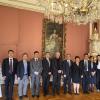
Nanjing University delegation visits IIASA to explore future collaboration
A high-level delegation from Nanjing University (NJU), led by Professor Tan Zhemin, President of NJU and Fellow of the Chinese Academy of Sciences, visited IIASA to discuss opportunities for strengthening scientific cooperation and advancing joint research on global challenges.
06 October 2026
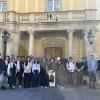
IIASA celebrates long-term partnership with MSc European Forestry Program
Coordinators, partners and graduates of the MSc European Forestry program visited IIASA on 29 September 2026. Twenty visitors from at least eight countries came as part of the alumni event held alongside the program's graduation ceremony at BOKU University in Vienna.