Join us for sessions featuring inspiring speakers tackling contested issues in the risk and resilience space. The hub proceeds mostly online, with a few events hosted personally at IIASA. A chance to learn, and be part of critical conversations.
Event
Conference Center, Laxenburg, Austria
As the world faces the growing risk of exceeding the 1.5°C warming threshold, understanding the risks and responses to climate overshoot across different disciplines has never been more urgent.
Article: News
17 March 2025
Adaptation to climate change is becoming increasingly urgent, yet global assessments still struggle to answer pressing questions: Where will adaptation be most needed? Which actors must adapt, and what barriers stand in the way? These challenges were at the heart of the ‘Adaptation Pathways and Scenarios for Climate Change Research’ workshop, held from 17th to 21st February at the Lorentz Center in Leiden, Netherlands.
A systems approach to the world highlights structural similarities across diverse domains. With a certain level of analytical abstraction, these similarities allow a unified language for description and analysis of different systems. This universality offers opportunities to transfer concepts, methods, and insights across different disciplinary domains, fostering cross-domain innovation and sense-making.
To make real-world impact, integrating a systems perspective into decision-making necessitates transcending disciplinary boundaries and forging partnerships beyond the scientific community. ASA research engages with policymakers in interactive processes of co-production of theories of change, data, interventions and insights.
Article: News
17 March 2025
People in informal settlements, urban deprived areas, refugee camps, prisons, and war zones can be particularly vulnerable to climate threats and natural hazards. A new study, led by IIASA researchers, explores how policymakers can ease their burden.

Vignesh Raghunathan
Researcher (IACC)
Article: Blog Post
14 March 2025
In a world where sustainable development and climate change solutions demand urgent action, ensuring that policies are informed by solid evidence is essential. The North Africa Applied Systems Analysis Centre (NAASAC) in Egypt has made this its mission, aiming to build a systemic culture of applied systems analysis for evidence-based policy development.
Article: News
14 March 2025
Want to contribute to the European Union’s climate neutrality target but not sure how? Join the latest Picture Pile campaign as part of IIASA’s LAMASUS project. Help us to identify livestock and grassland management practices from photographs, which will be used to validate a new geodatabase on land use management.
Event
Online and in Gvishiani room at IIASA (Laxenburg, Austria)
Artificial Intelligence (AI) and Machine Learning (ML) methods are becoming increasingly important in both science and society. In climate science - where complex biophysical and societal processes interact across diverse temporal and spatial scales, and datasets are often large, heterogenous and incomplete - AI and ML methods offer new powerful solutions.
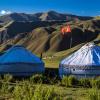
Strategy of sustainable industrial development of Kyrgyzstan
Article: News
12 March 2025
IIASA’s Population and Just Societies Program, in collaboration with the College of Population Studies at Chulalongkorn University in Bangkok, Thailand, is pleased to announce its upcoming annual intensive training course titled "Demographic Analysis with Applications to Aging and Health."
In order to address complex risk and resilience problems, SYRR implements Risk&Resilience Labs. These collaborative spaces support co-generation exercises for research, policy and practice. They proceed in transdisciplinary mode building on quantitative and qualitative research methods for creating enhanced insight and impact.
Event
IIASA, Raiffa Room
On March 3rd, the Systemic Risk and Resilience Group, as part of the MYRIAD-EU project, convened a diverse group of regional stakeholders from the Danube Region to co-create multi-risk pathways for the Danube Region.
IIASA Air Quality and Greenhouse Gases (AIR) Program will co-host a workshop with the Vietnam Academy of Science and Technology (VAST) in Hanoi from 18-21 December 2017.
Article: News
11 March 2025
IIASA contributed to the Austrian Bundesländerdialog — a forum bringing together the federal government, representatives of different states, and other interested institutions to discuss recent developments in research, technology, and innovation. It provided an important platform to increase IIASA’s visibility in the Austrian federal states and strengthen connections with key stakeholders in research and innovation.
Article: News
11 March 2025
IIASA researchers have made significant contributions to the newly released Vienna Yearbook of Population Research 2024 edited by Roman Hoffmann and colleagues.
Event
Paris, France
IIASA Director General Hans Joachim (John) Schellnhuber will be a featured speaker at The Climate Reality Project’s REALITY® Tour: Paris. As a world-renowned climate scientist, sustainability advocate, and founder of Bauhaus Erde, Schellnhuber will participate in a live Q&A panel to address pressing climate science questions.
Event
Matosinhos, a neighboring municipality of Porto, Greater Porto Metropolitan Area (Portugal)
The exhibition in the city of Matosinhos, a neighboring municipality of Porto, will open on the 24th March 2025 and will run until June 2025.
Event
Clare Hall, University of Cambridge
IIASA Director General Hans Joachim (John) Schellnhuber will participate in a Symposium on China at the University of Cambridge's Clare Hall. This prestigious event will bring together leading scholars, policymakers, and industry experts to explore critical issues in academic collaboration, trade, and cultural exchange with China.