

Raya Muttarak has been appointed to serve on the third term of the UN High-level Advisory Board (HLAB-III) on Economic and Social Affairs (2025-2027).
The United Nations High-level Advisory Board (HLAB) on Economic and Social Affairs was established in the context of United Nations development system reform, as a key part of efforts to enhance support to Member States of the United Nations in implementing the 2030 Agenda for Sustainable Development.
Raya Muttarak, Principal Research Scholar at the Migration and Sustainable Development (MIG) Research Group and Professor of Demography at the University of Bologna in Italy has been appointed as an expert to the United Nations High-level Advisory Board (HLAB-III). In this role, she will contribute her expertise and insights to help provide strategic guidance to the UN development system on pressing economic and social challenges.
Dr. Muttarak participated as a panelist in the inaugural meeting of the UN High-level Advisory Board on Economic and Social Affairs (H-LAB), held in Bangkok. Drawing on her expertise in migration, demography, and sustainable development, she contributed to discussions on how the Asia-Pacific region’s experiences can inform and advance global sustainable development efforts. Her insights helped shape the strategic guidance the Board will provide to the UN system on urgent economic and social challenges.
News

24 September 2026
IIASA researcher joins Austrian Academy of Sciences working group on integrated carbon neutrality
On 15 September, Principal Research Scholar Thomas Schinko represented IIASA at a high-level event of the Commission on the De-Fossilization and Carbon Neutrality of the European Energy Systems (DEE) of the Austrian Academy of Sciences (OEAW). The meeting denoted the kick-off workshop of the newly established DEE Working Group "Transsectoral and Transcontinental Integration”.

23 September 2026
Eco-Welfare Network Conference
Julia Beier participated in the first in-person Eco-Welfare Network Conference, held in Brussels from 9-11 September at the Université Libre de Bruxelles as part of the Transform-Labor project.
14 September 2026
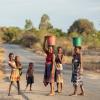
Can a warming climate put women at greater risk?
Unusually warm periods could have a link to an increased risk of intimate partner violence against women, according to a new IIASA-led study covering 31 countries in sub-Saharan Africa. The findings highlight how rising temperatures may compound existing risks of violence, with effects varying between demographic groups.