Article: News
26 February 2026
14 Student Fellowships awarded to students studying at East African Universities.
Article: News
25 February 2026
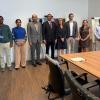
IIASA welcomed H.E. Ambassador Nikolaus Marschik, Secretary General of the Austrian Federal Ministry of European and International Affairs (BMEIA), for a high-level visit to Schloss Laxenburg on Friday, 20 February 2026.
Event
Online and in Raiffa room at IIASA (Laxenburg, Austria)
Artificial Intelligence (AI) and Machine Learning (ML) methods are becoming increasingly important in both science and society. In climate science - where complex biophysical and societal processes interact across diverse temporal and spatial scales, and datasets are often large, heterogenous and incomplete - AI and ML methods offer new powerful solutions.
Article: News
24 February 2026
JoAnne Linnerooth-Bayer moderated the Festival’s second plenary panel on private initiatives for financing nature, guiding a discussion on how the private sector can help close the global financing gap for biodiversity and nature-based solutions.
Article: Blog Post
23 February 2026
Validating disaster and climate resilience: how to create a gold standard for resilience-measurement
As climate risks intensify, fostering community resilience has become a global priority but a fundamental question remains for practice and policy: how can resilience be defined, measured, and proven to inform implementation? Together with the Zurich Climate Resilience Alliance, IIASA researchers have spent more than a decade developing and scientifically validating a universally-applicable framework to measure community resilience, turning a concept into an evidence-based tool to guide real-world implementation in the most vulnerable communities across the globe.
14 Student Fellowships awarded to students studying at East African Universities.
Event
Ithaca, Greece
Greece and Europe are entering a decisive demographic era. The Ithaca Demographic Forum 2026 convenes policymakers, diplomats and leading scholars to examine long-term population change, with a contribution by Wolfgang Lutz.
Article: News
23 February 2026
IIASA contributed to a new European roadmap for biodiversity monitoring through its involvement in the Horizon 2020 project, EuropaBON. The study, proposes a comprehensive roadmap to build a modern, integrated Biodiversity Observation Network (BON) for Europe that could become a global model for biodiversity monitoring in the 21st century.
Towards a National Roadmap for Population Dynamics in Mozambique (MOZPOL)

Transitioning towards sustainable mobility through co-creation with children: the case of mini blocks (Hop&Mop4 +CitySpace)
Event
Online
In this installment of the Tipping points webinar series, researchers and community-engaged scholars will explore what rapid glacier loss means for Alaska in terms of the reshaping of landscapes, livelihoods, and ways of life.

Duncan Gordon-Forbes
Guest Research Assistant (MDM)
Article: News
18 February 2026
As Europe faces increasingly severe climate impacts, the European Scientific Advisory Board on Climate Change is calling on the EU to urgently strengthen its policy framework for effective and coherent adaptation. A new report, with contributions from IIASA researchers, highlights that adaptation and mitigation must advance together to safeguard Europe’s future.
Event
Brussels
A dynamic afternoon exploring evidence-driven insights on climate mitigation contributions from circular economy strategies for construction - buildings, transport and energy infrastructure; services - housing and mobility; and system-wide enablers and impacts including digitalization, behavior change, and rebound effects.
Digital Twin Construction of Forest Environment in the Republic of Korea (DTCFE)
Navigating the risks of hydroclimatic extremes for freshwater ecosystem services in forest landscape (REACTION)
Want to learn how to turn your research into real policy impact? At the Green Policy Lab, a summer school co-organized by the University of Vienna and IIASA, you’ll explore how researchers can meaningfully contribute to green and evidence-informed policymaking. Through an immersive program combining hands-on learning, expert input, and international exchange, you’ll discover what it takes to navigate the science-policy interface and make your research count. Join us and become part of a growing community shaping greener and more resilient futures
Article: Blog Post
16 February 2026
In this IIASA Insights article, Nadejda Komendantova and Tahereh Zobeidi explore how behavioral science can strengthen disaster resilience by deepening our understanding of how people perceive and respond to risk. Drawing on their work within the PARATUS project, they highlight how integrating human decision-making into multi-hazard risk assessment can support more effective and socially grounded resilience strategies.
Event
Schönbrunn Palace, Vienna
IIASA Director General Hans Joachim (John) Schellnhuber and Agriculture, Forestry, and Ecosystem Services Research Group Leader, Florian Kraxner will participate in the upcoming Global Summit on Advancing Sustainable Forest-based Bioeconomy Approaches, bringing leading systems and climate science perspectives to the international dialogue. Their participation highlights the Institute’s commitment to advancing evidence-based pathways toward a sustainable, forest-based bioeconomy.
Event
Vienna, Austria
H2A researchers will be attending the ninth ATHEA Conference, "Equality in Times of Economic Slowdown", organized by the Austrian Health Economics Association (ATHEA) in Vienna.