© Foto 115358642 © Rawpixelimages | Dreamstime.com

Thomas Schinko
Research Group Leader and Principal Research Scholar (EQU)

Denise Watzenig
Program and Project Officer (POPJUS, EQU)
The Equity and Justice Research Group at IIASA advances the justice debate in global change research and sustainability science using mixed, systems-based, and participatory methods.
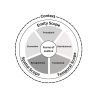
EQU research aims to contribute to achieving the Sustainable Development Goals (SDGs) by developing and applying conceptual and analytical frameworks for integrating equity and justice into systems analysis. Scientists in EQU bring a valued perspective to major global and local policy issues, including the climate crisis and biodiversity loss, by identifying and co-designing governance reforms and policy options that take account of diverse perceptions of procedural, distributive and compensatory justice.
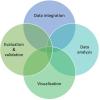
EQU researchers pioneer innovative mixed methods, with a special focus on the complementarity of qualitative systems approaches to quantitative systems analysis, to mobilise the manifold ideas of justice and governance approaches for complex societal challenges. To bridge the gap between conceptualization and implementation, EQU researchers develop and employ participatory processes that provide a safe space to co-produce options for transformative change. Stakeholder-inclusive research means putting people's lived experience at the center to solve “real policy problems” that our societies face. We aim for systematic and transparent research and to make our processes and output accessible to all.
In our team, we appreciate and harness diversity in views and work styles and we foster an enabling and collaborative work environment. We remain self-reflexive and open-minded. The research group works closely with other IIASA research programs and external partners to position our research activities in a systems analysis framework that reconciles both hard and soft systems methodologies and is grounded in ethics.







Franziska Gaupp
Guest Research Scholar (EQU)
Anna Kirchgasser
Research Intern (EQU)
Thomas Schinko
Research Group Leader and Principal Research Scholar (EQU)

Isabella Radhuber
Guest Research Scholar (EQU)

24 September 2026

23 September 2026
14 September 2026

13 July 2026
Climate change does not affect everyone equally. Vulnerability to extreme heat is shaped by a combination of conditions in which people live and work. If climate adaptation is to reduce vulnerability rather than simply manage its consequences, it must address the underlying conditions that create vulnerability. This is particularly relevant for workers, whose experiences remain a major blind spot in climate adaptation despite their essential role in providing the goods and services society depends on.