
© Riccardo Lennart Niels Mayer | Dreamstime.com

Taher Kahil
Research Group Leader and Senior Research Scholar (WAT)
The objective of the WAT Group is to provide the scientific foundation needed for addressing the quest for water security across scales and to help bridge science-policy-practice gaps related to water management by leading global efforts on integrated assessment of water resources and exploring transformation pathways towards a water secure future.
Water plays a central role in all human activities and needs to be managed efficiently and sustainably. The WAT Group pushes the boundary of transdisciplinary water science enabled by the institute’s recognized expertise in systems science approaches, to provide the scientific knowledge needed to address the quest for water security. The group aims to lead global efforts on integrated assessment of water supply and demand and identify solutions options that improve water scarcity, ameliorate water quality, and enhance resilience to extreme events, while at the same time engaging with key stakeholders at different levels to translate science into policy.
The group’s research has informed the development of various widely used models, which will continually be refined and extended to enable application and analysis at policy-relevant spatial scales. The group contributes to several IIASA research themes including biodiversity and ecosystem services, production and consumption, technology and innovation, and governance and institutions, by providing the water resources research expertise required for the development of a systemic approach to resolving sustainability issues.

Paul Kariuki
Guest Research Assistant (WAT)

Piotr Magnuszewski
Senior Research Scholar (WAT, EQU)
Mohammad Kamangar
INSF-IIASA Postdoctoral Fellow (WAT, CDAT)

Kimi Vu
Research Scholar (WAT, EF)
01 October 2026

23 September 2026

10 July 2026
IIASA, Laxenburg, Austria and online
Austrian Academy of Sciences and ISTA
16 October 2026
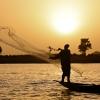
IIASA Journalist in Residence Lisa Palmer's latest article in the Science Diplomat highlights an IIASA-led partnership which found about 60% of Uganda’s rivers in good condition while building national capacity to track pollution and manage growing risks.
26 August 2026
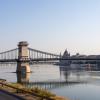
The reappearance of Budapest's “Rock of Starvation” is a visible sign of a drought months in the making. IIASA researchers have traced its progression from missing rainfall and parched soils to exceptionally low flows across the Danube basin.