News
21 October 2026
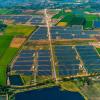
New UN report lays out emissions cuts needed for return to 1.5°C
IIASA researchers contributed to the UNEP Emissions Gap Report 2026: The Point of Return, which finds that urgent emissions cuts are needed to minimize global warming above 1.5°C and return to this threshold by the end of the century.

24 September 2026
IIASA researcher joins Austrian Academy of Sciences working group on integrated carbon neutrality
On 15 September, Principal Research Scholar Thomas Schinko represented IIASA at a high-level event of the Commission on the De-Fossilization and Carbon Neutrality of the European Energy Systems (DEE) of the Austrian Academy of Sciences (OEAW). The meeting denoted the kick-off workshop of the newly established DEE Working Group "Transsectoral and Transcontinental Integration”.

23 September 2026
IIASA researchers strengthen cooperation with Kyrgyzstan on AI and industrial development
IIASA Cooperation and Transformative Governance (CAT) Research Group Leader and Senior Research Scholar Nadejda Komendantova and CAT Research Scholar Dmitry Erokhin have contributed to a series of scientific and policy forums in Kyrgyzstan in 2026. Their research on artificial intelligence in the production sector builds on IIASA’s longstanding cooperation with the country on sustainable industrial development.
Focus

16 October 2026
Uganda-Austria water partnership leaves scientific legacy for water management
IIASA Journalist in Residence Lisa Palmer's latest article in the Science Diplomat highlights an IIASA-led partnership which found about 60% of Uganda’s rivers in good condition while building national capacity to track pollution and manage growing risks.
27 July 2026
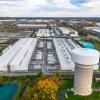
Can AI’s power problem become a clean-energy opportunity?
As artificial intelligence drives a surge in demand for electricity, concerns are growing about its impact on power systems and climate goals. IIASA researcher Behnam Zakeri argues that the challenge is not simply how to power AI, but how to harness the AI boom to accelerate the transition to cleaner, more flexible energy systems. Drawing on new research, he explores how energy storage can help ease pressure on electricity grids while creating opportunities that benefit both digital infrastructure and the wider energy transition.
Impacts

Water for growth
Impact Sheet #20, August 2021. IIASA and partners in East Africa are studying how the region’s economic development could affect water resources.

Assessing biofuels for transport
Impact Sheet #18, January 2021. IIASA models feed into the biofuel policies of international aviation and the EU road transportation sector, helping to steer them towards cleaner feedstocks.

Limiting global temperature increase to 1.5°C above pre-industrial levels
Impact Sheet #19, January 2021. IIASA research has guided the global policymaking community in their efforts to limit global temperature increase to this ambitious goal. When the world’s attention was focussed toward the 2°C target, the institute’s sophisticated analysis mapped credible pathways towards the 1.5°C goal
Policy briefs

Forest science and education in Ukraine: Priorities for action
Ukraine’s forest sector is suffering unprecedented challenges. War has impacted both forests and forestry – devastating forest areas, infrastructure and industry, as well as causing ‘brain drain’ and capacity loss due to the disruption of research institutions and the displacement of students and scientists. These impacts are compounded by factors including climate change, unstable forest health dynamics, landscape fires, and an overall decrease in forest productivity.

ENGAGE Summary for Policymakers
As the world faces the risks of dangerous climate change, policymakers, industry and civil society leaders are counting on Integrated Assessment Models (IAMs) to inform and guide strategies to deliver on the objectives of the Paris Agreement (PA) and subsequent agreements.
Stakeholder engagement in climate change solutions
Policy Brief #42, October 2023. Workshops bringing scientists together with stakeholders from various backgrounds have shown the importance of dialogue for co-designing climate pathways and highlighted the need for physical meetings and capacity building.
Policy applications
Centre for Integrated Assessment Modelling (CIAM)
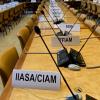
Since 1999 IIASA has been hosting the Centre for Integrated Assessment Modelling (CIAM), one of the four centres assigned for the European Monitoring and Evaluation Programme (EMEP) of the Convention on Long-range Transboundary Air Pollution.
GAINS analyses for the 2009 United Nations Climate Change Conference - COP15 in Copenhagen
As input to the climate negotiations at COP15 in Copenhagen 2009, IIASA has developed a coherent international comparison of greenhouse gas mitigation efforts among Annex I Parties in 2020. This web site provides interactive access to an on-line calculator, underlying input data, and documentation of the methodology.
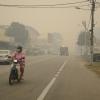
Pollution Management in Developing Countries
There is an urgent need in the developing world for increased support on pollution management in order to respond to the magnitude of the threat to human health and economies. Responding to pollution is a challenge that is solvable in the near term to save lives and unlock economic opportunity through action at the local, national, regional and global levels.
The methods developed by the PM Group offer an integrated perspective on cost-effective policy interventions that improve air quality, reduce negative health impacts, and deliver benefits for a wide range of development goals.