Please note that this program will be regularly updated. All times are given in India Standard Time (IST).
Article: News
14 March 2022
IIASA Advancing Systems Analysis Program Director, Elena Rovenskaya, contributed to the United Nations Educational, Scientific, and Cultural Organization (UNESCO) toolkit called “Mathematics for action: supporting science-based decision making” with a brief on allocating scarce resources modeling to support food-energy-water sustainability.
Event
Yola, Adamawa State, Nigeria
Dr. Hossein Hossani from the IIASA Cooperation and Transformative Governance (CAT) Research Group is the founder of YolaCare initiative in Nigeria, whose application, created under Monaco Impact, promises to bring solutions to child healthcare. The YolaCare application will be launched on Thursday, March 3 in Yola, Adamawa State, Nigeria.
Article: News
11 March 2022
The systemic and uncertain risks facing the world today can have cascading impacts across systems and sectors. A new briefing note on systemic risk highlights that an integrated perspective that incorporates the inherently complex nature of climate-related hazards, vulnerability, exposure and impacts, is crucial to better understanding and responding to systemic risk.
Article: News
10 March 2022
To have a better chance of holding global warming to 1.5°C, we need to accelerate the phase-down of HFC refrigerants under the Montreal Protocol. This could also reduce pollution and improve energy access.
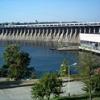
Integrated modeling for robust management of food-energy-water-land use nexus security and sustainable development
Article: News
10 March 2022
The increase in emissions of greenhouse gases into the atmosphere is only one of several serious global threats to our continued existence on Earth, and their reduction is at the core of international agreements like the Paris Agreement and the UN Sustainable Development Goals. Together with Ukrainian colleagues, IIASA researchers took a novel approach to further the understanding of the planetary burden and its dynamics caused by emissions from human activity.
Article: Blog Post
09 March 2022
Measured in terms of economic welfare, including consumption and life expectancy, the share of health care expenditures in most developed economies is too low.
IIASA's first Director, Howard Raiffa, and first Council Chair, Jermen Gvishiani were first in a series of distinguished scientists who have held these posts at IIASA.
IIASA's first director Howard Raiffa on the negotiations that led to IIASA's creation.
Article: News
08 March 2022
Curbing or even containing a pandemic breakout like COVID-19 almost always implies unpalatable choices between lost lives and livelihoods. The authors of a new study just published in the Journal of Economic Literature set out to better understand the impacts and trade-offs policymakers must consider when addressing modern infectious diseases and their macroeconomic repercussions.
Event
Hybrid event
Sustaining Biodiversity: A Challenge for Science and Policy
Event
Austrian Academy of Sciences, Vienna
This two-day event in cooperation with the Austrian Academy of Sciences will begin with an evening event on 16 November 2022 that demonstrates how systems analysis can contribute to solving many of today’s global challenges as well as explore the future of this transdisciplinary field. The second day will feature a major international conference on systems analysis.
Event
New Delhi
IIASA 50th anniversary celebrations will include a conference hosted by the Technology Information, Forecasting and Assessment Council (TIFAC) and IIASA. The event will build on the expertise and interlinkages between the system analysts’ communities in Asia to discuss and analyze transformative approaches to achieving sustainability across multiple stakeholder, sectors and regions.
Article: News
07 March 2022
Mountain regions have a large potential for hydropower that cannot be harnessed effectively by conventional technologies. IIASA researcher Julian Hunt and an international team of researchers developed an innovative hydropower technology based on electric trucks that could provide a flexible and clean solution for electricity generation in mountainous regions.
Article: News
07 March 2022
Many countries have set carbon neutrality as a policy goal, but according to a new study by an international team of researchers from IIASA, Japan, and the US, there are various risks associated with the reduction of greenhouse gases, especially in the agriculture, forestry, and land use sectors, that need to be considered when formulating mitigation strategies.
In June 2021 IIASA was granted Observer status to the Intergovernmental Science-Policy Platform on Biodiversity and Ecosystem Services (IPBES).