


OSCE Partners with IIASA to Inform Long-Term Regional Energy Security Planning Amid Escalating Climate and Systemic Risks
The Organization for Security and Co-operation in Europe (OSCE) is partnering with the International Institute for Applied Systems Analysis (IIASA) to implement the initiative on Energy Systems Analysis and Capacity Building for Long-term Regional Energy Security Planning (2026-2028) as part of the OSCE’s Mitigating Climate Change Threats to Critical Energy Infrastructure (2023-2028) project. The new phase within the project will address escalating climate threats and broader systemic pressures on critical energy infrastructure.
 © OSCE-IIASA
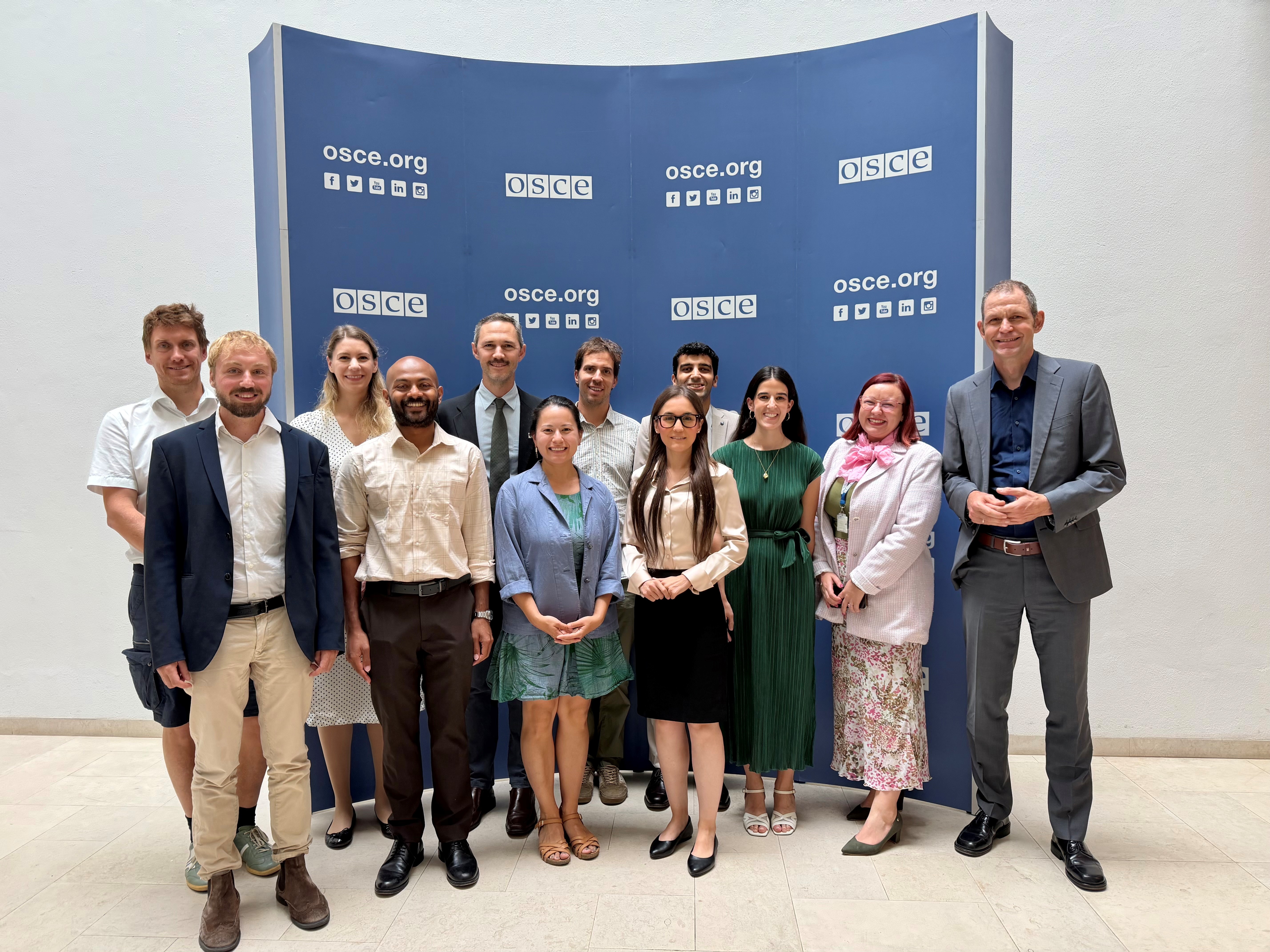
Photo: OSCE-IIASA project team at the kick-off meeting in Vienna
Energy systems across the OSCE region are increasingly interconnected and exposed to a complex and evolving range of risks. Climate-related hazards can physically damage critical energy infrastructure, impact supply and demand patterns, and threaten energy security. At the same time, rising energy demand, supply chain disruptions, infrastructure constraints, and changing geopolitical and trade dynamics can place additional pressure on energy systems and amplify these risks. This exposure is particularly pronounced in Eastern Europe, South-Eastern Europe, the Mediterranean, and Central Asia (“OSCE Target Regions”).
Although awareness of these challenges has grown and considerable technical expertise already exists across the regions, national decision-makers need coordinated analytical capabilities and practical tools to plan long-term energy security and resilient energy transition strategies. The newly established OSCE-IIASA partnership will address this need and support decision-makers in 14 countries across the OSCE Target Regions through advanced energy system modelling and robust analytical tools, combined with capacity-building and regional co-operation.
A Continuous Approach to Regional Energy Security
Originally launched by the OSCE in 2023, the project's first phase established a strong analytical foundation for understanding where and how climate change may affect energy infrastructure across the OSCE Target Regions over the coming decades. This included highly localized, high-resolution climate projections and training for hundreds of energy sector operators on vulnerability assessments.
Running from 2026 to 2028, the new phase, Energy Systems Analysis and Capacity Building for Long-term Regional Energy Security Planning, builds on this foundation by broadening the focus from climate-related analysis to the resilience of interconnected energy systems facing multiple, compounding risks - including both climate-related and broader systemic energy security risks. It will develop a comprehensive and transferable analytical framework to examine how energy systems respond to, withstand, and recover from these interacting risks.
This next phase will also place greater emphasis on strengthening the capacity of national institutions to independently assess vulnerabilities, anticipate future risks, and develop energy security plans that are resilient to identified risks.
Three Pillars of Action: Modelling, Training, and Co-operation
The 2026-2028 phase of the project is structured around three complementary workstreams designed to strengthen analytical capacity, build practical skills, and foster transboundary co-operation in support of long-term energy security and resilience in energy transition planning.
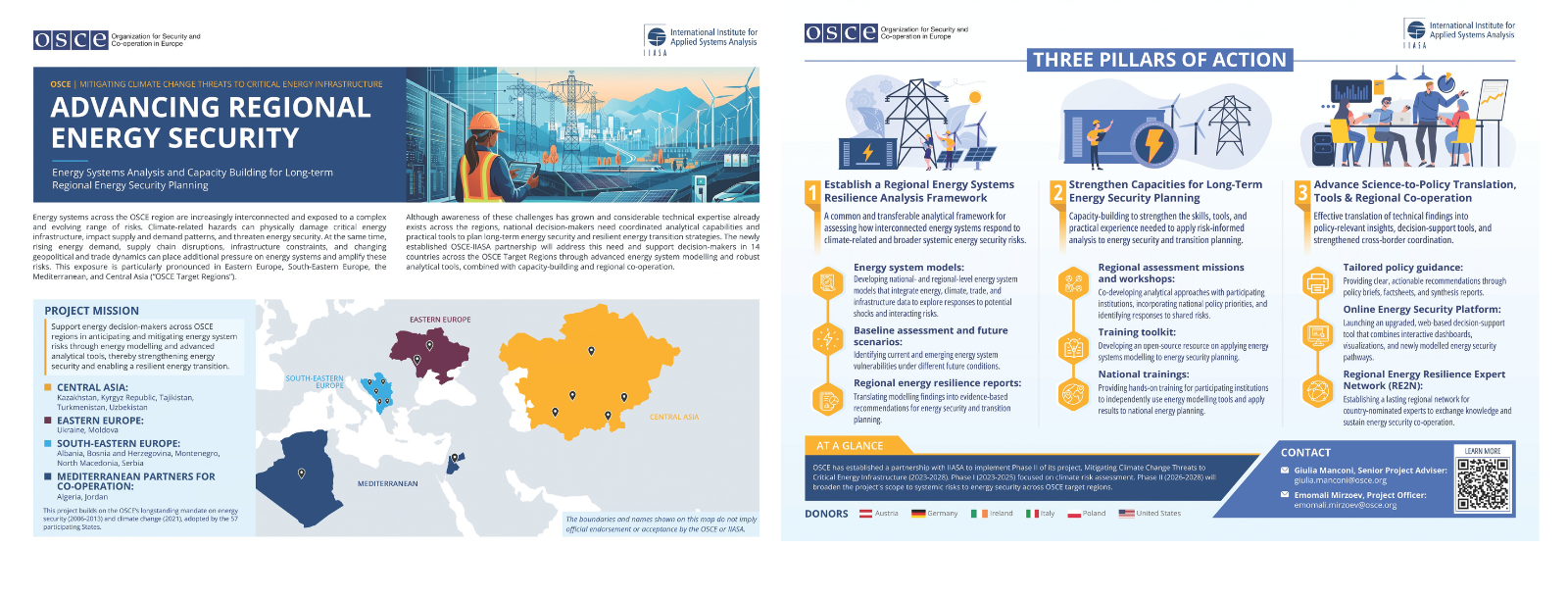
- Advanced Analytical Framework: IIASA’s Energy, Climate, and Environment (ECE) Program will provide advanced energy system modelling and analytical tools at national and regional levels. These models will be used to assess future vulnerabilities and the resilience of energy systems under different scenarios. By testing energy systems against a range of potential shocks, the project will help participating States identify emerging risks and better understand how different risks can interact and affect interconnected energy systems, providing an evidence base for energy security and transition planning.
- Strengthened Institutional Capacities: Capacity-building efforts will further strengthen the tools needed for long-term energy security and transition planning across the OSCE Target Regions, building on existing technical capacity in the regions. Through regional missions, hands-on workshops, and technical trainings, IIASA and national stakeholders will share knowledge and discuss how to evaluate energy system scenarios and co-design joint strategies to foster long-term transboundary cooperation across sectors.
- Enhanced Early Warning Tools and Transboundary Coordination: The project will translate technical and scientific findings into accessible decision-support tools and actionable policy recommendations for decision-makers. It will roll out an upgraded OSCE Energy Security and Risks Platform, a web-based decision-support application providing access to data, interactive visualizations and newly modelled energy security scenario pathways. These enhancements will support evidence-based decision-making and help identify emerging risks and opportunities for energy security, resilience, and the energy transition. In parallel, a Regional Energy Resilience Expert Network (RE2N) will be established as a mechanism for sustained cross-border co-operation, knowledge exchange, and expert co-ordination beyond the project period.
A Broad Transboundary Reach
The initiative spans 14 participating countries across the OSCE Target Regions:
- Central Asia: Kazakhstan, Kyrgyz Republic, Tajikistan, Turkmenistan, Uzbekistan
- Eastern Europe: Ukraine, Moldova
- South-Eastern Europe: Albania, Bosnia and Herzegovina, Montenegro, North Macedonia, Serbia
- Mediterranean Partners for Co-operation: Algeria, Jordan
Factsheet
 © OSCE/IIASA
OSCE-IIASA Partnership: Bringing Science and Policy Together
The project reflects a shared OSCE-IIASA commitment to bringing scientific evidence and systems thinking into policy and multilateral dialogue.
 © OSCE/IIASA
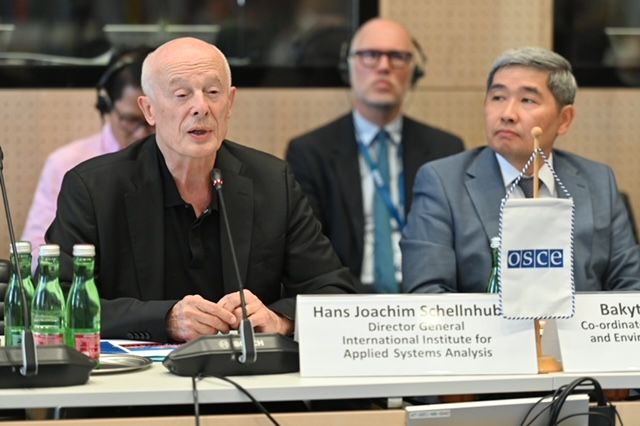
“Energy security in the 21st century cannot be achieved by nations acting alone. Energy systems are deeply interconnected across the globe, as are the risks they face. By bringing science, systems thinking, and diplomacy together, we can turn this interdependence into a source of resilience and co-operation. This partnership with the OSCE demonstrates how shared knowledge can build bridges across borders and help shape a more secure and sustainable future for all,” notes IIASA Director General Hans Joachim (John) Schellnhuber.
Recent IIASA engagement in the OSCE Economic and Environmental Forum in Prague and its Joint Preparatory Meeting in Vienna – where IIASA Director General Hans Joachim (John) Schellnhuber, Science Diplomacy Director Susie Kitchens, and Senior Research Scholar Ping Yowargana contributed to discussions on science-based diplomacy – further underscored the importance of strengthening the science-policy interface in addressing shared economic, environmental, and security challenges.
Events
Prague, Czech Republic
IIASA at the Concluding Meeting of the 32nd OSCE Economic and Environmental Forum
Hofburg, Vienna, Austria