

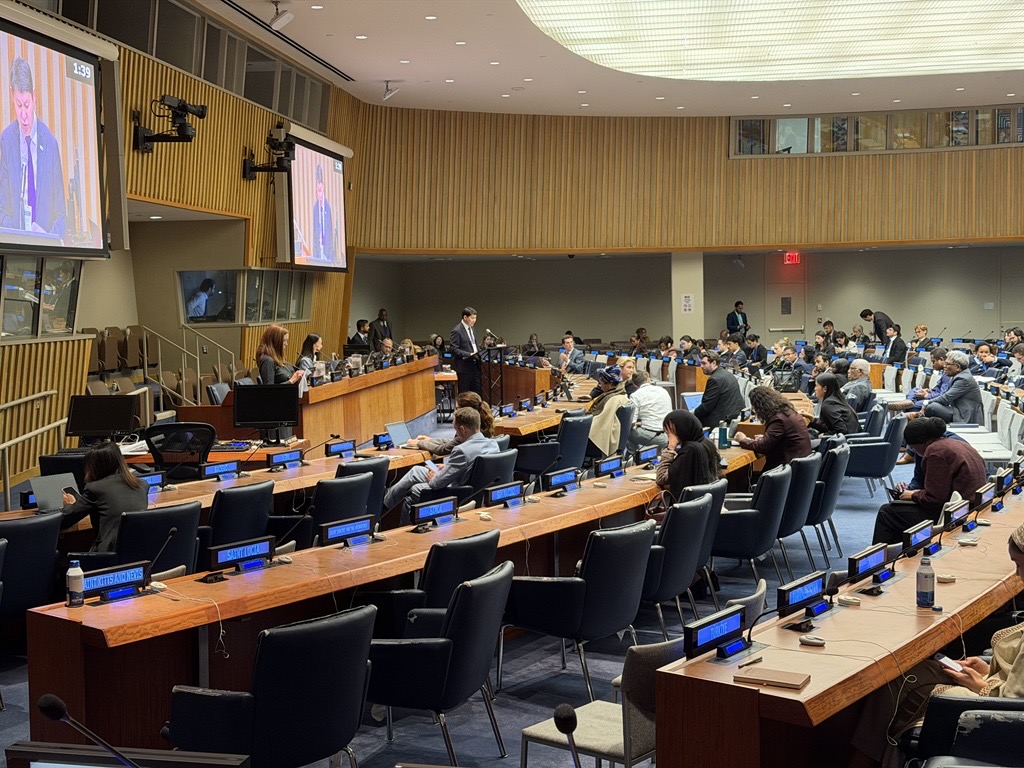
IIASA Science Diplomacy Director and Head of Communications and External Relations Susie Kitchens represented the Institute at the United Nations General Assembly (UNGA) High-level Week and Science Summit in New York in September, contributing to discussions on how science and international cooperation can help address shared global challenges.
During UNGA High-level Week and the accompanying Science Summit, Susie engaged with international partners, policymakers, and scientific leaders on issues ranging from climate change and food security to artificial intelligence, sustainable development, and the future of multilateral cooperation.
A key highlight was her participation as a speaker in the High-Level Dialogue on Science Diplomacy and Global Cooperation, where discussions focused on strengthening the connections between science, diplomacy, and international decision-making. She also contributed to discussions on Resilient Food Systems at the Climate-Nature-Conflict Nexus, organized by the Stimson Center and the UK's Department for Environment, Food & Rural Affairs (DEFRA). The event explored the interconnected challenges of climate change, environmental degradation, conflict, and food insecurity, reflecting IIASA's long-standing expertise in integrated systems analysis.
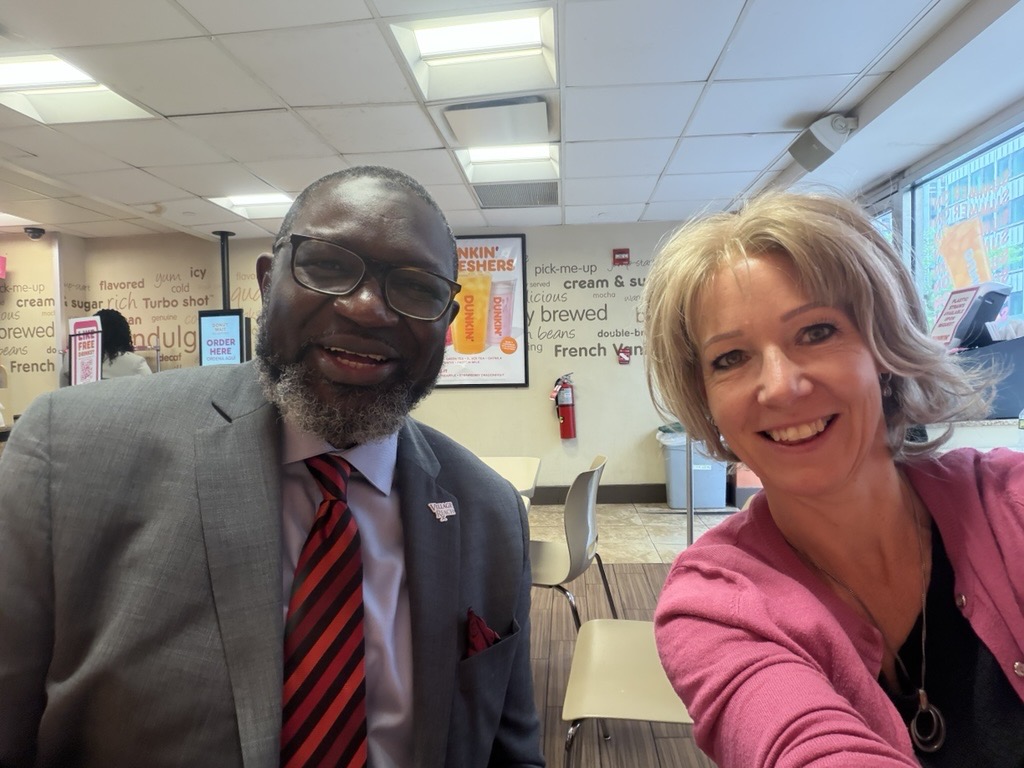 © IIASA
Susie Kitchens with Dr Ahmed Ogwell, Science Diplomacy advisor to SFA
In addition, her program included engagement with representatives of the Islamic World Educational, Scientific and Cultural Organization (ICESCO), the United Nations Industrial Development Organization (UNIDO), and the Austrian Permanent Mission to the United Nations, as well as discussions with representatives and partners from Barbados, the United Kingdom, Kenya, and Kazakhstan, supporting IIASA's efforts to strengthen relationships with current and prospective IIASA National and Regional Member Organizations.
Susie also engaged with the African Union Development Agency–NEPAD and the Science for Africa Foundation (SFA), exploring opportunities to strengthen science diplomacy, develop networks of science diplomacy champions across Africa, and build capacity to translate scientific research into policy, while deepening collaboration across African research and innovation networks. Discussions with SFA representatives also highlighted opportunities for joint activities, including a planned IIASA-SFA panel at the Science Forum South Africa conference in Pretoria in December. These engagements took place alongside events addressing climate action, responsible artificial intelligence, and global health.
"Science diplomacy is about building bridges where they are needed most. In a world of growing complexity and geopolitical uncertainty, science offers a common language and a foundation for trust. IIASA's strength lies in bringing countries, disciplines, and perspectives together to turn knowledge into collective action for a more sustainable future," noted Susie following her participation in New York.
IIASA’s participation in events such as the UNGA builds on the Institute's founding mission as a bridge between scientists across geopolitical divides. More than five decades later, this commitment to cooperation across borders remains central to IIASA's work, connecting systems science with diplomacy to help shape evidence-informed responses to global challenges.
 © IIASA
News
13 July 2026
From innovation to impact: Professor Subra Suresh visits IIASA
IIASA recently welcomed Professor Subra Suresh – Vannevar Bush Professor Emeritus at the Massachusetts Institute of Technology (MIT), Professor at Large at Brown University, former Director of the US National Science Foundation (NSF), and former President of Carnegie Mellon University and Nanyang Technological University Singapore – for a full day of exchange culminating in a Science Parliament Lecture titled, Innovation 4.0 for Humanity 4.0.
07 July 2026
New framework identifies freshwater conservation priorities
Freshwater ecosystems are under growing pressure worldwide, but conservation resources are limited. A framework developed by IIASA researchers and partners can help identify where conservation could prevent biodiversity loss and where restoration efforts are likely to have the greatest ecological impact across the United States and Europe.

27 May 2026
Temporary carbon removal could help support climate goals
Persistent methane emissions from sectors such as agriculture and growing debates over the credibility of carbon offsets are creating new challenges for governments and companies pursuing net-zero commitments. New research suggests temporary carbon storage may have a scientifically valid role in helping support climate goals, if used in the right way.