

IIASA is proud to announce that 12 researchers from across various IIASA programs have been named on the annual Highly Cited Researchers™ list from Clarivate.
The annual list identifies around 6,600 researchers from across the globe who demonstrated significant influence in their chosen field or fields through the publication of multiple highly cited papers produced over an 11-year period from January 2010 to December 2020, which is quite an elite group considering the number of research institutions and researchers around the world.
The methodology that determines the “who’s who” of influential researchers draws on the data and analysis performed by bibliometric experts and data scientists at the Institute for Scientific Information™ at Clarivate. Their names are drawn from the publications that rank in the top 1% by citations for field and publication year in the Web of Science™ citation index. It also uses the tallies to identify the countries and research institutions where these citation elite are based.
The following IIASA researchers were selected for their exceptional influence and performance in the Essential Science Indicator (ESI)™ fields of environment and ecology research, cross-field research, geosciences, and social sciences:
- Oliver Fricko, Integrated Assessment and Climate Change and Sustainable Service Systems Research Groups of the Energy, Climate, and Environment Program
- Shinichiro Fujimori, Transformative Institutional and Social Solutions, Integrated Assessment and Climate Change, and Sustainable Service Systems Research Groups of the Energy, Climate, and Environment Program
- Petr Havlik, Integrated Biosphere Futures Research Group of the Biodiversity and Natural Resources Program
- Zbigniew Klimont, Pollution Management Research Group of the Energy, Climate, and Environment Program
- Volker Krey, Integrated Assessment and Climate Change Research Group of the Energy, Climate, and Environment Program
- Michael Obersteiner, Exploratory Modeling of Human-natural Systems Research Group of the Advancing Systems Analysis Program
- Keywan Riahi, Energy, Climate, and Environment Program
- Joeri Rogelj, Integrated Assessment and Climate Change and Transformative Institutional and Social Solutions Research Groups of the Energy, Climate, and Environment Program
- Hugo Valin, Integrated Biosphere Futures Research Group of the Biodiversity and Natural Resources Program
- Yoshihide Wada, Biodiversity and Natural Resources Program
IIASA Energy, Climate, and Environment Program Director Keywan Riahi is one of only 23 researchers recognized for showing exceptionally broad performance being highly cited in three or more fields. Riahi was recognized in the fields of environment and ecology research, geosciences, and social sciences. Integrated Biosphere Futures Research Group Leader, Petr Havlik, was recognized in both the environment and ecology research, and social sciences fields.
Two researchers not primarily associated with IIASA, but who nevertheless have strong ties to the institute also made the list:
- Klaus Hubacek, an alumnus of the former IIASA Water Program
- Andreas Richter, an alumnus of the former IIASA Ecosystems Services and Management Program
“It is increasingly important for nations and institutions to recognize and support the exceptional researchers who are driving the expansion of the world’s knowledge. This list identifies and celebrates exceptional individual researchers who are having a significant impact on the research community as evidenced by the rate at which their work is being cited by their peers. The research they have contributed is fueling the innovation, sustainability, health, and security that is key for our society’s future,” said David Pendlebury, senior citation analyst at the Institute for Scientific Information at Clarivate.
“The presence of so many IIASA researchers on this prestigious list reflects the high quality, highly relevant, and innovative research undertaken by our researchers. A recognition of this nature should undoubtedly be celebrated. However, it also places a great responsibility on our researchers to continue to systematically, and in a scientifically robust manner, unravel the complexity of the global challenges we face today, so as to facilitate the evaluation of alternative development pathways for their societal relevance and sustainability impacts,” concludes IIASA Deputy Director General for Science, Leena Srivastava.
Congratulations to all these IIASA researchers for this exceptional achievement!
The full 2021 Highly Cited Researchers list and executive summary can be found online here.
News
06 October 2026
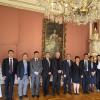
Nanjing University delegation visits IIASA to explore future collaboration
A high-level delegation from Nanjing University (NJU), led by Professor Tan Zhemin, President of NJU and Fellow of the Chinese Academy of Sciences, visited IIASA to discuss opportunities for strengthening scientific cooperation and advancing joint research on global challenges.

23 September 2026
Global water report warns of increasingly erratic freshwater conditions
IIASA water-quality modeling has contributed to the World Meteorological Organization’s (WMO) State of Global Water Resources 2025 report. The assessment shows that the global water cycle is becoming increasingly erratic, with serious implications for people and economies worldwide.
22 September 2026
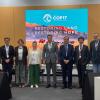
IIASA at UNCCD COP17: Advancing land restoration and resilience
Building on its engagement at the 16th session of the Conference of the Parties to the United Nations Convention to Combat Desertification (UNCCD COP16) in Riyadh, IIASA contributed to a series of events and bilateral discussions at UNCCD COP17, held in Ulaanbaatar, Mongolia, towards the end of August. Under the theme, Restoring Land, Restoring Hope, COP17 advanced action on land degradation, drought resilience, and sustainable land management, with particular emphasis on rangelands and pastoral livelihoods.