



INQUIMUS 2025 organized by the Equity and Justice (EQU) Research Group was successfully held at IIASA in December 2025. The interactive three-day conference brought together around 50 participants from a wide range of disciplines, all sharing a commitment to making justice dimensions more explicit in transformative climate risk management and adaptation research and practice.
The conference aimed to explore how justice considerations can be placed at the center of managing climate risks, rather than treated as an add-on. Interactive formats, such as “state-of-the-art" talks and “open space” sessions, created a space for in-depth discussions, collective reflection, and idea generation. Participants presented their own research but also explored research gaps, discussed how diverse dimensions of justice could be better integrated into ongoing projects, and identified opportunities for future collaboration and proposal development.
A key outcome of INQUIMUS 2025 is the intention to establish a Community of Practice. As a next step, the organizers will host a follow-up online event in April 2026 for all participants to continue the exchange and collaboration.
To learn more about the conference, read our blog “What if we centered justice in climate risk management and adaptation research and practice?” and visit the event page INQUIMUS interactive conference: Centering Justice in Climate Risk Management for Transformative Change.
About INQUIMUS
INQUIMUS is a workshop series initiated by the Department of Geoinformatics – Z_GIS at the University of Salzburg, Austria and EURAC Research in 2014 to integrate quantitative and qualitative assessment methodologies for complex and multidimensional phenomena. The yearly event is alternatingly held among the partner institutions
- International Institute for Applied Systems Analysis (IIASA)
- United Nations University (UNU EHS)
- GeoSphere Austria
Hosted for the second time by IIASA in 2026, we also had the kind support and participation of our member organizations, including the Sub-Saharan Africa Regional Member Organization (SSARMO) and Egypt.
News

24 September 2026
IIASA researcher joins Austrian Academy of Sciences working group on integrated carbon neutrality
On 15 September, Principal Research Scholar Thomas Schinko represented IIASA at a high-level event of the Commission on the De-Fossilization and Carbon Neutrality of the European Energy Systems (DEE) of the Austrian Academy of Sciences (OEAW). The meeting denoted the kick-off workshop of the newly established DEE Working Group "Transsectoral and Transcontinental Integration”.

23 September 2026
Eco-Welfare Network Conference
Julia Beier participated in the first in-person Eco-Welfare Network Conference, held in Brussels from 9-11 September at the Université Libre de Bruxelles as part of the Transform-Labor project.
14 September 2026
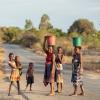
Can a warming climate put women at greater risk?
Unusually warm periods could have a link to an increased risk of intimate partner violence against women, according to a new IIASA-led study covering 31 countries in sub-Saharan Africa. The findings highlight how rising temperatures may compound existing risks of violence, with effects varying between demographic groups.