



Join us as an early career researcher
 © IIASA
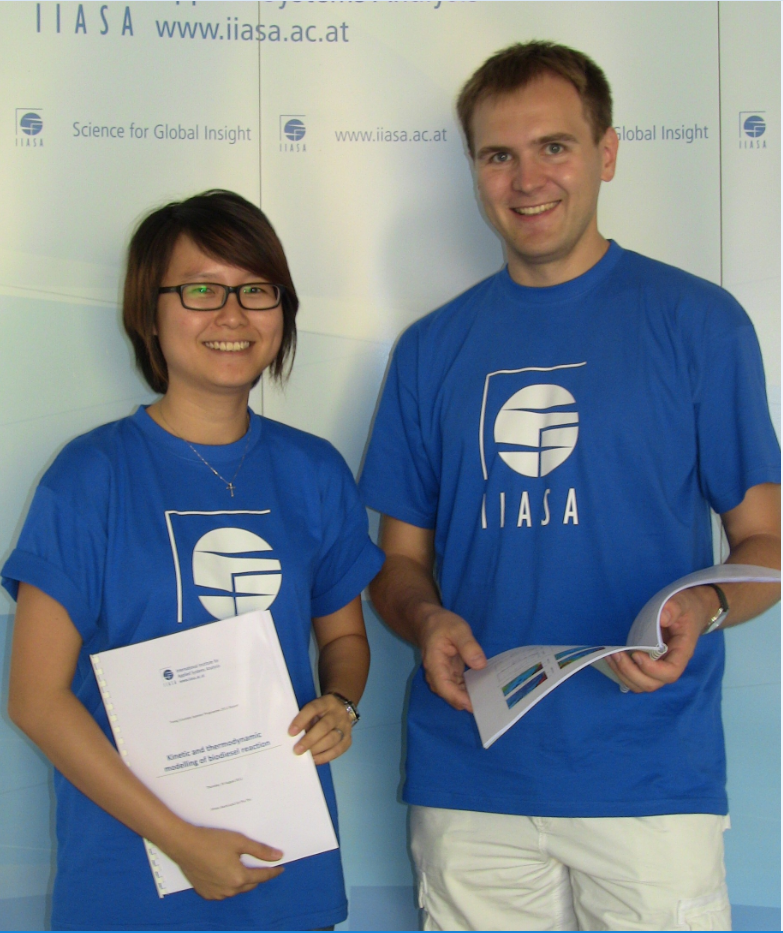
As an early career researcher at IIASA you are integrated into a research group of typically 10-20 researchers, from junior to senior, as well as into a bigger IIASA research program that typically covers several research groups.
Within your research group you are likely addressing challenges with an interdisciplinary team of colleagues with different backgrounds, trained in different modes of thinking. Brace yourself for a lot of input and interesting conversations!
1. Mentorship and Research Independence
At IIASA, you are supervised by one or more senior scientists who support you throughout your research journey.
They help you learn new methods and tools, develop your research ideas and skills, and understand how to generate, analyze, and interpret research results.
As your skills and confidence grow, so does your independence and responsibility. You are encouraged to connect different fields of knowledge and practice and develop your own research perspective.
Our mentoring program also supports researchers at every career stage, helping them reflect on their career paths and prepare for the challenges and opportunities ahead.
2. An Open and Collaborative Research Culture
IIASA is a culturally diverse and highly collaborative environment.
Our researchers are approachable and many have an open-door policy. So, don't hesitate to reach out, ask questions, exchange ideas, or simply have a conversation.
You will find a community that is willing to listen, share experience, and support your development.
3. Data, Models, and Research Support
A large part of IIASA's research relies on data, models, and decision-support tools.
As an IIASA researcher, you have access to up-to-date data and the opportunity to work alongside experts who develop some of the most advanced tools for supporting decision-making.
Your research is also supported by dedicated professional teams across the institute.
For example, IIASA's Library and Knowledge Management team can help you access the literature and knowledge resources you need to move your research forward.
4. A Community of Early Career Scientists
Beyond your immediate research group, you become part of a vibrant international community of interdisciplinary early career scientists.
Researchers support one another, share experiences, and exchange ideas about research and career development.
They organize seminars to share their work and regularly come together for lunches, social activities, and networking.
There are also many opportunities to connect with researchers across the institute — through seminars and workshops, social events, activities such as Enlarge Your Social Circle at IIASA, and the many clubs at IIASA.
5. Building an International Network
And speaking of international networks, IIASA gives you access to a large and active alumni community.
Many alumni remain connected to the institute and may be able to support you as you take your next career step.
IIASA also shares information about career and professional development opportunities for early career researchers, including grants and fellowships, and provides support with preparing and submitting applications.
6. Connecting Research with Decision-Making
Much of IIASA's research is highly applied, with some projects directly supporting decision-makers.
This gives you opportunities to engage with decision-makers, understand their perspectives and the challenges they face, and bring those insights into your own research.
It is a chance to see how research can contribute to real-world decisions and societal challenges.
7. Learning Systems Analysis
Not sure what applied systems analysis means?
IIASA offers introductory courses in systems thinking and systems analysis to help you build a foundation and explore the field.
You can also take part in IIASA's systems analysis reading group, where you are exposed to different approaches and develop experience with a broad range of tools.
Most importantly, by working at IIASA, you are immersed in systems analysis research and gain first-hand experience of how different perspectives can be brought together to understand complex challenges.
8. Opportunities for Further Study and Collaboration
Some early career scientists at IIASA pursue a PhD at a local university alongside their work.
If this is an option you are interested in, talk to your supervisor and the CDAT unit about the possibilities.
IIASA also provides opportunities for collaboration through partnerships with other organizations, including institutions such as the Complexity Science Hub Vienna.
9. Growing Your Career
Joining IIASA as an early career researcher can give your career a substantial boost.
Some former early career researchers have gone on to become research leaders at IIASA.
Others have become researchers and professors at universities around the world, joined international organizations, or started their own businesses.
Your time at IIASA can therefore become an important foundation for many different career paths.
10. Developing Your Research Skills
IIASA regularly offers research skills training, both formally and informally.
You can also apply for funding to participate in external training events, giving you opportunities to develop skills and experti
 © IIASA
Honoring 50 Years of IIASA's Young Scientist Summer Program
This year marks the 50th Anniversary of IIASA’s world-leading Young Scientist Summer Program (YSSP). To celebrate this significant milestone, IIASA will host a series of regional alumni gatherings and showcase impactful stories from our global network. The anniversary celebrations will culminate in a celebratory two-day YSSP Alumni event held at IIASA.
 © IIASA
IIASA Connect
offers a platform for connecting our international systems analysis community. Are you part of our early career network? Join today.
News
09 January 2020
Representing IIASA at the 2019 Centennial AGU Fall Meeting
Florian Hofhansl shares his experience on presenting the wildfire climate impacts and adaptation model (FLAM) at the Google Exhibition Booth at the 2019 American Geosciences Union meeting held in San Francisco 9-13 December.
09 January 2020
Representing IIASA at the 2019 Centennial AGU Fall Meeting
Florian Hofhansl shares his experience on presenting the wildfire climate impacts and adaptation model (FLAM) at the Google Exhibition Booth at the 2019 American Geosciences Union meeting held in San Francisco 9-13 December.
Events
Laxenburg, Austria
Postdoc Appreciation Week (PAW) Austria
https://iiasa.zoom.us/j/69377584933
2026 Young Scientists Summer Program (YSSP) Application Webinar for Europe and Asia
Comenius University, Faculty of Natural Sciences, Bratislava