
Throughout 2025, the Strategic Initiatives (SI) Program continued to foster close collaboration with IIASA’s National and Regional Member Organizations, supporting targeted, solution-oriented research aligned with national and global priorities.
BLOOM
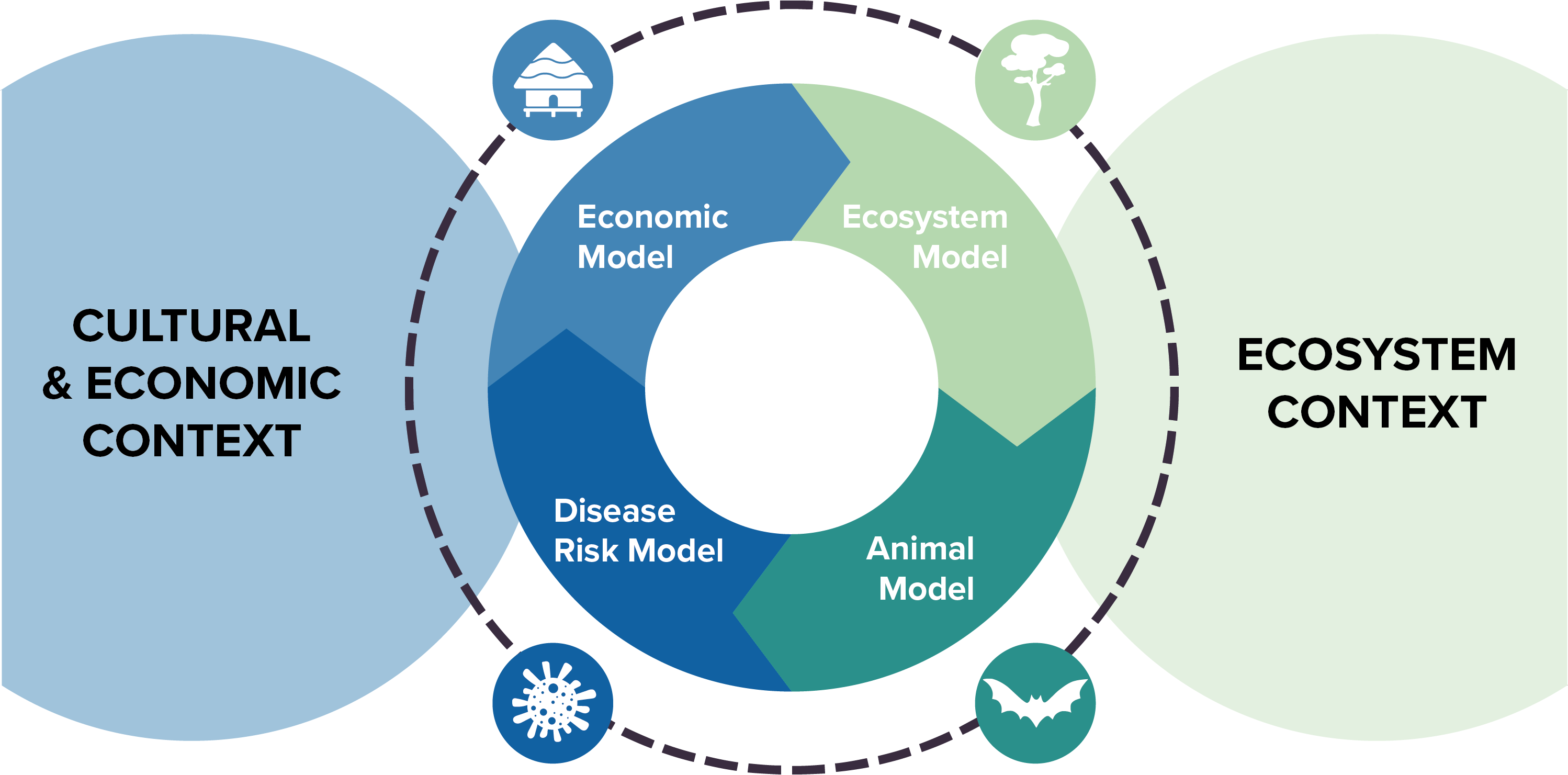
The Biodiversity and Land-use Objectives for Optimal Management (BLOOM) project, launched in January 2025, aims to develop a quantitative systems analysis framework for One Health research to evaluate how conservation policies influence zoonotic disease spillovers. As IIASA’s first One Health project, BLOOM integrates economics, ecology, epidemiology, and policy analysis within a single framework, using Ebola Virus Disease risk in Sierra Leone as a case study.
During its first year, the project focused on defining modeling, data, and policy requirements; developing the integrated framework; and establishing a stakeholder engagement strategy. Key outputs include a perspective article describing the framework (planned for submission to Nature Sustainability in 2026), a synthesis of economic and ecological datasets, and an integrated modeling structure currently being tested in Sierra Leone’s Gola National Park.
The project also reviewed existing and planned governance policies and conducted a comprehensive stakeholder mapping exercise, resulting in preliminary scenarios and a stakeholder engagement framework. An online stakeholder workshop planned for July 2026 will help validate project assumptions against local socioeconomic and cultural realities.

Fire&Ice
The Wildfires and Climate Change in the Boreal Zone (Fire&Ice) project focuses on understanding how climate change is affecting wildfire patterns in the boreal region. A novel aspect of the project is the improved representation of demographic indicators and the assessment of health impacts from biomass burning emissions to better understand future wildfire risks and vulnerabilities. In 2025, the project made significant progress on its first case study in Sweden.
A key highlight was the development of detailed population projections to better assess how settlement patterns influence exposure and vulnerability to wildfires. Global future population scenarios (Shared Socioeconomic Pathways, or SSPs) were adapted to finer geographic scales, including counties, municipalities, and local districts. Population data for SSP2, which represents a “middle-of-the-road” future with moderate changes in birth rates, death rates, and migration, are now available for 2025–2100, broken down by age and sex.
A second highlight focused on improving wildfire modeling. The project reviewed the main factors influencing wildfires in the boreal zone and Sweden. In parallel, work progressed on improving and refining the Wildfire climate impacts and adaptation model (FLAM), which simulates wildfire behavior, through analyses comparing historical conditions with projected future changes under SSP585, a scenario assuming high greenhouse gas emissions and significant warming.
In addition, an emissions calculation component used to estimate pollution from fires was integrated into the model, providing a foundation for future research on air pollution and related human health impacts.
RESIST
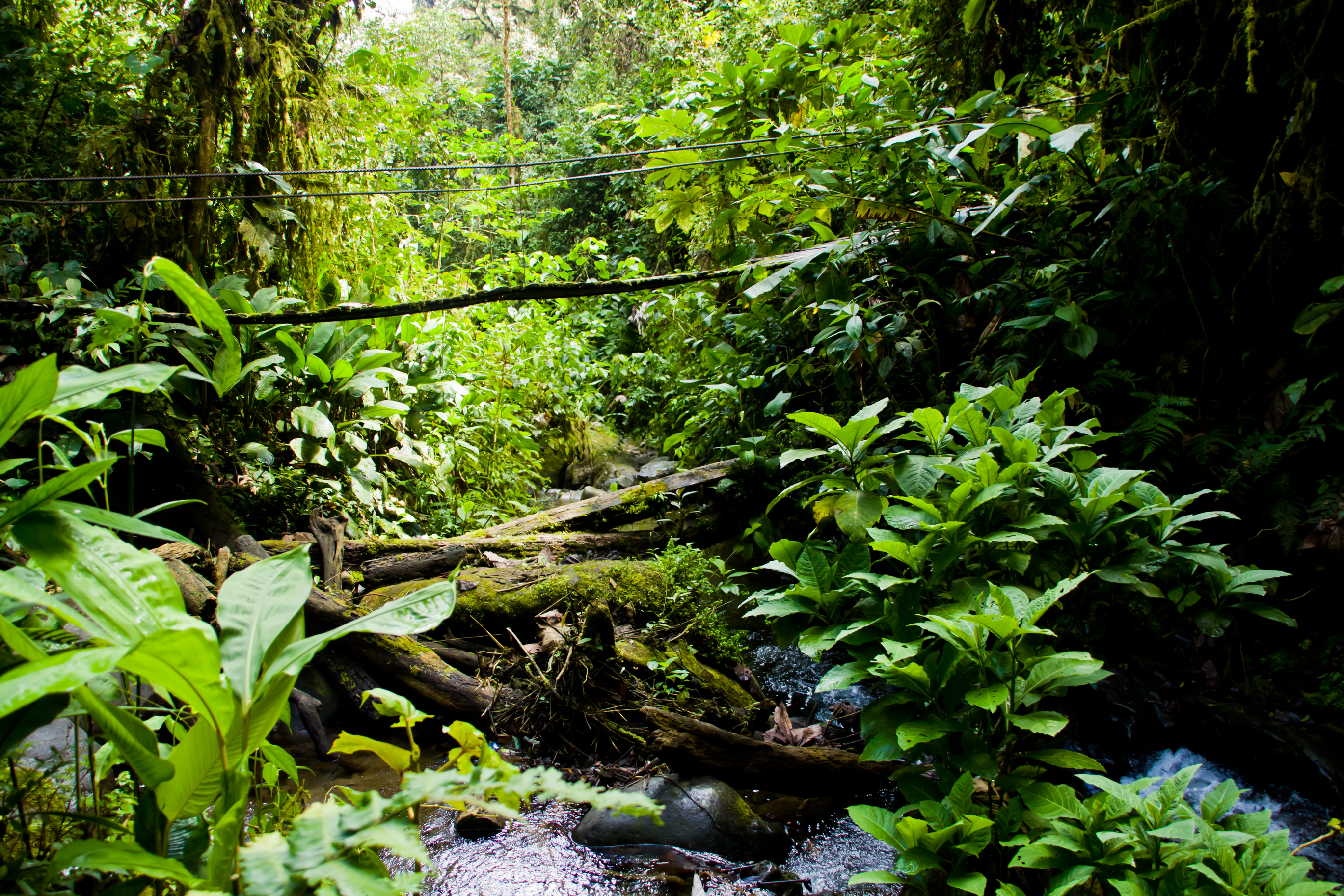
The Resilience of Ecosystem Services provided by Intact and Sustainably managed Terrestrial ecosystems (RESIST) initiative made notable progress through enhanced collaboration with IIASA Member Organizations and international research partners. A central highlight is the establishment of coordinated case studies across Brazil, China, India, Israel, and the UK, enabling integrated data collection, stakeholder engagement, and model development.
Specifically, RESIST advanced field-based research by defining biodiversity conservation and restoration objectives supported by new data collection networks and stakeholder-driven field campaigns in India; generating early measurement data from the AmazonFACE experiment, which were successfully applied to model calibration and preliminary simulations in Brazil; securing a data-sharing agreement for model calibration in Israel, enabling future progress once geopolitical conditions stabilize; and leveraging international co-funding opportunities that led to several co-developed research proposals, including one on ecosystem stability and resilience funded by the National Natural Science Foundation of China.
Overall, RESIST strengthened its multidisciplinary modeling framework and global research network, delivering scientific outputs and laying the foundation for policy-relevant insights into ecosystem resilience, biodiversity conservation, and sustainable land management.

TRUST
The Tools for Raising and UnderStanding Trust in systems science through citizen engagement (TRUST) initiative concluded in December 2025, marking a year of empirical research and institutional synthesis. A primary highlight was the completion of a survey experiment involving more than 400 respondents across 12 countries. Using conjoint analysis, the study identified which specific design features of citizen science initiatives most effectively strengthen public perceptions of trustworthiness.
The project also contributed to research on scientific communication. At the 19th Conference of the European Chapter of the Association for Computational Linguistics, the team presented Communication as a Complex System: Modeling the Feedback Dynamics of Trust and Credibility, which examined how trust and credibility dynamics shape public understanding of scientific information. This work provided a theoretical framework for understanding the feedback loops driving “truth decay” and proposed human-centered strategies to reduce polarization.
Finally, the project achieved an institutional milestone by& synthesizing findings from four workshops conducted over the three-year project timeline. This culminated in the coproduction of the IIASA Guidance on Stakeholder Engagement. The document harmonizes participatory research approaches across programs and departments, successfully mainstreaming these methodologies to enhance the institutional visibility and impact of stakeholder engagement at IIASA.