



Development of a harmonized water balance modelling system for the Danube River Basin
 © Interreg Danube Region
This project is supported by the Interreg Danube Region Programme co-funded by the European Union.
Project title: Development of a harmonized water balance modeling system for the Danube River Basin (Danube Water Balance)
Specific objective 2.3 of the Danube Transnational Programme: Sustainable, integrated, transnational water and sediment management in the Danube River Basin ensuring good quality and quantity of waters and sediment balance
Budget: 3 028 320 EUR
Duration: 01/01/2004 – 30/06/26 - 30 months
Lead partner organization: OVF (Hungary) & unofficially co-leader: Serbia
 © Interreg Danube Region
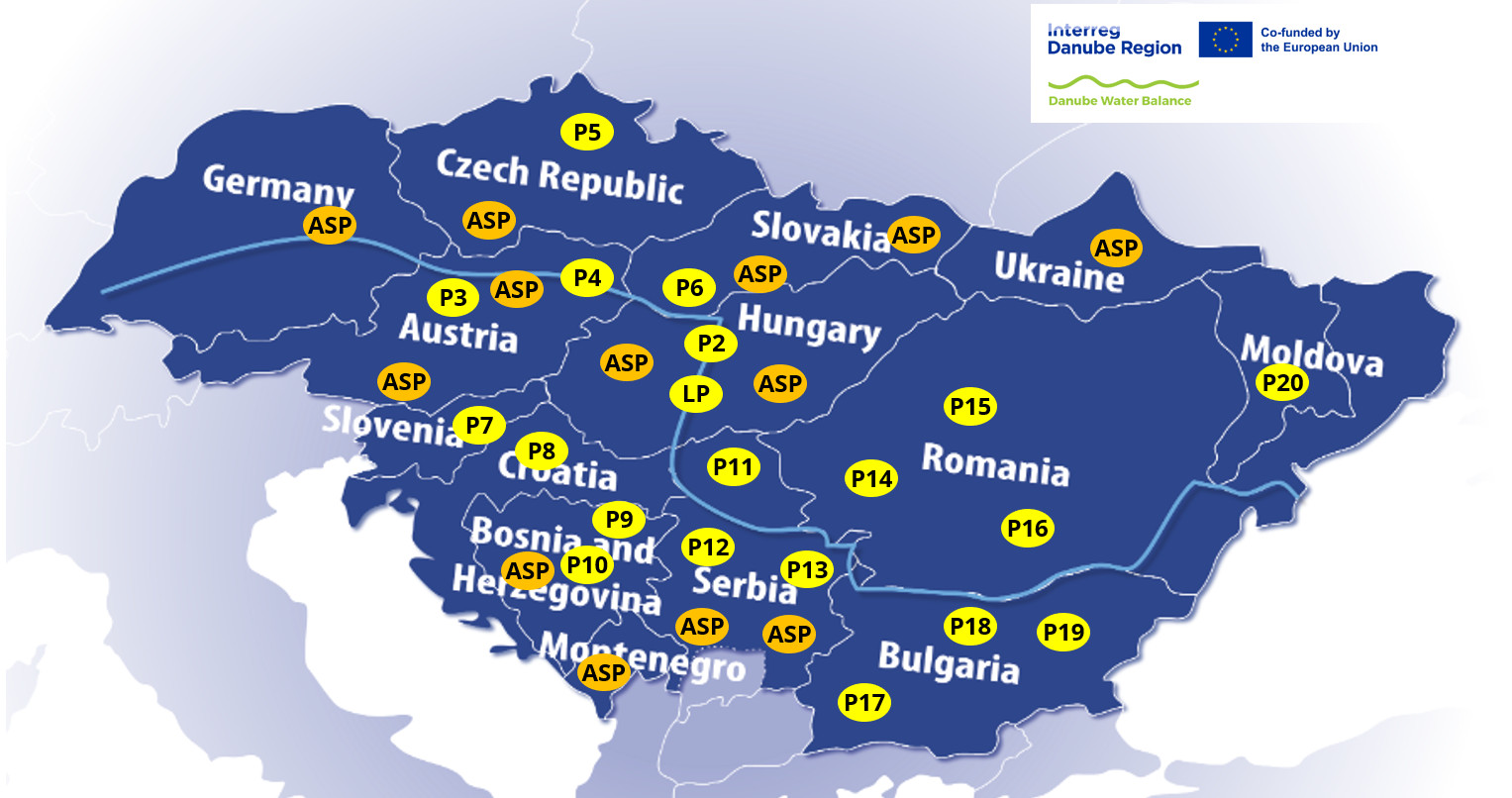
20 PPs: university or research institute: 9, national public body: 6, sectoral agency: 3, interest group: 1 public service: 1
13 ASPs: ministry: 5, national public body: 4, sectoral agency: 2, public service: 1, research institute: 1
Danube Water Balance Partnership
11 countries, 20 partners, 13 associated partners
Danube Water Balance
The Danube Water Balance project aims to improve the effectiveness of joint, transboundary, and cross-sectoral water management in the Danube River Basin (DRB) to address water quantity issues. The project will deliver a basin-wide water balance model for surface and groundwater, tested in transboundary sub-basins, along with the application of climate scenarios. It will foster improving data management and capacity building by preparing a common training material and establishing an expert hub.
Project description
The extreme and climate change impacts cause significant water balance issues in the Danube River Basin (DRB), already posing major challenges also for the environment, the economy and the whole society. Water management in the DRB is characterized by scattered data availability and various national calculation methods, ultimately leading to country-scale or sub-regional mosaics about the water balance. A jointly developed data management and water balance model is needed to address the basin's transnational water quantity challenges. The Danube Water Balance project aims to overcome this situation and contribute to sustainable, integrated transnational water management in the DRB
Objectives
The overall objective of the project is to develop a harmonized water balance modeling system in the DRB
Main outputs
1. Improved data management for present and future water balance calculations. This will consist of (i) a data repository for all input and output data of the model, (ii) a set of tools supporting input data collection, validation, conversion and result visualization and interpretation and (iii) a new data management strategy providing a sound basis for data-related activities of future water balance and water management modeling. Both the data
repository and the tools will be open access; therefore, the list of beneficiaries extends from water experts using the developed model to experts from other water-related fields to decision makers willing to understand the main characteristics of the DRB as a hydrological system.
2. CWatM - The state-of-the-art, open-source water balance model for the DRB, that allows the quantification of water balance components for the entire basin and for selected areas of interest. The model will be calibrated and validated against measured data collected and processed in accordance with jointly defined data management protocols, ensuring the common acceptance of model results. The foreseen afterlife of the water balance model is a fully functional basin-wide water management model, enabling more reasonable, sustainable, and adaptive water management in the long run.
3. Elaborated water balance scenarios for 4 selected transboundary sub-basins, namely Morava (CZ, SK & AT), Tisa (HU, SK, RO, RS & UA), Upper Sava (SI & HR), and Drina (RS & BA). This key action within the project will be the cornerstone of future cooperation by providing a good exercise for our international experts to test and enhance the Danube River Basin Water Balance model (DRBWBM) and the founded common data repository.
4. Improved stakeholder insight into transboundary water balance methodology: strong emphasis will be put on sectoral stakeholder involvement and capacity building in the project. Besides the essential technical modeling steps, it is planned that several trainings will be carried out and an expert hub will be established that will consist of modeling experts, water managers, and other professionals from water-related sectors.
 © IIASA
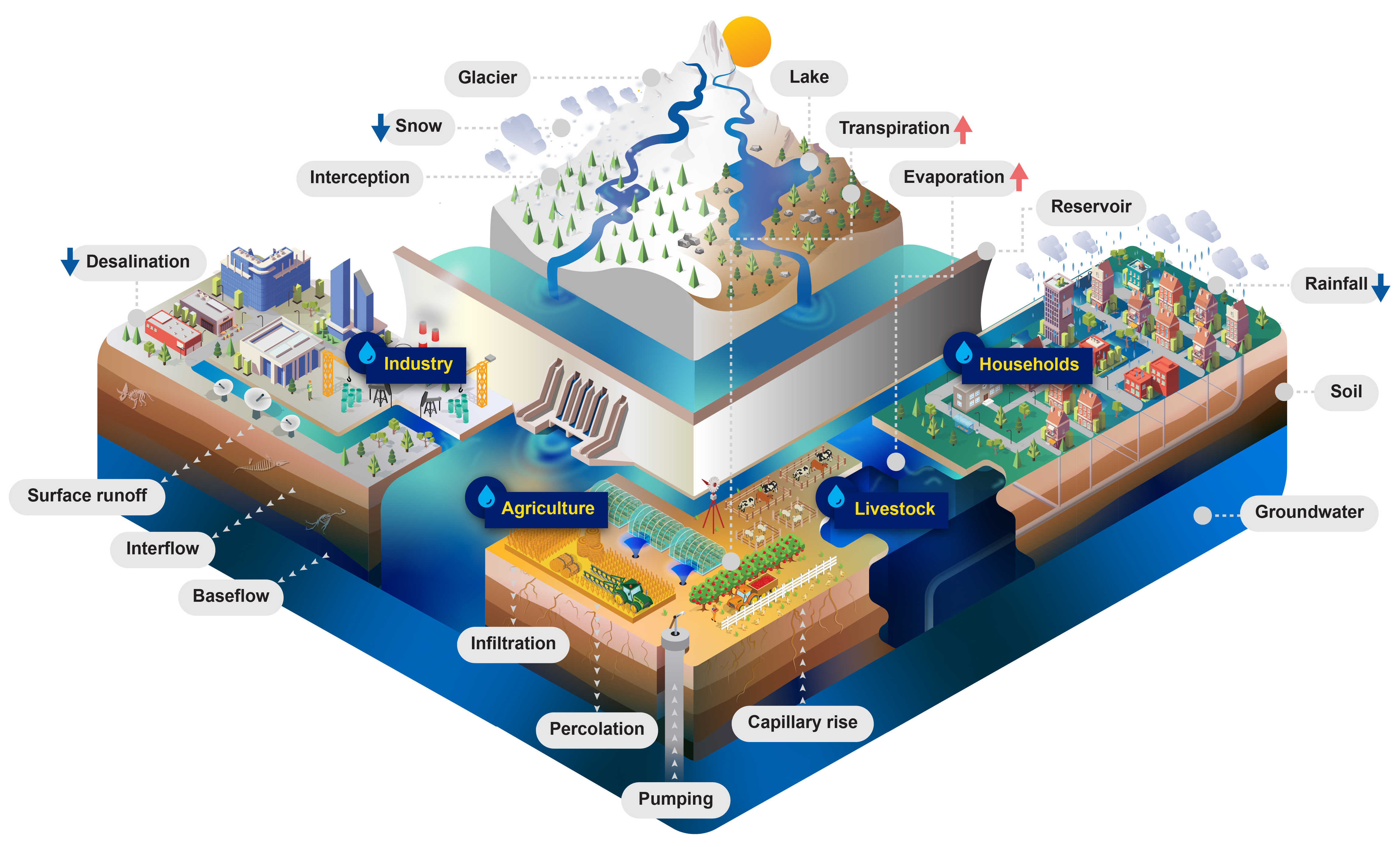
CWatM - Water-related processes included in the model design (https://cwatm.iiasa.ac.at)
News
For newsletters and further information on the project please visit the projects website.
Social Media
IIASA Models used
News
26 August 2026
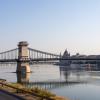
When the Rock of Starvation appears: How drought is tightening its grip on the Danube
The reappearance of Budapest's “Rock of Starvation” is a visible sign of a drought months in the making. IIASA researchers have traced its progression from missing rainfall and parched soils to exceptionally low flows across the Danube basin.
Events
Sofia, Bulgaria