



The 2025 edition of INQUIMUS themed “Centering Justice in Climate Risk Management for Transformative Change” will take place from 2–4 December 2025, at the International Institute for Applied Systems Analysis (IIASA) in Laxenburg, Austria.
Ever intensifying climate-related risks are unevenly distributed within and across countries, potentially reinforcing existing injustices and leading to the emergence of adaptation limits globally. The 2025 INQUIMUS interactive conference, organized by the Equity and Justice (EQU) Research Group, thus aims to increase the understanding of inequities as root causes of vulnerabilities and risks, integrate justice considerations more explicitly in climate risk management (CRM), and exchange inter- and transdisciplinary methods and tools for its assessment to foster transformative change.
This in-person interactive conference will feature a variety of engaging formats, including keynote presentations, poster presentations by participants, break-out discussions, and open-space exchange. We seek to support and engage researchers, analysts, policy advisors, and practitioners in applying concepts, methods, and tools that explicitly integrate justice considerations into CRM/adaptation projects, thereby enhancing the social and political feasibility of transformative change.
What can you expect from participating?
In a professionally facilitated, safe and interactive environment fostering mutual learning, you will:
- Gain new perspectives and a better understanding of justice in CRM and adaptation by connecting across disciplines and engaging with state-of-the-art research;
- Explore real-world applications through a poster exhibition of research projects and practical examples at the intersection of justice and CRM/adaptation.
- Learn and reflect on innovative concepts, methods, and tools for integrating justice dimensions in research and practice through group discussions;
- Engage in open, meaningful dialogue and build new connections for potential collaborations in an open-space setting;
What formats and methods will be used?
- Three inspirational State-of-the-art talks by renowned speakers
- Participants will be invited to present their work as part of the poster exhibition.
- Group discussions on concepts, methods, integration into policymaking processes, future collaborations
- Networking activities
- Open space formats for creative ideation on topics selected by participants and professionally facilitated by moderators
INQUIMUS 2025 Speakers
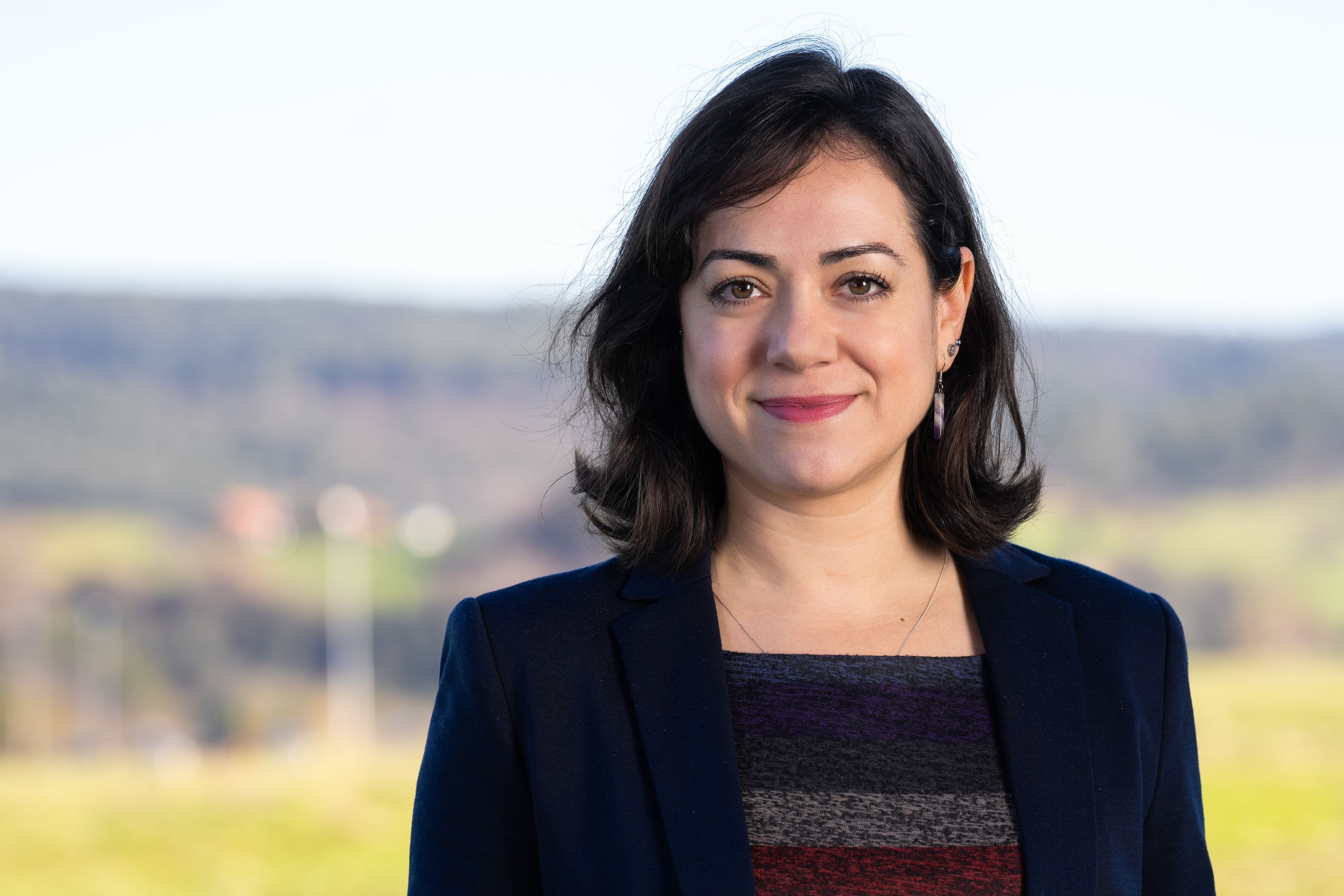
Dr. Ana T. Amorim-Maia is an interdisciplinary socio-environmental scientist working at the intersection of climate governance, urban adaptation, and social justice. She holds a PhD in Environmental Science and Technology from the Autonomous University of Barcelona (UAB, Spain), a master’s degree in Environmental Studies – Cities and Sustainability (jointly completed at UAB, Spain; TUHH, Germany; AU, Denmark; and UA, Portugal), and a bachelor’s degree in Environmental Engineering from the University of São Paulo (USP, Brazil). Currently, Ana is a postdoctoral researcher at the Basque Centre for Climate Change (BC3) in Bilbao, Spain, where she works on the European project IMAGINE Adaptation, supporting cities in envisioning resilient futures and tracking progress toward achieving them. Her research is internationally recognized for its contributions to adaptation policy and practice, combining conceptual work on intersectional climate justice with hands-on experience in implementing urban climate shelters.

Dr. Lisa Schipper is Professor of Development Geography at the University of Bonn, where she heads the AdaptationHive research collective. With a PhD in Development Studies from the University of East Anglia, Lisa has explored the links between development and adaptation to climate change for more than two decades. She is particularly interested in the politics of adaptation and epistemic injustice in adaptation (and climate) science and still finds it difficult to accept that adaptation plans do not always start with the aim to address the root causes of vulnerability. She is currently concerned about the double whammy normalized by current geopolitics of abandoning climate targets and reducing development aid and what that means in the context of the limits of adaptation.
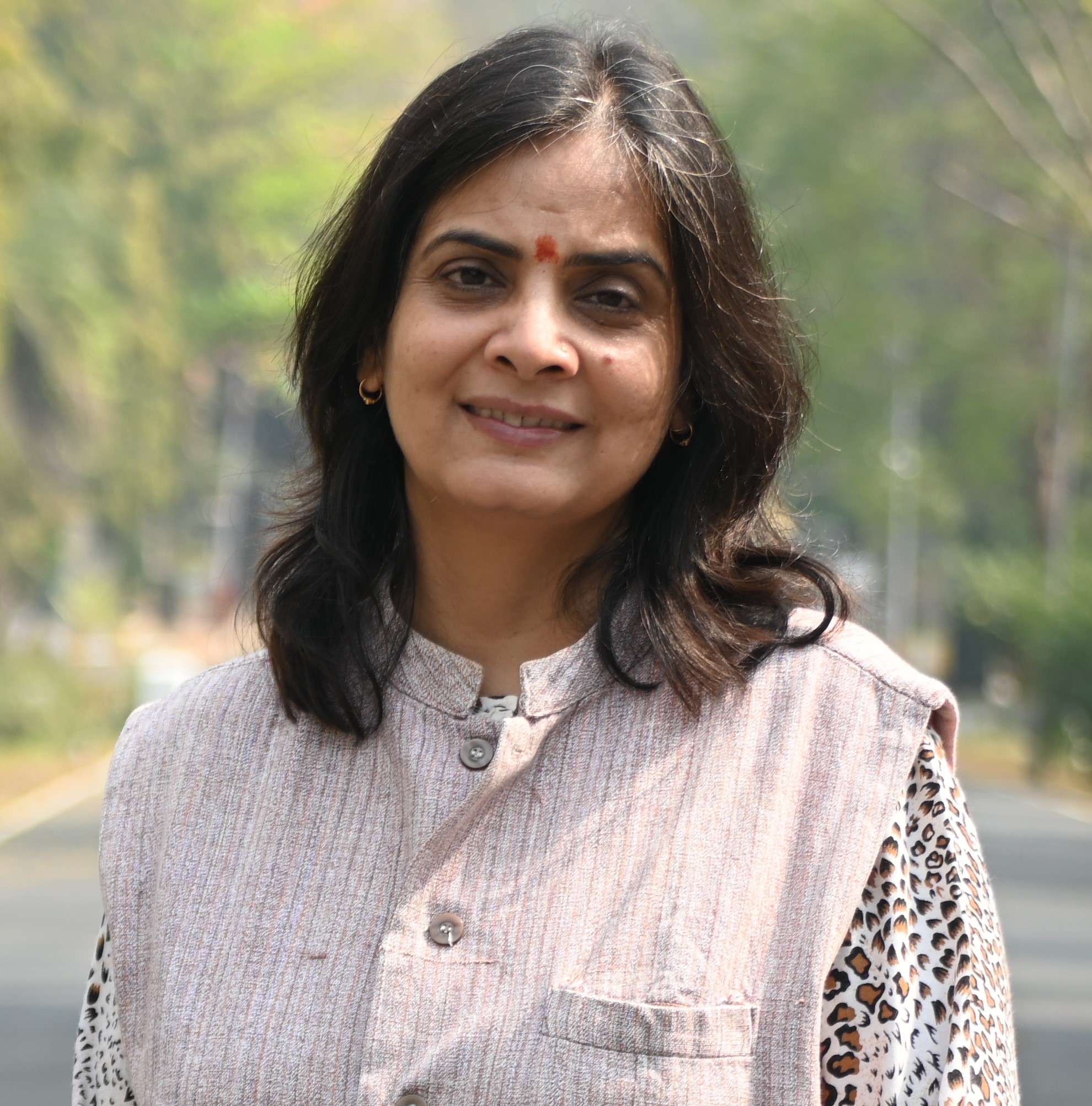
Dr. Shalini Dhyani is a Principal Scientist at the CSIR-National Environmental Engineering Research Institute (CSIR-NEERI), India. She is a visiting scientist at the Center for International Forestry Research (CIFOR), Bogor, Indonesia. She is the Asia Vice Chair and a Steering Committee member in the Commission on Ecosystems Management (CEM) of IUCN and an Associate of UNESCO-TWAS (The World Academy of Sciences). Shalini works on socio-ecological interlinkages, following diverse knowledge systems and sustainability science approaches for ecosystem conservation, restoration and management including ecosystem-based approaches. She has been the lead author of the two IPBES assessments (The Asia-Pacific Regional Assessment on Biodiversity and Ecosystem Services and the thematic assessment on Sustainable Use of Wild Assessment). She is also lead author for the global assessment on forest resilience by IUFRO and spring-shed assessment by ICIMOD, Nepal. Shalini has many awards to her credit including the IUCN CEM Chair young professional award and award by National Institute of Disaster anagement, Government of India. She has several peer-reviewed publications to her credit and she has been invited for talks nationally and internationally including twice to the UN General Assembly, USA.
We invite submissions from early-career to senior researchers, scientists, and practitioners engaged in inter- and transdisciplinary work – ranging from theoretical and methodological contributions to case studies and practice-based research. We are particularly interested in contributions that already study justice aspects in CRM or adaptation, as well as those seeking to explore transformative approaches and integrate justice considerations into research or practice.
Selected participants will be invited to present their work as part of the poster exhibition. Further details regarding registration, poster format, and the workshop agenda will be provided upon acceptance of the abstract.
For more information on the guiding questions of the INQUIMUS 2025 workshop and format, please visit the event site here.
For any further inquiries, please contact [email protected].
Please submit your abstract (max. 500 words) here by 18.08.2025, addressing motivation, relevance to the guiding questions, methods applied, results and insights, and conclusions.
The workshop registration fee is EUR 300,- and includes afternoon snacks and dinner on Day 1, lunch and dinner on Day 2, and lunch on Day 3. A reduced fee of EUR 200,- is available for a limited number of PhD students who face challenges in securing institutional or project-based funding. Please indicate in your submission if you wish to apply for a reduced rate.
News

24 September 2026
IIASA researcher joins Austrian Academy of Sciences working group on integrated carbon neutrality
On 15 September, Principal Research Scholar Thomas Schinko represented IIASA at a high-level event of the Commission on the De-Fossilization and Carbon Neutrality of the European Energy Systems (DEE) of the Austrian Academy of Sciences (OEAW). The meeting denoted the kick-off workshop of the newly established DEE Working Group "Transsectoral and Transcontinental Integration”.

23 September 2026
Eco-Welfare Network Conference
Julia Beier participated in the first in-person Eco-Welfare Network Conference, held in Brussels from 9-11 September at the Université Libre de Bruxelles as part of the Transform-Labor project.
14 September 2026
Can a warming climate put women at greater risk?
Unusually warm periods could have a link to an increased risk of intimate partner violence against women, according to a new IIASA-led study covering 31 countries in sub-Saharan Africa. The findings highlight how rising temperatures may compound existing risks of violence, with effects varying between demographic groups.