


A new Focus Issue has been launched in Environmental Research: Climate on ‘Climate Risks and Socioeconomic Vulnerability’, bringing together Guest Editors from sister projects SPARCCLE, CROSSEU and ACCREU.
Scope
The intersection of climate variability and societal structures creates a complex landscape of risk that requires an interdisciplinary lens. While physical hazard modelling provides a necessary foundation, understanding the lived reality of climate change requires a deep dive into how climatic hazards and extreme events interact with socio-economic systems, structural and societal inequalities, as well as place-based vulnerabilities to amplify risks. There is an urgent need to move beyond traditional metrics to explore the climate-society nexus through localised insights and integrated frameworks that capture the distributional and systemic impacts of climate hazards across economies and societies.
This focus collection seeks to bridge the gap between the physical aspects of climate risk and their multi-dimensional socio-economic and distributional consequences. By focusing on the diverse ways in which communities experience and respond to climate impacts, this collection intends to highlight evidence-based pathways for risk reduction, equitable adaptation, and informed decision-making.
This focus collection invites contributions that:
- Present interdisciplinary methods for understanding and assessing socioeconomic impacts of climate change on the society.
- Explore socio-economic evaluations, including equity- and capability-based approaches, to understand how climate change affects households, communities, labor markets and economies.
- Showcase participatory and stakeholder methods (e.g., co-production processes, community-based consultations, Living Labs, scenario co-development) for designing climate risk pathways and transformative adaptation strategies.
Editors
- Shreya Some, Technical University of Denmark, Denmark/India (CROSSEU)
- Edward Byers, IIASA, Austria (SPARCCLE Project Coordinator)
- Nicholas Vasilakos, University of East Anglia, United Kingdom (CROSSEU)
- Aleš Urban, Czech University of Life Science Prague, Czech Republic (CROSSEU)
- Zoi Vrontisi, E3-Modelling Energy-Economy-Environment, Greece (SPARCCLE)
- Francesco Bosello, Euro-Mediterranean Centre on Climate Change (CMCC) & Department of Environmental Sciences Economics and Statistics Ca’ Foscari University of Venice, Italy (ACCREU)
- Sarah Greenham, University of Birmingham, United Kingdom (CROSSEU)
Submission process
We encourage submissions from all authors whose work fits with the scope of this focus collection. The collection will also feature invited contributions. All focus collection articles are subject to the same review process as regular articles. Authors are invited to contact one of the guest editors, or the ERCL team ([email protected]) directly, to discuss the suitability of their work prior to submission.
Please submit your article via our online submission form. You should submit the appropriate article type for your submission then choose ‘Focus on Climate Risks and Socioeconomic Vulnerability’ from the drop-down menu.
Deadline for submissions
The target deadline for submissions is 31 October 2026 though we can be flexible where necessary. We encourage early submission where possible, as articles will be published on acceptance without being delayed by other papers in the collection.
Adapted from Environmental Research: Climate. More details available at the link below.
About the SPARCCLE project
The SPARCCLE project, coordinated by IIASA, will deliver adaptation and mitigation strategies for a just and climate-resilient Europe, as well as support policymaking for action on the socioeconomic risks posed by climate change.
By engaging policymakers, public and private sector stakeholders, and scientific experts throughout the project, SPARCCLE aims to generate actionable insights and recommendations for policymakers at all levels – European, national, and local, including the European Commission Joint Research Centre (JRC) – as well as for businesses, and civil society, based on state-of-the-art science. This involves iterative activities through the project’s lifetime such as co-design of scenarios, validation of results, and capacity building.
To bridge disciplinary divides, SPARCCLE is establishing new methodological frameworks that connect research communities working on climate impacts and risk in Europe. It combines bottom-up assessments of multidimensional climate vulnerabilities, risks, damages and adaptation with integrated assessment frameworks (IAFs) and leading multi-sectoral macroeconomic models. Through this approach, the project will strengthen Europe’s capacity to identify the characteristics of both sectoral and systems-level transformations required for climate-resilient and just development that reduces socioeconomic risks for Europe related to both sudden extreme events and slow onset processes.
News

10 March 2026
ERC Starting Grant to explore habitability in a changing climate
Elisa Calliari, a Senior Research Scholar in the Systemic Risk and Resilience Research Group of the IIASA Advancing Systems Analysis Program, has been awarded a prestigious European Research Council (ERC) Starting Grant for a new project investigating how climate change reshapes the habitability of places and how societies respond.
03 November 2025
Two Years of SPARCCLE: Highlights from the Annual General Assembly
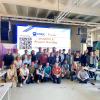
The SPARCCLE consortium convened at the CMCC Foundation in Milan on 7-8 October 2025 for its annual General Assembly, marking two years since the project’s launch. The meeting brought together partners from across Europe, along with representatives from sister projects, members of the Stakeholder Advisory Board, and colleagues from the European Commission’s Joint Research Centre (JRC).

27 May 2025
Launch of the Global Assessment Report 2025 on Disaster Risk Reduction
The Global Assessment Report is the defining report on the state of art and future on disaster risk. The comprehensive 2025 report comes 10 years after the Sendai Framework, where the global community agreed to further prevent the creation of new risk, reduce existing risk and increase resilience.