

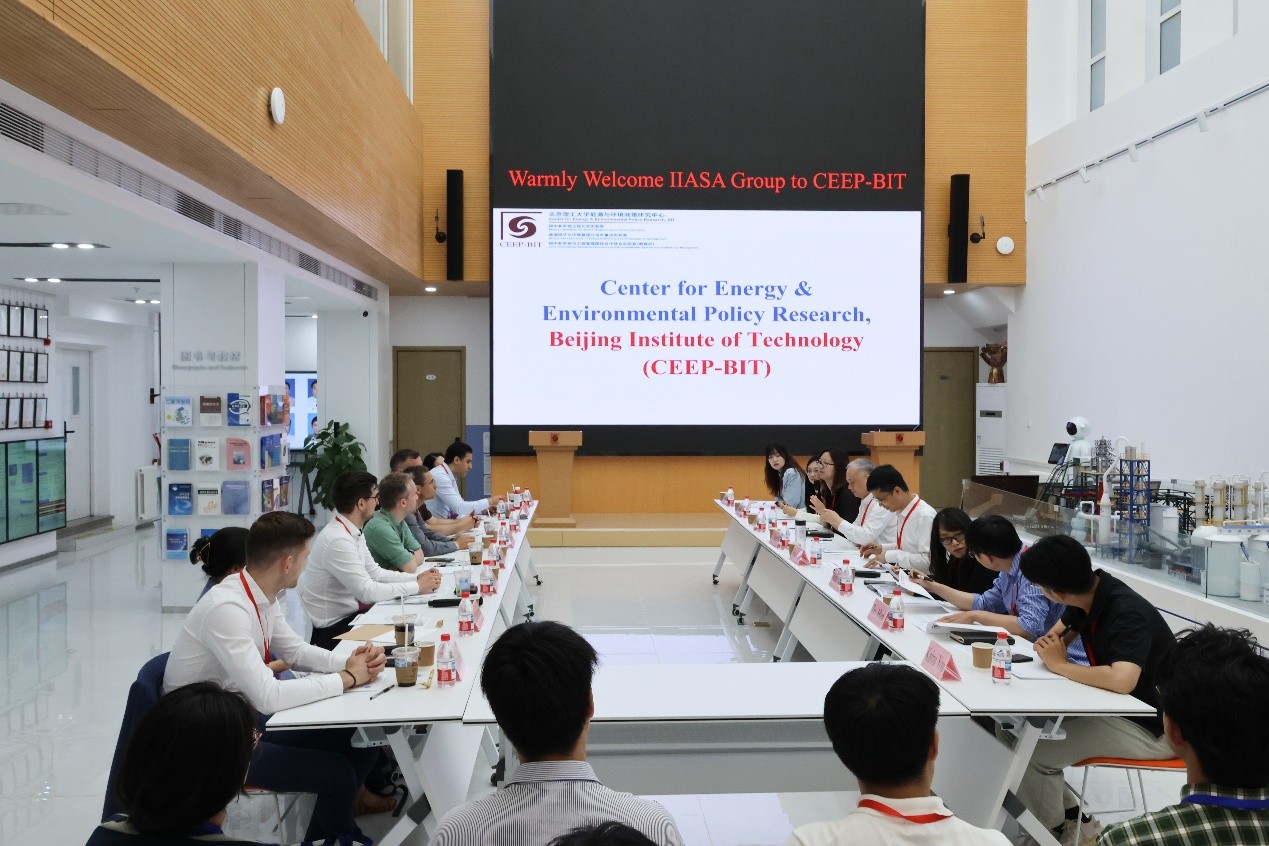
The Center for Energy and Environmental Policy Research at Beijing Institute of Technology (CEEP-BIT) and IIASA held a bilateral discussion meeting in Beijing in late June 2026. The meeting provided a platform to exchange recent research, identify shared priorities, and explore opportunities for closer institutional and scientific cooperation.
The workshop, which ran from 22 to 23 June 2026 marked the beginning of what both institutions intend to become a long-term strategic collaboration in research, capacity building, and science diplomacy. The event was jointly organized by representatives of CEEP-BIT and IIASA, including Yi-Ming Wei, Hua Liao, Baojun Tang, Biying Yu, and Ke Wang from CEEP-BIT, together with Michael Kuhn, Stefan Wrzaczek, and Michael Freiberger from IIASA’s Economic Frontiers Research Group; Reinhard Mechler from the Advancing Systems Analysis Program; and Thomas Gasser from the Energy, Climate, and Environment Program, who is also affiliated with the Advancing Systems Analysis Program.
The meeting opened with a warm welcome to the IIASA delegation from Distinguished Professor Yi-Ming Wei, founder of CEEP-BIT, Vice President of Beijing Institute of Technology, and Academician of the German Academy of Science and Engineering, as well as Professor Biying Yu, Deputy Director of CEEP-BIT. Subsequently, Hua Liao, Director of CEEP-BIT, Stefan Wrzaczek, Senior Research Scholar at IIASA, and Michael Kuhn, Principal Research Scholar and Economic Frontiers Research Group Leader, delivered the opening remarks. Speakers from both sides emphasized the importance of sustained international and interdisciplinary collaboration in advancing research that supports low-carbon transitions, climate action, and evidence-based policymaking.
 © IIASA
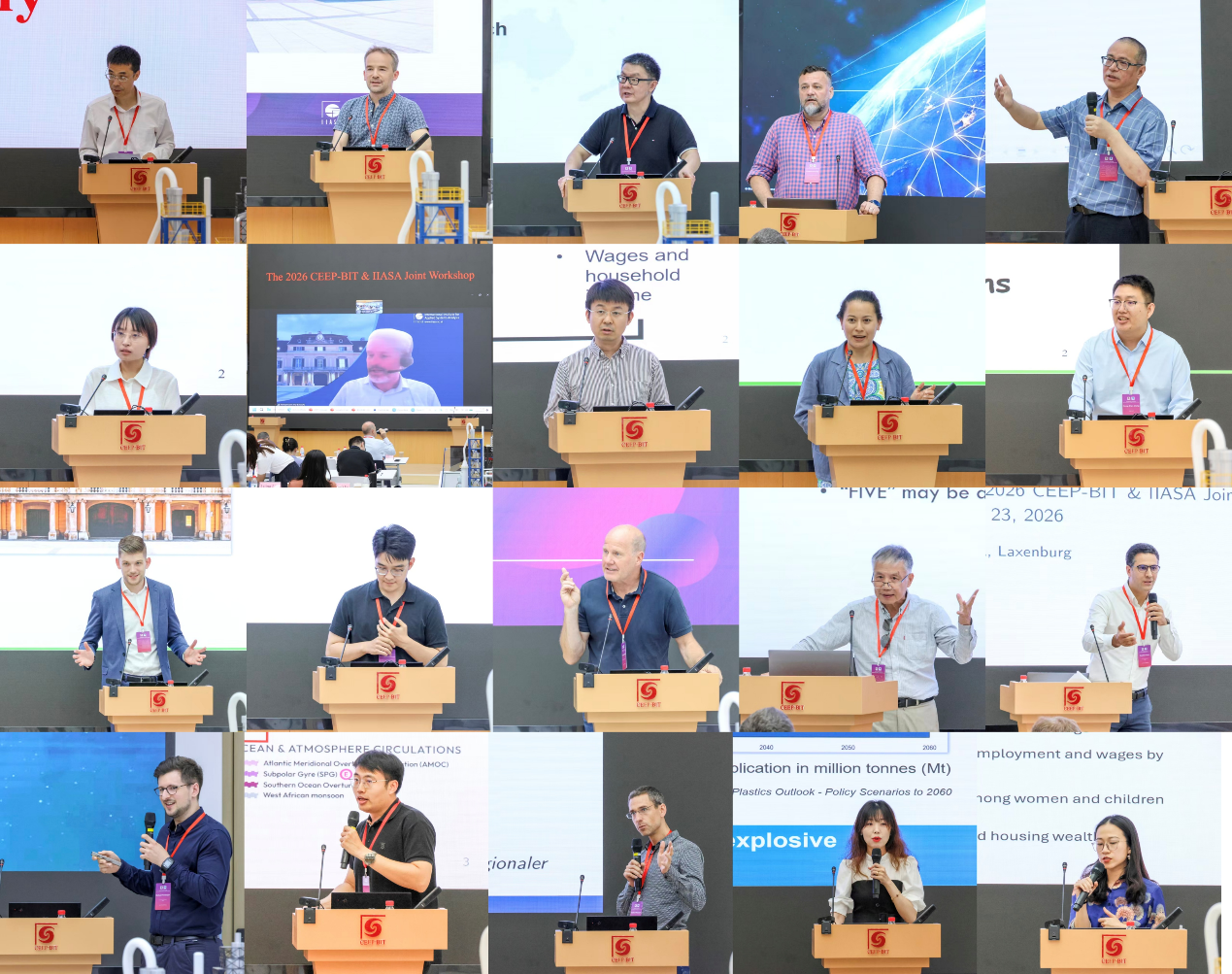
Researchers from both institutes, together with invited colleagues, contributed expertise and identified areas where collaboration could create strong scientific synergies. The exchanges covered integrated assessment modeling, climate-system modeling, climate tipping points, mitigation and adaptation, international climate cooperation, energy security, coal transition, land use, air-quality co-benefits, and the resilience of green transitions.
In the closing session, Hua Liao and Reinhard Mechler, who leads the IIASA Systemic Risk and Resilience Research Group, summarized the main outcomes of the meeting and highlighted promising directions for future cooperation.
 © IIASA
Following the meeting, IIASA Research Scholar Michael Freiberger led a practical training session on a Julia-based toolbox for solving two-stage optimal-control problems under uncertain switching times. Participants also visited the Northern Medical Centre Integrated Energy Station and Control Centre, where they learned about the application of integrated energy-management technologies and low-carbon solutions.
The collaboration continued shortly after the Beijing workshop with a visit by a CEEP-BIT delegation to Schloss Laxenburg from 28 to 29 June. During the visit, IIASA Director General Hans Joachim (John) Schellnhuber welcomed the delegation and highlighted IIASA's founding principles and longstanding role in science diplomacy, emphasizing the importance of collaboration with Chinese partners. The program also included presentations on CEEP-BIT's scientific vision, and discussions on shared research interests and opportunities for future collaboration in research and capacity building.
Overall, the meeting marked an important step in the collaboration between CEEP-BIT and IIASA. Led by representatives from the Economic Frontiers Research Group, participants discussed possible future activities, including joint research, model development, researcher and student exchange, capacity building through initiatives such as a joint summer school, and policy-oriented systems analysis. Both institutions expressed their intention to maintain close communication and develop further joint activities in energy, climate change, environmental policy, and sustainable development and agreed to explore the organization of a follow-up CEEP-BIT–IIASA workshop in 2027 to further define shared research priorities.
The collaboration is expected to contribute not only to scientific excellence but also to strengthening international science diplomacy around shared global sustainability challenges.
 © Michael Freiberger
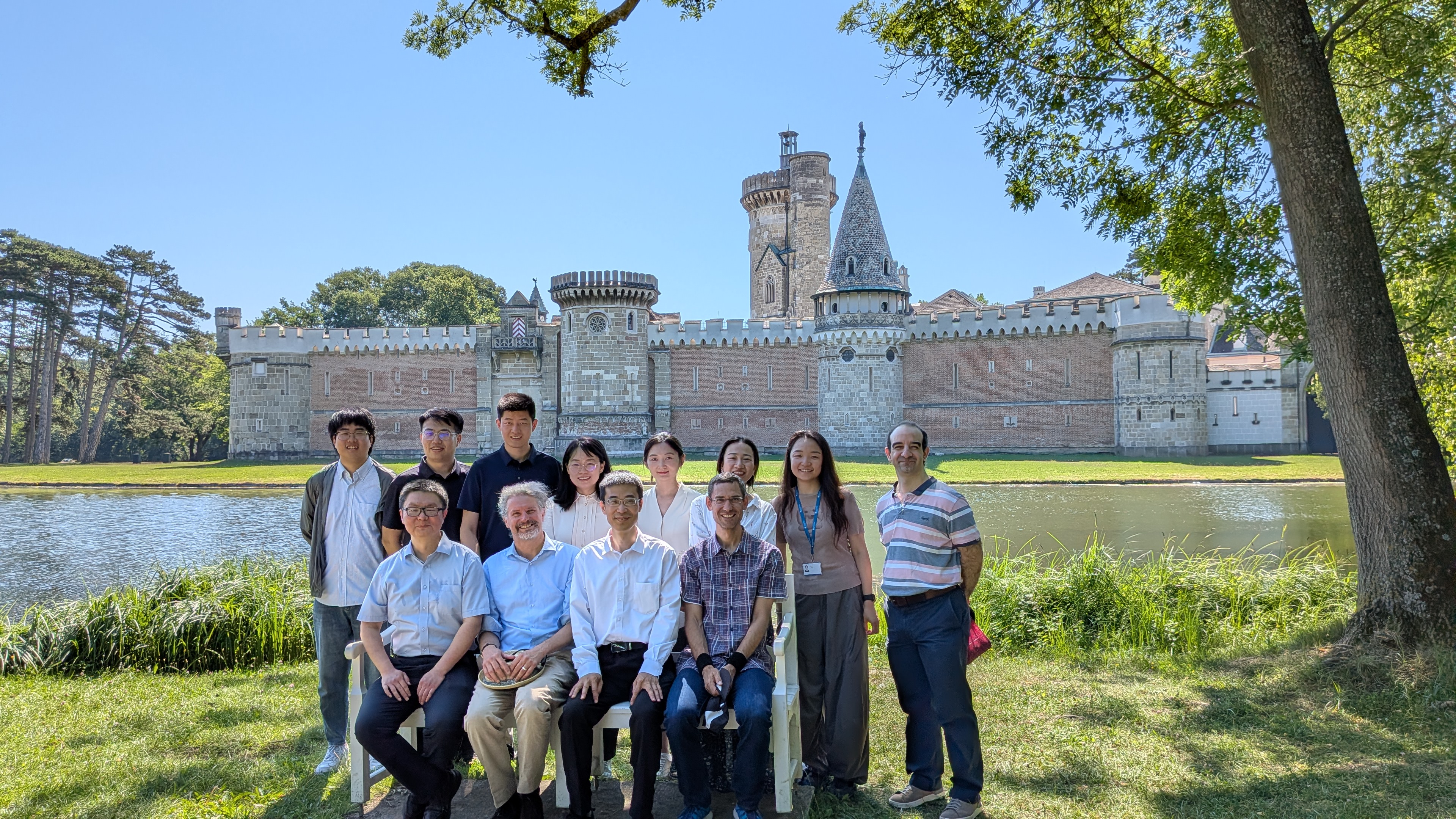
Group photo of participants in the park during their visit to the IIASA premises in Laxenburg.
News

16 June 2026
Peking University and IIASA advance plans for a new Centre on Global Change and Health
On 28 May, Peking University (PKU) and IIASA held a joint online seminar to discuss health research under global change and to review the progress, priorities, and coordination arrangements for a proposed Centre on Global Change and Health.
29 May 2026
IIASA and Chinese partners explore future collaboration in science diplomacy
A high-level delegation from the Ministry of Science and Technology of China (MoST) and representatives of the Embassy of the People’s Republic of China in Austria visited IIASA at Schloss Laxenburg on 13 May 2026 for discussions on scientific cooperation, science diplomacy, and future collaboration.

27 May 2026
Temporary carbon removal could help support climate goals
Persistent methane emissions from sectors such as agriculture and growing debates over the credibility of carbon offsets are creating new challenges for governments and companies pursuing net-zero commitments. New research suggests temporary carbon storage may have a scientifically valid role in helping support climate goals, if used in the right way.