
Researchers at IIASA are studying the direct and indirect effects of climate change on health, shedding light on healthy aging drivers and metrics and analyzing interconnections between the components of multi-dimensional national well-being.
 © blurf | Dreamstime.com
Links Between Climate Change, the Environment, and Health
Researchers across IIASA are exploring how a variety of climate hazards and stressors are affecting health, including wildfires in the Fire&Ice project and heat extremes in the DISCC-AT and SPARCCLE projects.
Another area of study is on air pollution and its effects on mortality and morbidity, including health co-benefits of climate mitigation, with the GAINS model, and contributions to the Lancet Countdown on Health and Climate Change.
Researchers are also studying the effects of urban infrastructure and green spaces on health, including how they can mitigate or amplify climate-health effects, through the Urban Releaf project.
In addition, the CLIMAKID project will provide a digital tool to causally link extreme weather and child undernutrition in Sub-Saharan Africa and India to global climate change.
 © Canva
One Health
The project bloom brings together an interdisciplinary team to explore the complex relationships between biodiversity, land use, and zoonotic disease spillover risk in West Africa. By integrating expertise in ecosystem function, socioeconomics, modeling, and stakeholder engagement, the project enhances understanding of these dynamics, with the aim to inform policies and conservation strategies that promote both human and ecosystem well-being.
As part of the SWITCH and CHOICE projects, researchers are developing the GLOBIOM health module, which links health impacts to dietary patterns. Additionally, the FACE Africa project explored how climate change indirectly affects nutrition and food availability through changes in crop production and land use.
 © Cristine Rochol/PMPA
Health Systems
Health systems play an important role in reducing climate risks on health. However, they are also vulnerable to extreme weather events which can affect their capacity to deliver health services. Researchers are examining how floods and heatwaves affect the provision of and access to routine maternal and child healthcare in the REACH project.
Examining the macro-economic consequences of health-related shocks is a further area of focus.
 © Canva
Ageing, Cognition, and Wellbeing
IIASA researchers are developing global measures of healthy aging and wellbeing, and exploring how factors like employment, family roles and environmental exposures, shape cognitive health over the life course, in the CHIAS project.
IIASA researchers also apply systems thinking to study multi-dimensional national well-being, with the identified theoretical relationships being validated and quantified using data for the OECD countries.
News

20 October 2026
How are nutrition, the gut microbiome, and mental health connected?
Mental health conditions such as anxiety and depression affect millions of people across Europe and are increasingly recognized as closely linked to diet, nutrition, social inequalities and broader lifestyle factors. IIASA researchers are collaborating on new Horizon Europe-funded research project, NUTRIMIND (Understanding Mental Health and Nutrition in Europe), which aims to explore how nutrition, dietary choices, the gut microbiome, and lifestyle factors might interact with mental health.

15 October 2026
MowingQuest system-test campaign 2026 concludes, data collection continues
IIASA’s MowingQuest citizen-science campaign has wrapped up its August–September 2026 system test, with 25 pioneer users submitting almost 800 observations across eight countries. The results will help improve the app and data-quality workflows ahead of the main 2027 campaign. Two participants have also won Garmin GPS watches in the campaign raffle.
06 October 2026
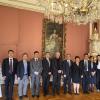
Nanjing University delegation visits IIASA to explore future collaboration
A high-level delegation from Nanjing University (NJU), led by Professor Tan Zhemin, President of NJU and Fellow of the Chinese Academy of Sciences, visited IIASA to discuss opportunities for strengthening scientific cooperation and advancing joint research on global challenges.