


The SPARCCLE project will deliver adaptation and mitigation strategies for a just and climate-resilient Europe, as well as support policymaking for action on the socioeconomic risks posed by climate change.
By engaging policymakers, public and private sector stakeholders, and scientific experts throughout the project, SPARCCLE aims to generate actionable insights and recommendations for policymakers at all levels – European, national, and local, including the European Commission Joint Research Centre (JRC) – as well as for businesses, and civil society, based on state-of-the-art science. This involves iterative activities through the project’s lifetime such as co-design of scenarios, validation of results, and capacity building.
To bridge disciplinary divides, SPARCCLE is establishing new methodological frameworks that connect research communities working on climate impacts and risk in Europe. It combines bottom-up assessments of multidimensional climate vulnerabilities, risks, damages and adaptation with integrated assessment frameworks (IAFs) and leading multi-sectoral macroeconomic models. Through this approach, the project will strengthen Europe’s capacity to identify the characteristics of both sectoral and systems-level transformations required for climate-resilient and just development that reduces socioeconomic risks for Europe related to both sudden extreme events and slow onset processes.
The main goals of SPARCCLE are to:
- Accelerate new probabilistic emulators of climate hazards, damages and risks, incorporating cross-sectoral interactions, spillovers, and monetization of climate impacts.
- Develop granular socioeconomic projections, including gender and socioeconomic heterogeneities, and multidimensional vulnerabilities informed by empirical assessment.
- Develop insights on mitigation-adaptation synergies and trade-offs and sectoral risks, and provide region-specific recommendations on short- and long-term climate policy responses, considering energy security and import dependence.
- Foster co-creation with public and private stakeholders through knowledge transfer, capacity-building activities, and open science.
- Co-design stress-test scenarios that explore socioeconomic climate risks with stakeholders and policymakers, including sectoral stress tests.
Understanding Europe’s climate risk through stress test scenarios
The co-development of stress-test scenarios is a central theme of the project, cutting across the five substantive work packages in an integrative activity that explores plausible yet exceptional changes in risk factors across Europe. SPARCCLE will co-design stress test scenarios with key stakeholders, to explore high-impact components of the socioeconomic risks of climate change in Europe.
SPARCCLE brings together leading experts from across Europe
IIASA acts as the coordinator of the SPARCCLE project, responsible for overseeing project management and partner collaboration. Additionally, IIASA brings together expertise from four of its research programs, which actively contribute to the project’s implementation:
- Energy, Climate and Environment (ECE) - responsible for overall project coordination and communication activities, stakeholder processes, online tools and data systems, and integrated assessment modelling with the MESSAGEix model.
- Biodiversity and Natural Resources (BNR) - responsible for assessing land-use pathways and climate impacts on the forestry sector.
- Advancing System Analysis (ASA) - responsible for investigating the impacts of climate extreme events on the fiscal stability of national economies.
- Population and Just Societies (POPJUS) - responsible for leading the development of scenarios and datasets of socioeconomic development and vulnerability.
Project Partners:
- The International Institute for Applied Systems Analysis (IIASA) (Austria)
- E3 Modeling (E3M) (Greece)
- Euro-Mediterranean Center on Climate Change (CMCC) (Italy)
- Institute of environmental protection (IOS-PIB) (Poland)
- Climate Analytics (CA) (Germany)
- Potsdam Institute for Climate Impacts Research (PIK) (Germany)
- Vrije Universiteit Brussel (VUB) (Belgium)
- Netherlands Environmental Assessment Agency (PBL) (Netherlands)
- University of Florence (UNIFI) (Italy)
Associate Partners:
- Swiss Federal Institute of Technology in Zürich (ETH Zurich) (Switzerland)
- Imperial College London (ICL) (UK)
- Joint Research Centre (JRC, European Commission)
SPARCCLE communication channels
SPARCCLE disseminates project news, updates, and insights through the following communication channels:
Funding acknowledgements
Funded by the European Union under grant agreement No 101081369 (SPARCCLE). Views and opinions expressed are however those of the author(s) only and do not necessarily reflect those of the European Union or HORIZON-RIA - HORIZON Research and Innovation Actions. Neither the European Union nor the granting authority can be held responsible for them.
 © Funding Acknowledgements
Published papers:
News

03 April 2025
Celebrating Research on Health at IIASA; World Health Day 2025
Researchers at IIASA are studying the direct and indirect effects of climate change on health, shedding light on healthy aging drivers and metrics and analyzing interconnections between the components of multi-dimensional national well-being.
17 March 2025
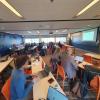
SPARCCLE Researcher Marina Andrijevic Leads the Organization of the ‘Adaptation Pathways and Scenarios for Climate Change Research’ Workshop
Adaptation to climate change is becoming increasingly urgent, yet global assessments still struggle to answer pressing questions: Where will adaptation be most needed? Which actors must adapt, and what barriers stand in the way? These challenges were at the heart of the ‘Adaptation Pathways and Scenarios for Climate Change Research’ workshop, held from 17th to 21st February at the Lorentz Center in Leiden, Netherlands.
20 January 2025
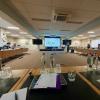
SPARCCLE Workshop Gathers EU Policymakers for Policy Feedback and Insights
From 3rd to 4th December 2024, the SPARCCLE consortium hosted a workshop in Brussels, bringing together external stakeholders and EU policymakers, including representatives from CINEA, DG ENER, and DG HERA. This collaborative event provided a platform for feedback on EU adaptation and mitigation policy analysis. It also marked the beginning of SPARCCLE’s stress test co-development process, allowing participants to contribute valuable input toward the design of the SPARCCLE climate stress test scenarios.