


IIASA has released its report from the European Forum Alpbach 2025, where it served as reporting partner for the Climate Track. Drawing from five insightful blogs, the report distills key ideas and reflections that emerged under the Forum’s overarching theme, “Recharge Europe.”
The newly published IIASA report captures the essence of the Climate Track discussions at the European Forum Alpbach 2025 (EFA25), offering a systems perspective on how Europe can transform knowledge into leadership and connection into climate action. As one of eight leading think tanks invited to contribute to EFA25, IIASA worked closely with the Forum to ensure that the ideas, debates, and highlights from the event continue to resonate well beyond the summer gathering.
 © IIASA
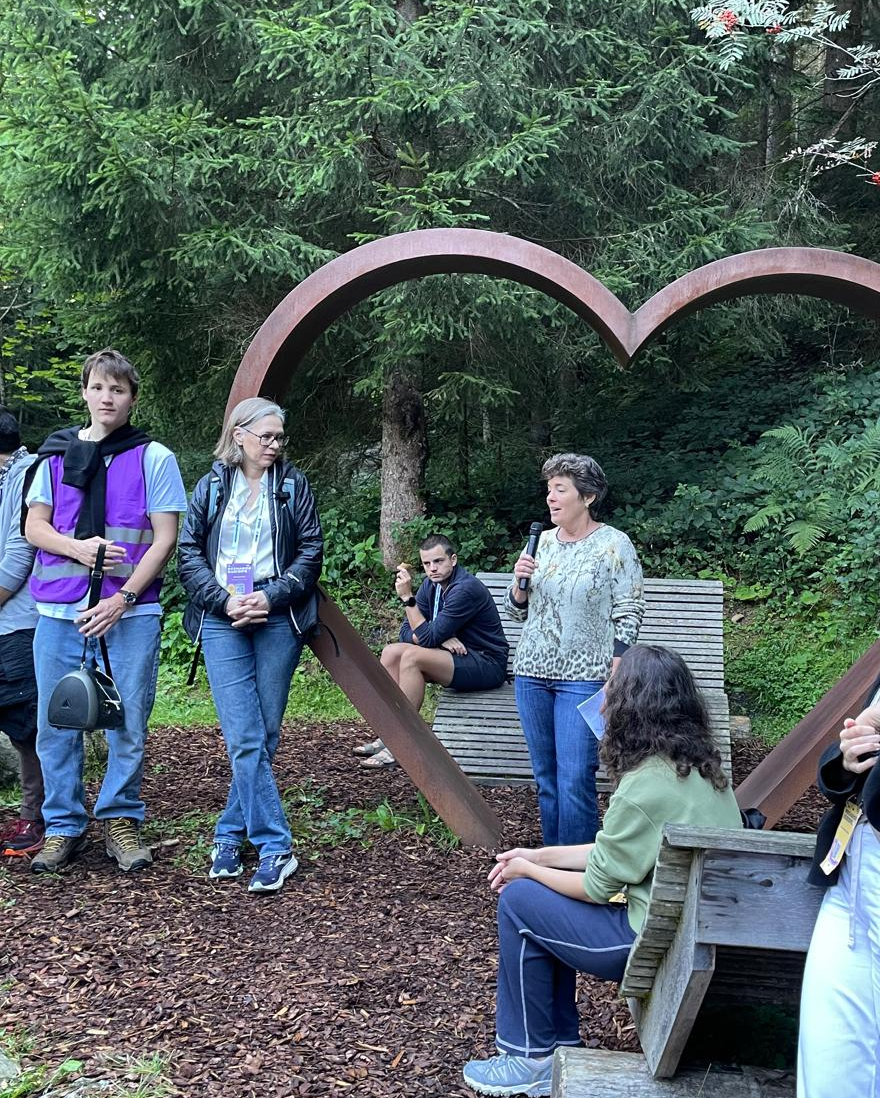
Karen Lips speaking at her EFA25 session “Knowledge Without Borders: Turning Openness into Climate Leadership.”
Among the highlights of EFA25 was the session “Knowledge Without Borders: Turning Openness into Climate Leadership,” which took place as a hike and discussion. IIASA Deputy Director General Karen Lips participated in this session, contributing to an exploration of how Europe’s “Fifth Freedom” – the free movement of knowledge and talent – can translate openness in science, education, and data into climate leadership. The report reflects on the importance of this dialogue, emphasizing how responsible openness and collaboration can fuel resilience, innovation, and prosperity - principles that are deeply aligned with IIASA’s mission to apply systems thinking and transdisciplinary research to global challenges.
At a time when climate change shapes not only environmental policy but also Europe’s economic strategy, security outlook, and moral direction, this report underscores the need for systems thinking, openness, and collaboration. It bridges insights from science, policy, business, and civil society - highlighting pathways toward a more resilient and united Europe.
Authored by EFA attendees Ansa Heyl and Bettina Greenwell from the IIASA Communication and External Relations Department, together with IIASA Senior Researcher Daniel Huppmann, the report draws together blog posts exploring emotional engagement, open knowledge, science diplomacy, and climate justice. It provides readers with an integrated view of the challenges and transformative ideas discussed at EFA25 and will help inform the debates at next year’s European Forum Alpbach 2026 - ensuring that the momentum for climate action continues to grow.
News
15 October 2026
IIASA strengthens science diplomacy ties at UNGA in New York
IIASA Science Diplomacy Director and Head of Communications and External Relations Susie Kitchens represented the Institute at the United Nations General Assembly (UNGA) High-level Week and Science Summit in New York in September, contributing to discussions on how science and international cooperation can help address shared global challenges.

13 October 2026
Connecting disciplines and inspiring new ideas with the Environment and Climate Research Hub
IIASA Deputy Director General Karen Lips delivered a keynote at the University of Vienna's recent Environment and Climate Research Hub (ECH) Research Frontiers Workshop in Bad Vöslau, Austria, emphasizing the importance of interdisciplinary collaboration in addressing complex environmental and climate challenges.
12 October 2026
Connecting science across borders: IIASA Committee meets University of Salzburg
How can universities and international research organisations work together to address the complex challenges of a changing world? This question shaped a full day of scientific exchange at the University of Salzburg on 6 October, when the Austrian IIASA Committee met with members of the University community to discuss research, collaboration and opportunities for researchers and students.