

IIASA researcher Roman Hoffmann has been honored with two prestigious awards and elected as a member of the Young Academy of the Austrian Academy of Sciences, recognizing his contributions to climate change research and environmental social sciences.
 © Silveri | IIASA
Roman Hoffmann
Hoffmann, who leads the Migration and Sustainable Development Research Group in the IIASA Population and Just Societies Program, was selected as a member of the Young Academy of the Austrian Academy of Sciences, a distinguished platform that brings together exceptional early-career scientists from diverse disciplines. The Young Academy fosters interdisciplinary collaboration and supports scientific discourse on critical societal challenges. His membership was officially announced earlier this month, in recognition of his impactful work in the fields of migration, climate impacts, and sustainability research.
In addition to this membership, Hoffmann received the IPUMS Research Award together with IIASA colleagues Guy Abel and Raya Muttarak. The award honors outstanding research utilizing IPUMS data. The researchers received the award based on a joint publication published last year in Nature Climate Change, in which they investigated the impacts of drought and aridity on human migration across multiple global regions. Their work provided new insights into how shifts in climate patterns influence population movements, particularly in vulnerable areas. The IPUMS award acknowledges the study’s innovative application of demographic and climate data to address critical questions of human mobility in the context of climate change.
Most recently, Hoffmann was also named a recipient of the EAERE Award for European Research Council (ERC) Grants Laureates in the field of environmental and resource economics. This award recognizes his work on the ERC-funded 2C-RISK project, which addresses critical gaps in understanding climate-related (im)mobility by examining when, how, and why households move – or remain immobile – under climatic and non-climatic stressors. Unlike previous research, which often considers environmental factors in an isolated way, this project takes a comprehensive approach by integrating underrecognized risks, co-stressors, and insecurities.
“I am deeply honored to receive these recognitions. They underscore the importance of climate change research and the need for evidence-based solutions to address global challenges. I am grateful to my collaborators and institutions for their support and look forward to advancing this work further,” says Hoffmann.
IIASA congratulates Roman Hoffmann on this well-deserved recognition and celebrates his commitment to pioneering research in the fields of migration, climate impacts, and sustainability.
News

24 September 2026
IIASA researcher joins Austrian Academy of Sciences working group on integrated carbon neutrality
On 15 September, Principal Research Scholar Thomas Schinko represented IIASA at a high-level event of the Commission on the De-Fossilization and Carbon Neutrality of the European Energy Systems (DEE) of the Austrian Academy of Sciences (OEAW). The meeting denoted the kick-off workshop of the newly established DEE Working Group "Transsectoral and Transcontinental Integration”.
10 September 2026
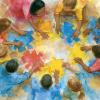
Hop & Mop project’s Co-creation of mini-blocks: schoolchildren’s teamwork as the center of developing ideas
Schoolchildren are the stakeholders that will be benefit from the city not only for today, but also for a long time in the future. As such it is crucial to include them in designing their environment. They have a fresh eye on spotting the issues and can think creatively and at the same time critically to come up with ideas to develop their environment. Hop & Mop project is aimed to work with the schoolchildren to design mini-block prototype in the streets near their schools.
24 August 2026
Project "G/ArtenLeben": Turning gardens into biodiversity hotspots together
How can private gardens help support biodiversity in Austria? The new IIASA citizen science project G/ArtenLeben brings science and gardening practice together. At three G/ArtenCafés in Lower Austria, hobby gardeners are invited to contribute their knowledge and experience to research and work alongside scientists to explore how gardening can help biodiversity thrive.