
In a momentous celebration of their outstanding contributions to systems analysis and lifelong dedication to IIASA, five eminent researchers have been honored with the esteemed title of IIASA Distinguished Emeritus Research Scholar.
In addition to the recently honored Nebojsa Nakicenovic, five more researchers have received this prestigious recognition. These exemplary individuals have made remarkable contributions to their own disciplines as well as to understanding complex systems, propelling forward the frontiers of knowledge and fostering innovative approaches to solving real-world challenges. Let us commemorate these exceptional researchers and acknowledge the profound impact of their work on systems science, sustainable development, and society at large:
Günther Fischer’s influential role in shaping the IIASA world food systems model Basic Linked System (BLS) and his contribution to several major food and agricultural studies have left an indelible mark in the field. He also collaborated with the Food and Agriculture Organization of the United Nations (FAO) on the development of the Agro-Ecological Zoning (AEZ) model, which provided a milestone in assessing resource limitations and identifying regions where self-reliance in food supply was problematic or impossible, and currently has a wide user community. The combination of AEZ and BLS constituted an advanced integrated ecological-economic framework, which among others allowed for pioneering studies of climate change impacts on the food system.
Arnulf Grübler, a trailblazer in energy and technology, has transformed our understanding of technological change, resource economics, and energy innovation systems and policy. As a testament to his expertise, he has been a pivotal figure as Lead and Contributing Author, as well as Review Editor, for the Second, Third, Fourth, Fifth, and Sixth IPCC Assessment Report. Through his unwavering commitment to advancing knowledge and sustainability, Grübler continues to leave a lasting impact on the field and inspires future generations of researchers and policymakers alike.
JoAnne Linnerooth-Bayer’s scientific career revolves around understanding diverse perspectives on risk management, climate change, and global policy issues. With a large number of journal publications and reports, including contributions to leading journals such as Nature Climate Change, Science, and PNAS, she has left a lasting impact on risk analysis and management. She was Lead Author and Review Editor for the IPCC Special Report on Managing the Risks of Extreme Events and the IPCC Fifth Assessment Report, respectively.
Renowned for his visionary contributions to demography and his innovative perspective on aging, Sergei Scherbov has been a driving force in pushing the boundaries of demographic modeling. His expertise extends beyond research, as he has conducted numerous courses in demographic analysis and computer applications at prestigious universities and statistical offices worldwide. Moreover, in recent years, Scherbov’s insights have been sought by several governments where he has played a crucial role in evaluating effective population policies.
Anatoly Shvidenko is undoubtedly one of the greatest forest- and vegetation carbon scientists of our time. He conducted path-breaking research for IIASA about the forest and carbon resources of the global forests with special focus on the boreal ecosystem, Europe, and particularly of the former Soviet Union, and later Russia. Shvidenko has made an invaluable contribution to the development of a long series of globally renowned vegetation, forest, and carbon models. He has compiled over 500 impactful publications and served as Coordinating Lead Author and Corresponding Author in the Third Millennium Ecosystem Assessment from 2001-2005 and in the 2nd, 3rd, and 4th IPCC Assessment Reports (AR2-AR4, 1992-2007).
“IIASA is proud to be home to such distinguished researchers who have made globally visible contributions,” notes IIASA Director General Albert van Jaarsveld. “They continue to be an important asset for the institute well beyond formal retirement, generously sharing their expertise, mentoring younger colleagues, and fostering the next generation of innovators.”
News
01 October 2026
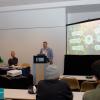
Fire&Ice brings the boreal fire community together at IBFRA 2026 Conference in Canada
Where, under future climate, will fire put people's health at risk? And what can we do?
These are the questions we asked in the Fire&Ice workshop that we held on 24 August 2026, at the International Boreal Forest Research Association (IBFRA) Conference in Québec City with around 28 participating boreal specialists, from students and researchers to practitioners and decisionmakers from leading institutions and organizations.
01 October 2026
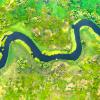
Where the waters meet: Connecting global limits and local water management
Human activity and climate change are putting growing pressure on water resources, disrupting the predictability of the water cycle, and changing the availability and quality of freshwater. IIASA researchers and partners have developed a new framework for guiding water management and planning at the river-basin level, derived from the existing Global Water Planetary Boundary.

23 September 2026
Global water report warns of increasingly erratic freshwater conditions
IIASA water-quality modeling has contributed to the World Meteorological Organization’s (WMO) State of Global Water Resources 2025 report. The assessment shows that the global water cycle is becoming increasingly erratic, with serious implications for people and economies worldwide.