News

12 August 2026
Planning for the future through a population lens
IIASA researcher suggests a fundamentally different way for governments to plan for the future: using population as a common framework to connect health, education, food, jobs, housing, social protection, and climate risk. The approach integrates demographic data with sectoral planning to help governments make more coordinated, evidence-based decisions and improve population wellbeing.
04 July 2025
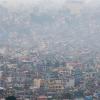
IIASA research informs new World Bank Report on Nepal’s air pollution crisis
Air pollution has become the leading health risk in Nepal, contributing to around 26,000 premature deaths each year. IIASA researchers provided scientific tools and analysis for a new World Bank report presenting the country’s first comprehensive clean air plan to address the problem.
Events
Kathmandu, Nepal
IIASA at the 6th APA Conference 2024
Virtual meeting
Landslide EVO Annual Meeting
Focus

Annual Report 2025
Annual Report 2025: Policy Impact Highlights
As part of its mission, IIASA provides scientific guidance to policymakers by applying systems analysis to global challenges.

27 April 2026
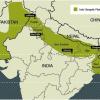
Cleaning the air in South Asia: Why science and cooperation matter
IIASA researchers Pallav Purohit and Zbigniew Klimont examined the urgent challenge of air pollution in South Asia and the opportunities to address it through science-based policy and regional cooperation. In the run-up to the recent International Vienna Energy and Climate Forum, they drew on recent research and real-world examples to highlight how integrated approaches to energy, climate, and air quality can deliver cleaner air, improved health, and more resilient economies for nearly one billion people.
Projects